by Laurie Pocher
April 11, 2026 • New England School of Falconry Woodstock, Vermont
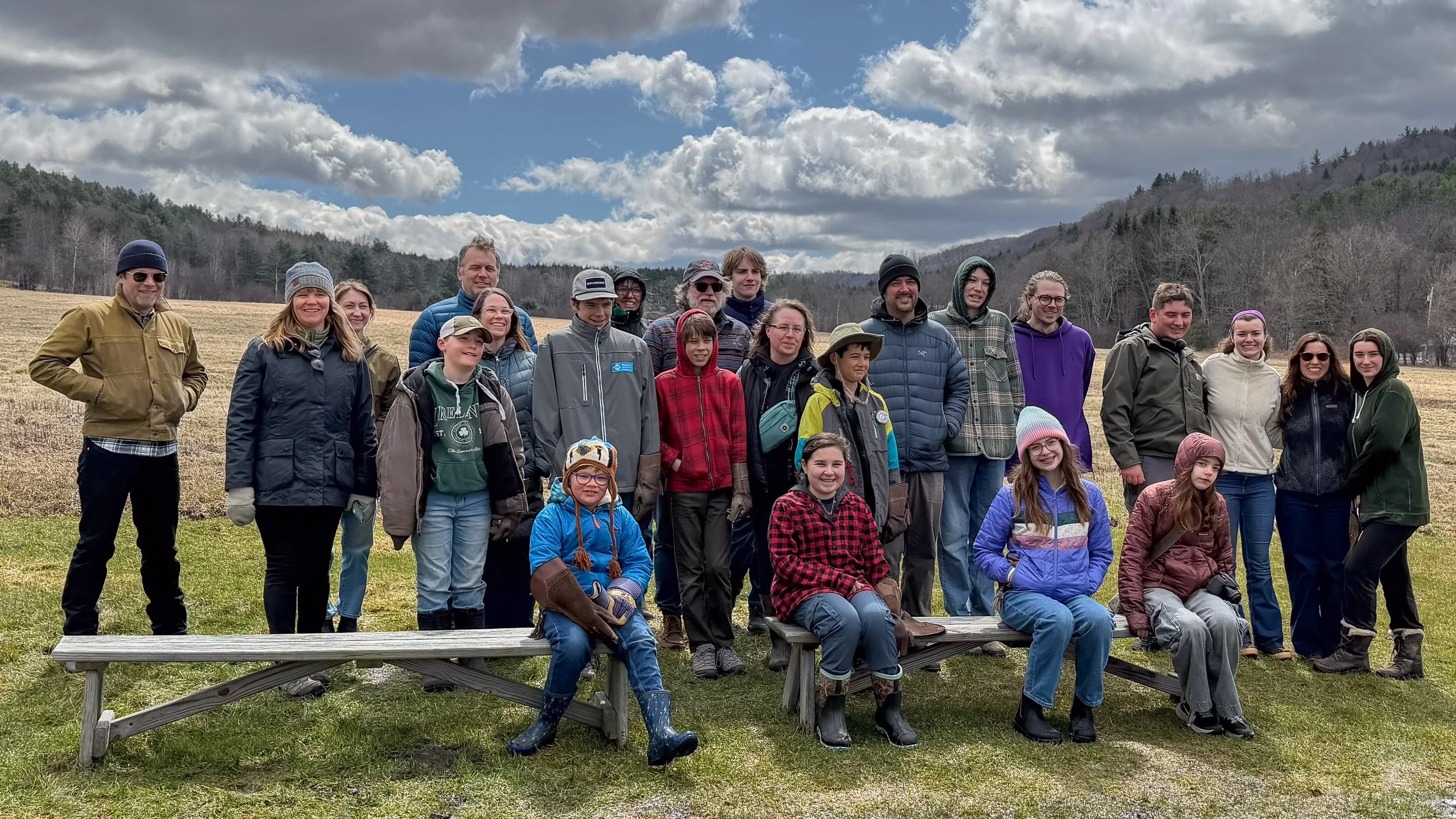
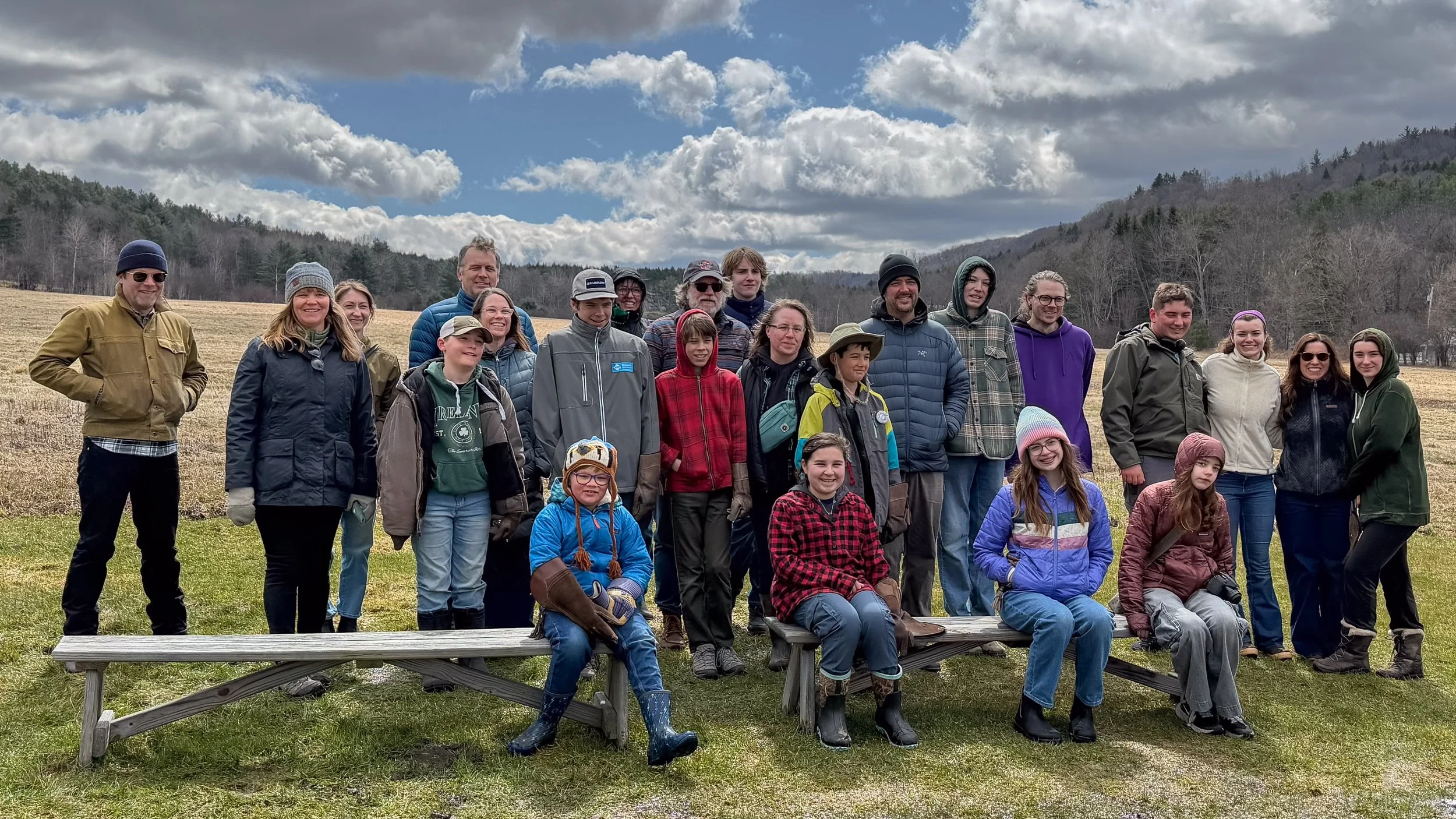
Most MYBC outings find us out in the field, scanning treetops and mudflats with binoculars, waiting for birds to reveal themselves on their own terms. This trip was something entirely different — and entirely wonderful. On a windy, cold April day, a dozen young birders and a contingent of parents (aka paparazzi) made the drive from southern Maine to Woodstock, Vermont, for a hands-on experience at the New England School of Falconry.
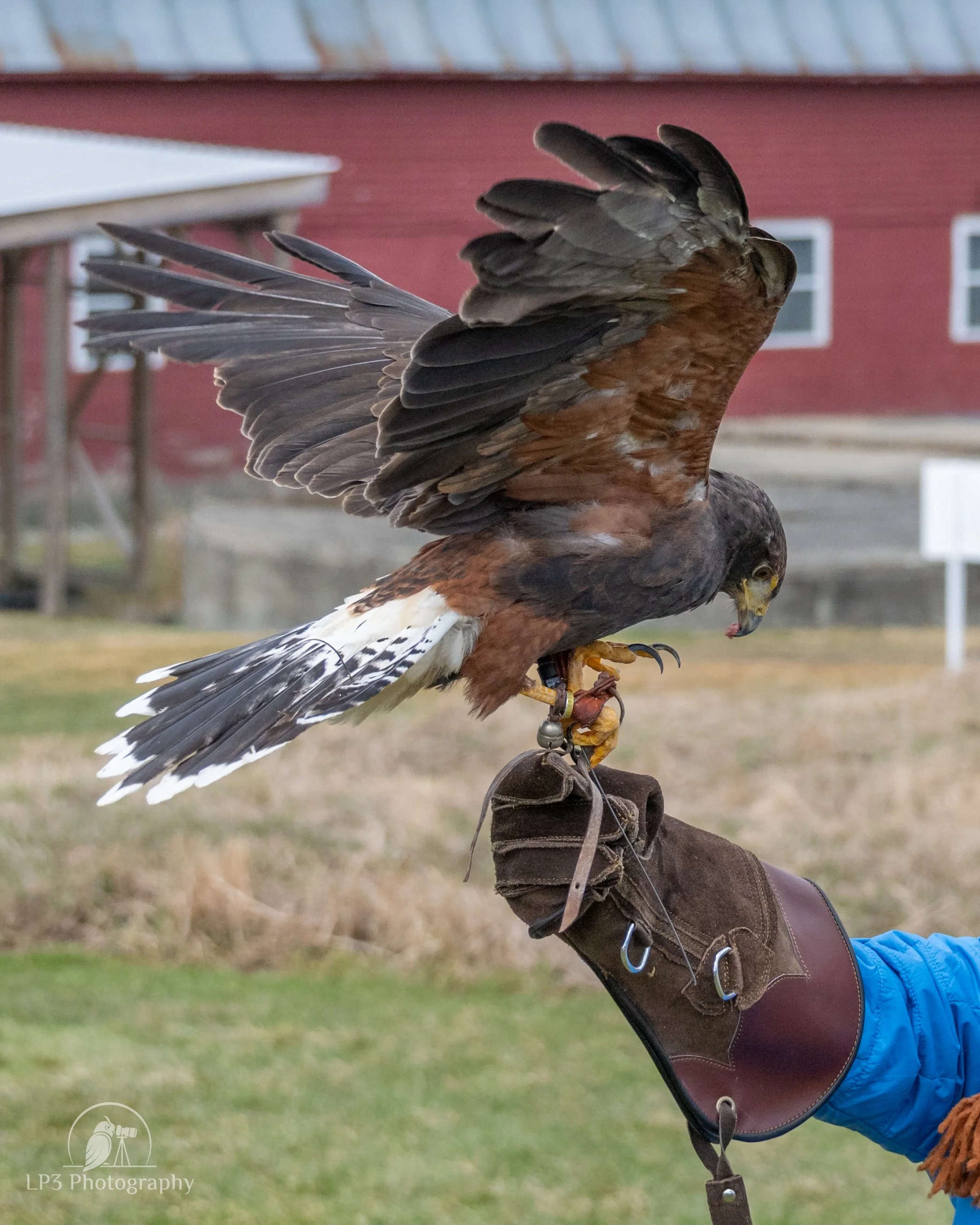
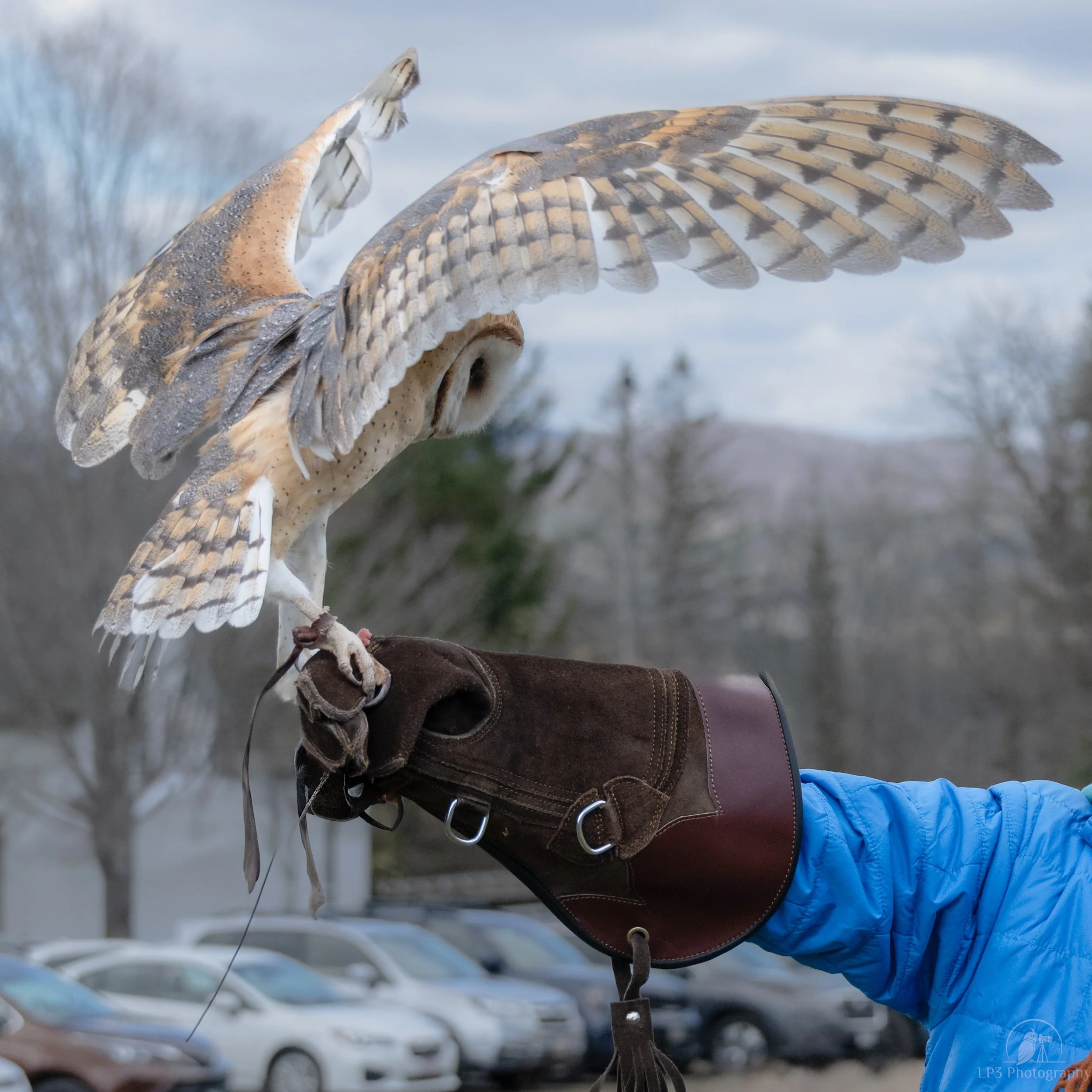
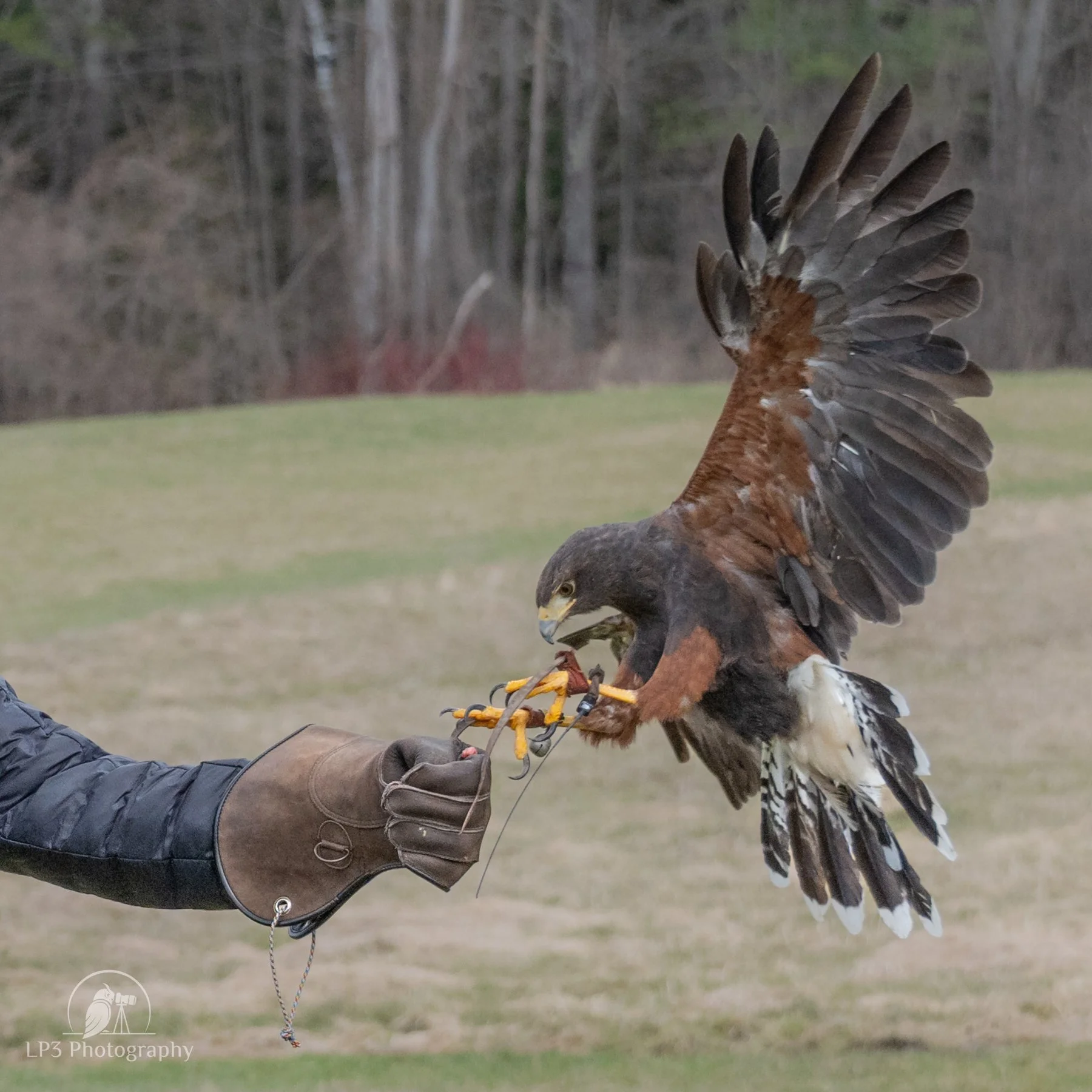
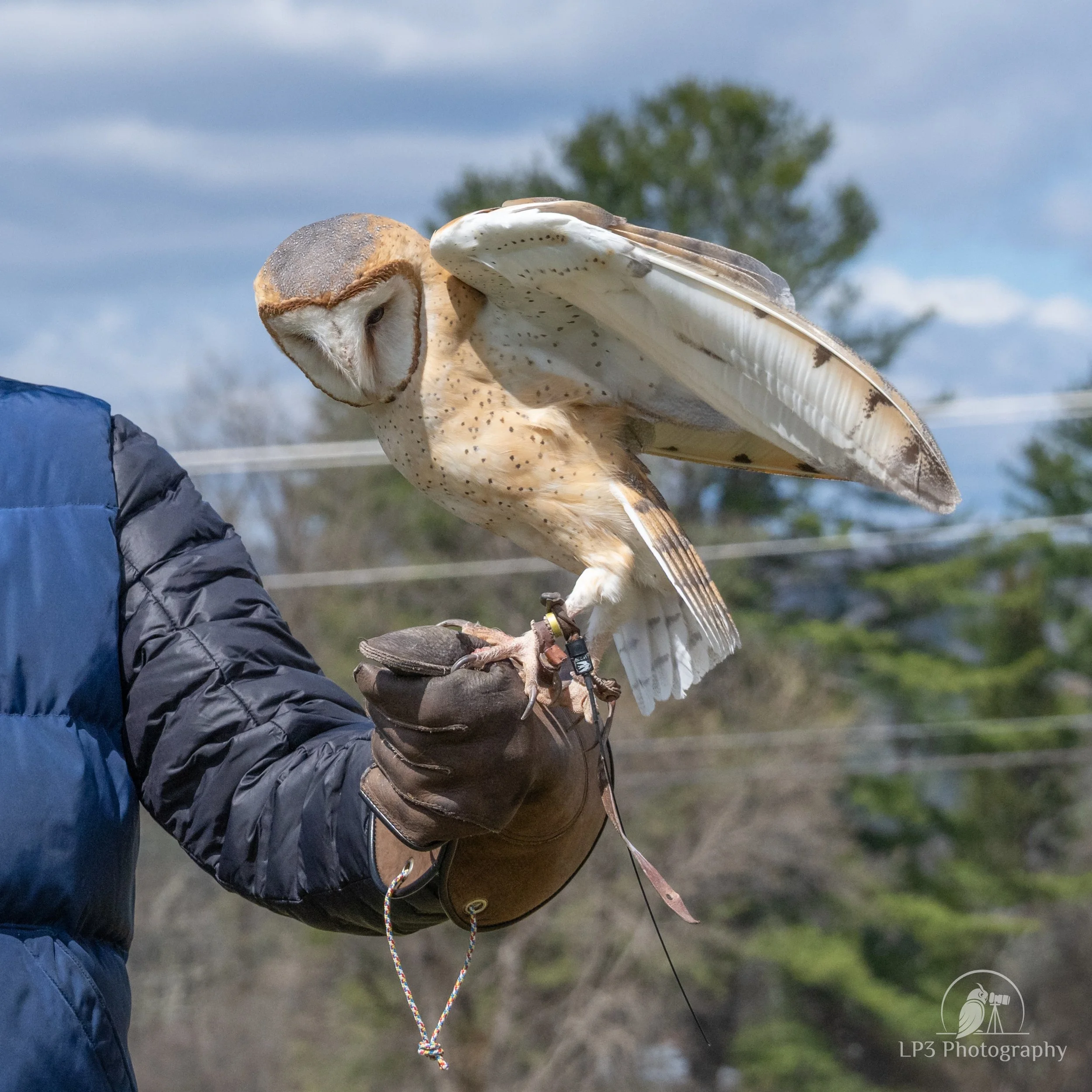
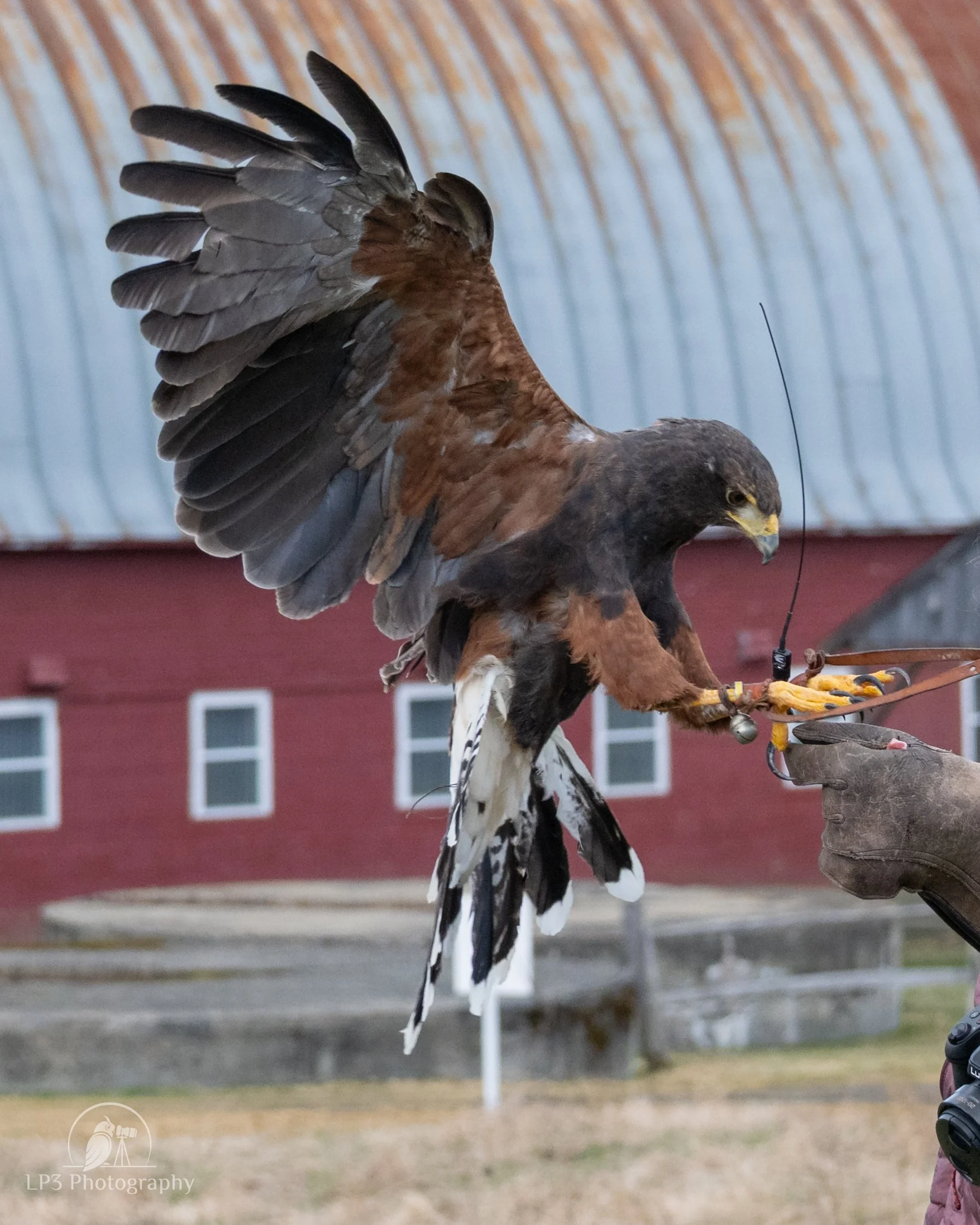
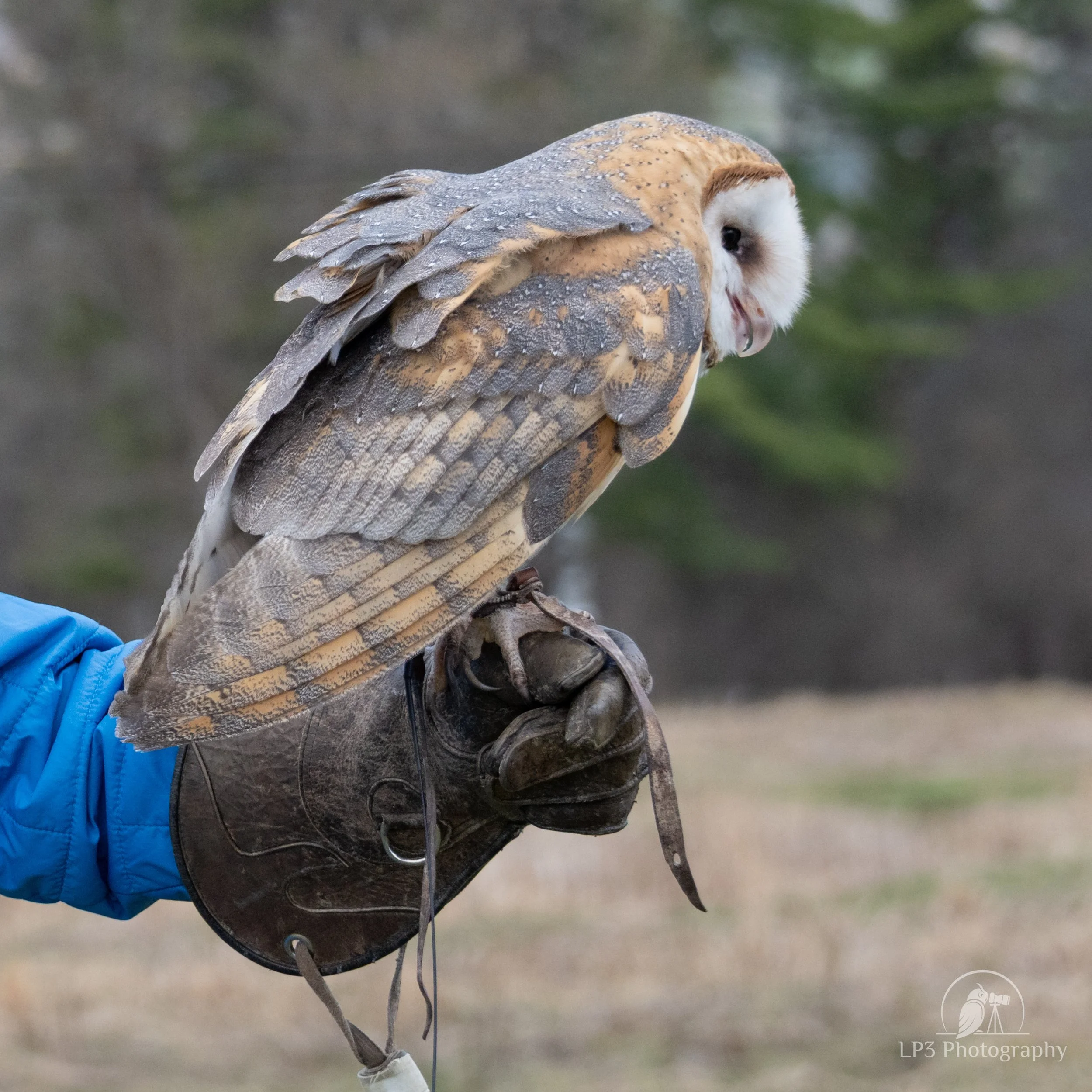
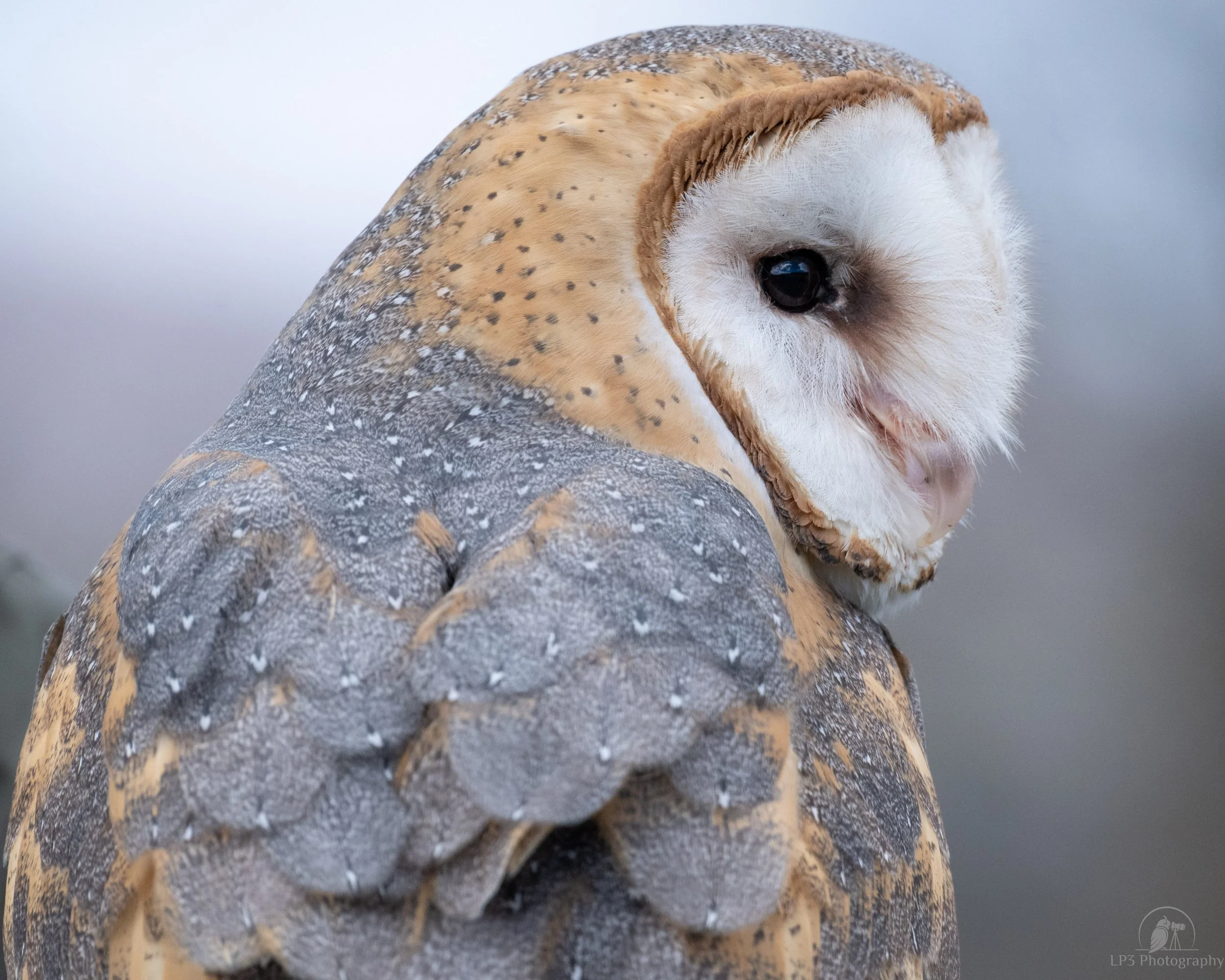
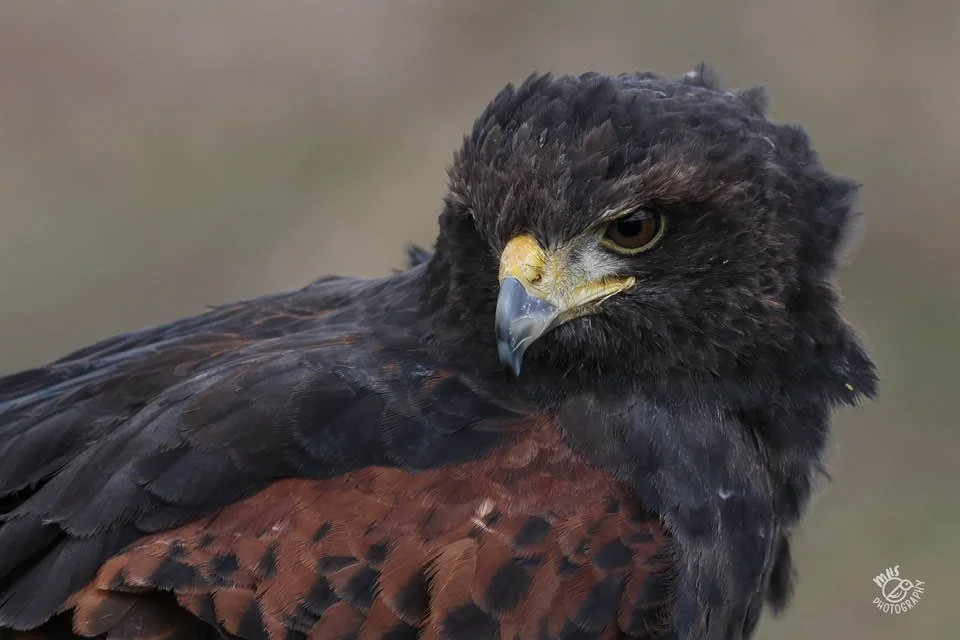
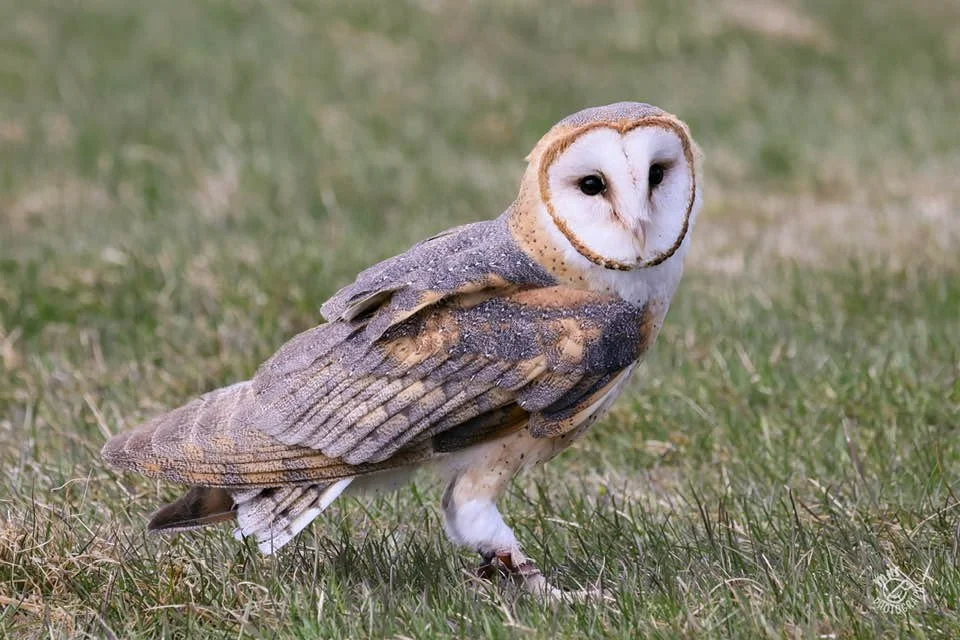
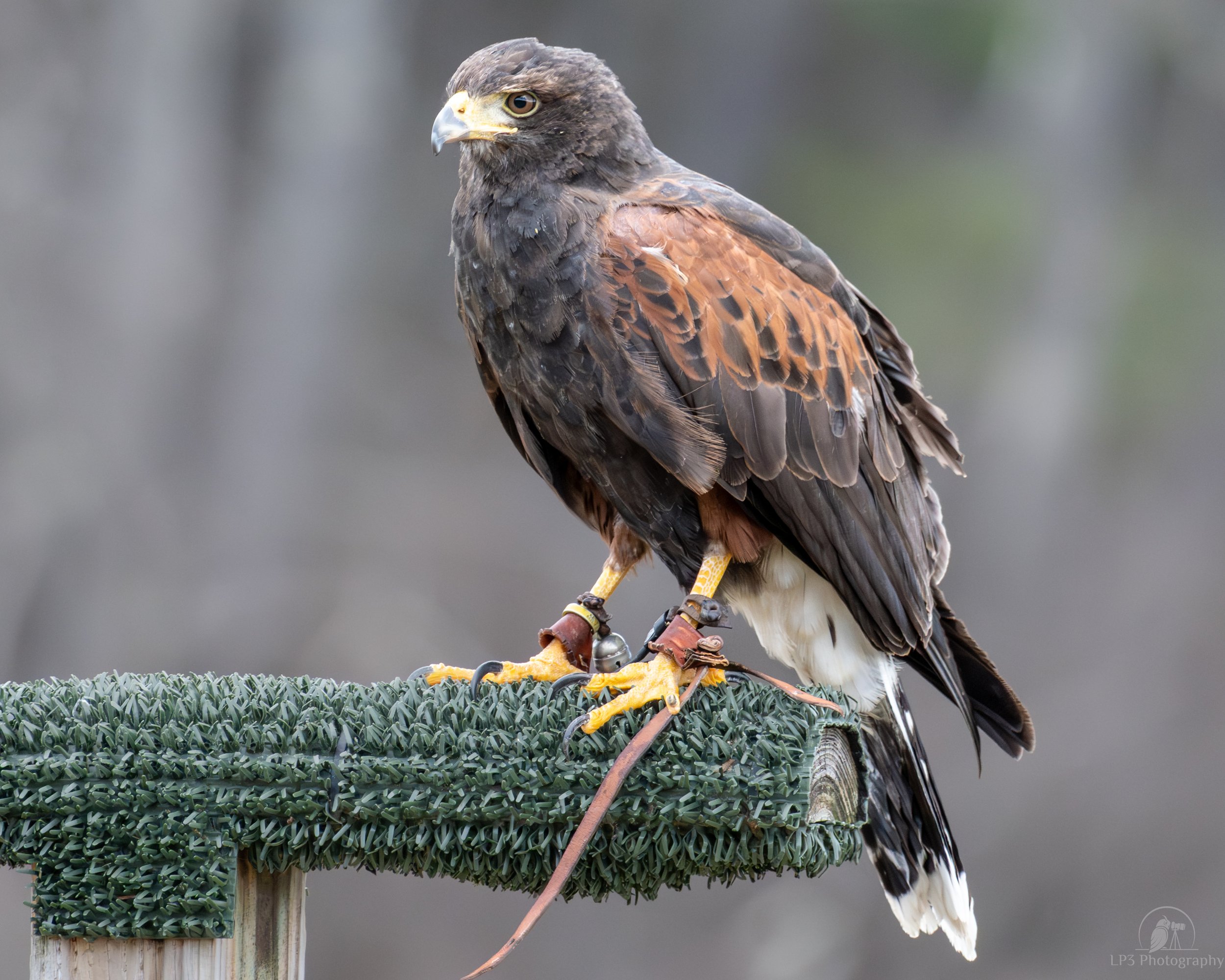
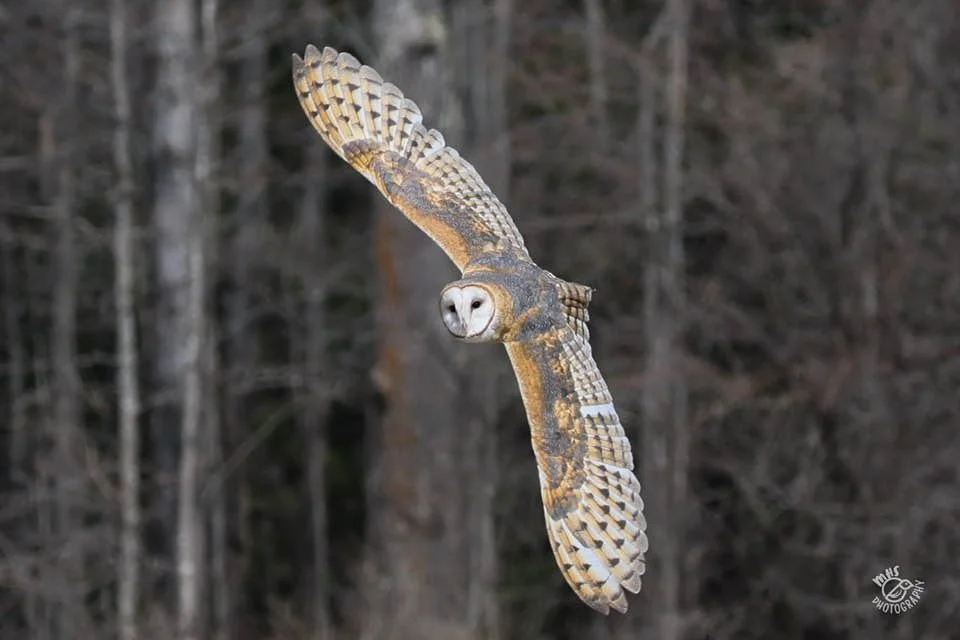
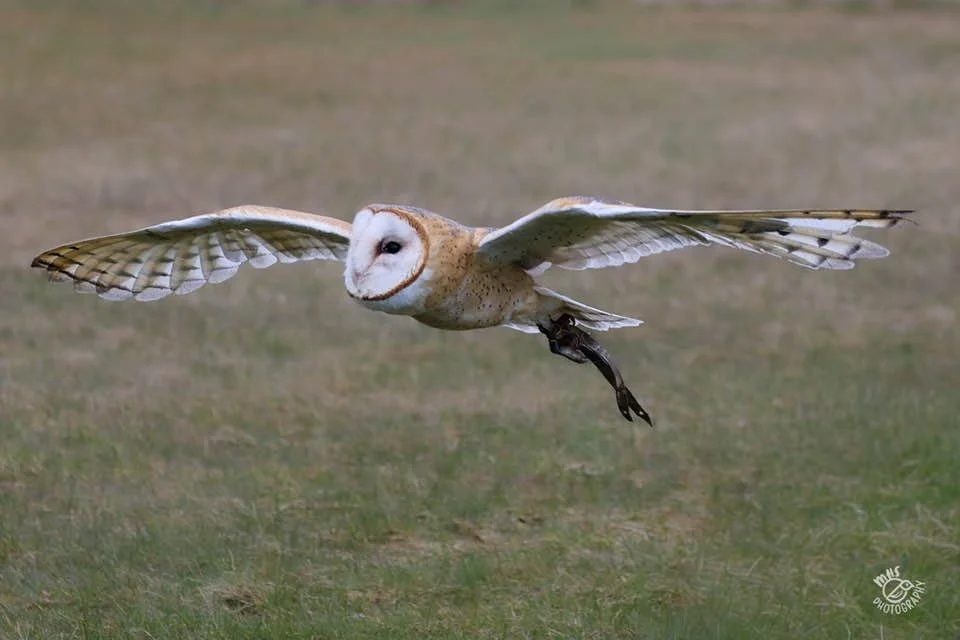
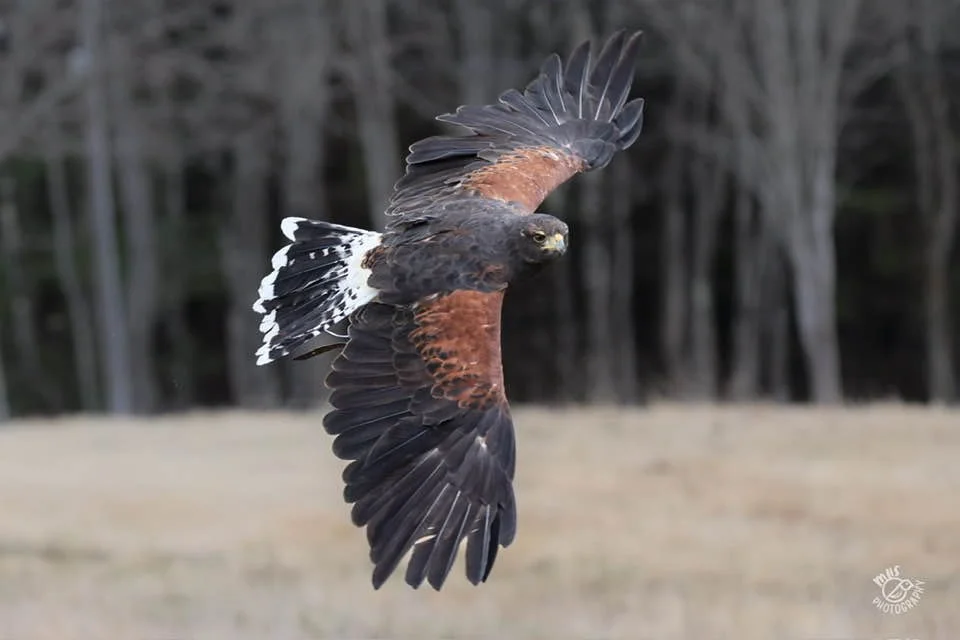
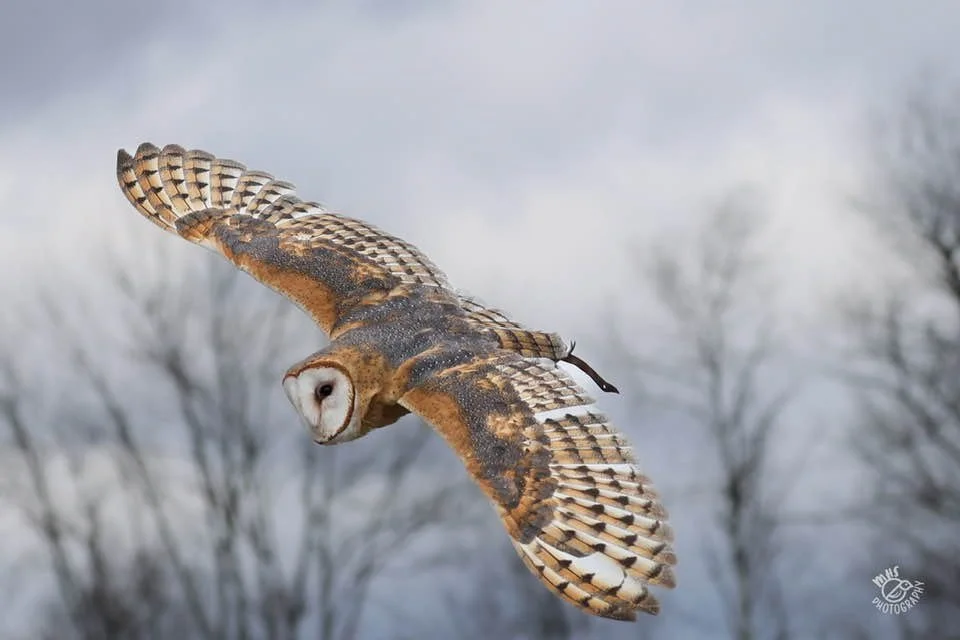
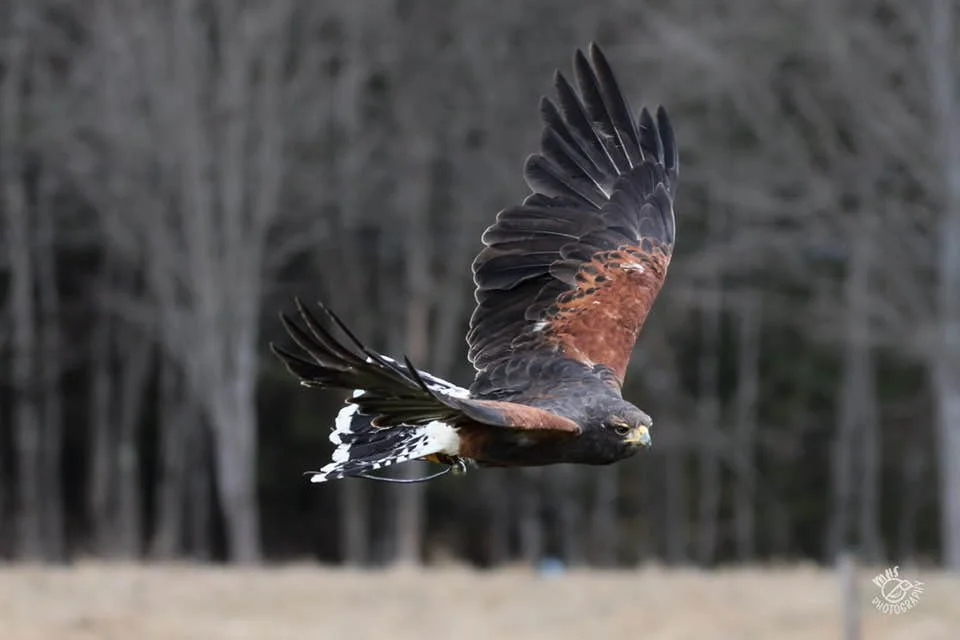
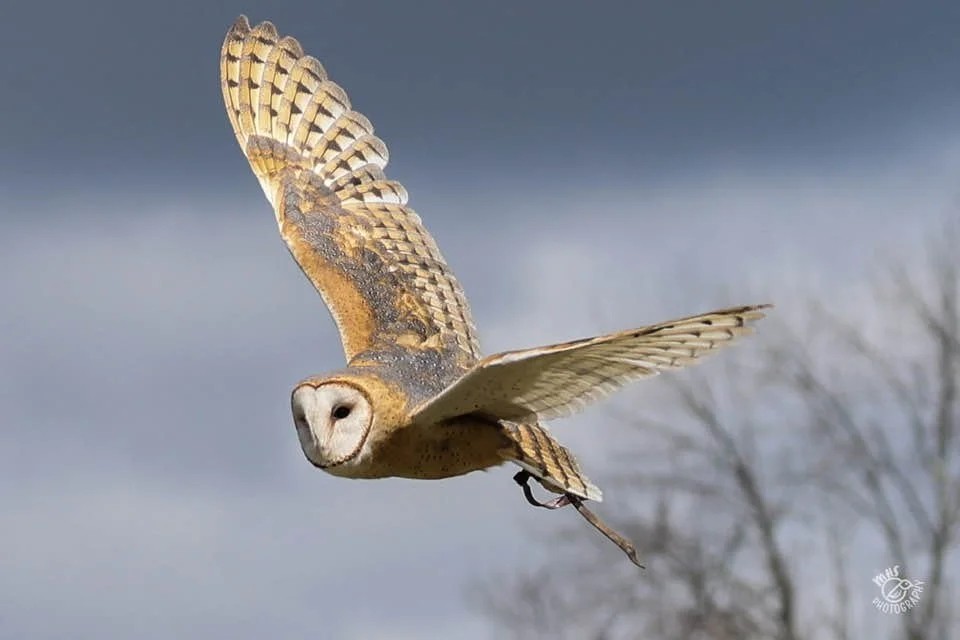
We spent two hours with Jessica, one of the school’s falconers, and two remarkable birds: Audubon, a nine-year-old Harris’s Hawk, and Alba, an American Barn Owl who will be turning ten next month. Both birds are seasoned veterans of this kind of work, and it showed. Audubon, at roughly a pound and a half, is compact and powerful, with the Harris’s Hawk’s characteristic bold patterning. Alba, closer to a pound, is all soft plumage and heart-shaped face — the picture of quiet elegance.
We flew both birds, and everyone in attendance had the experience of a raptor landing on their arm. There is simply no way to prepare for the moment a bird like that drops out of the sky and grips your glove. The wingspans alone are enough to make you catch your breath.
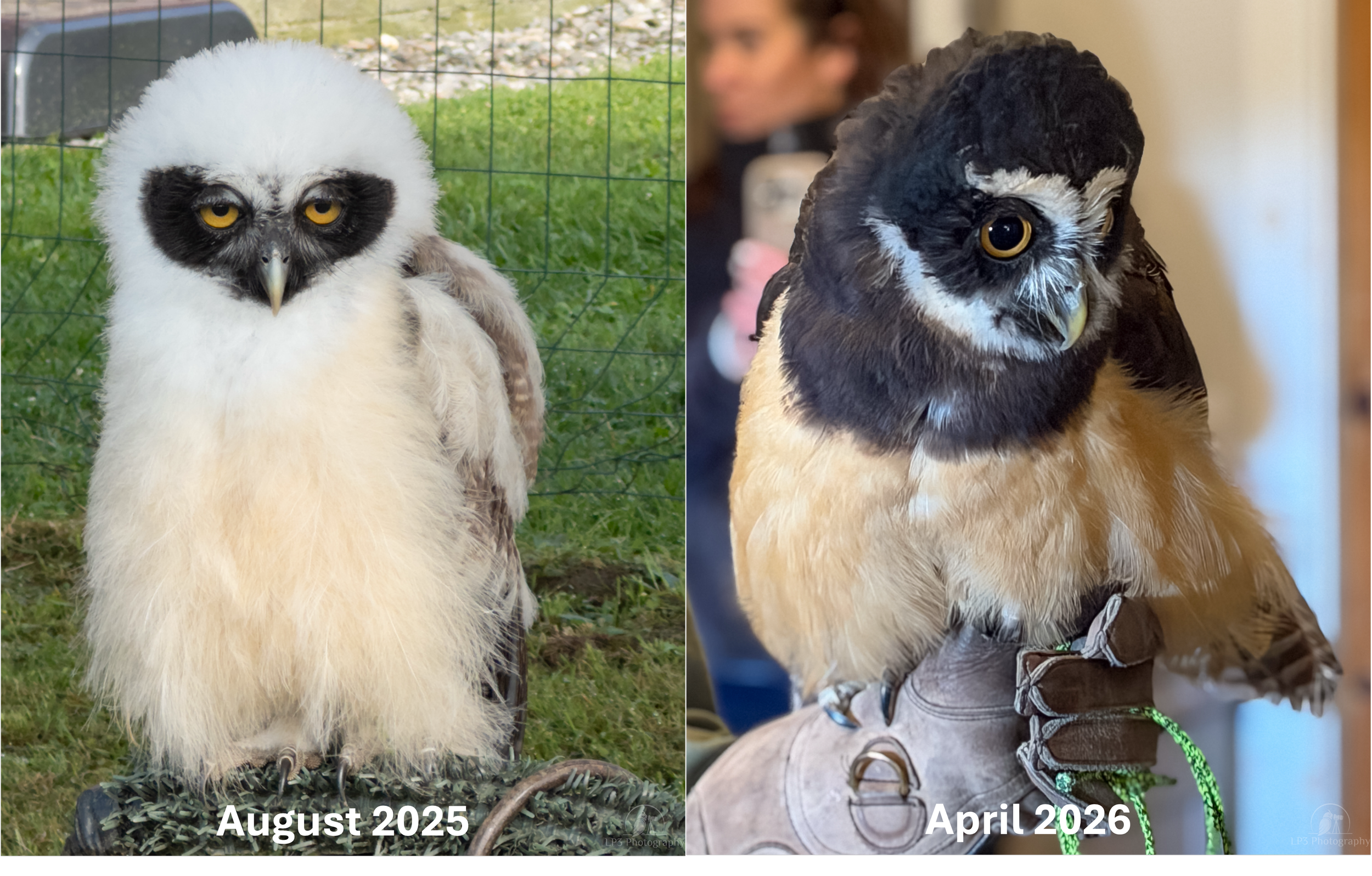
We also got to visit with Coruja — Portuguese for owl — a young Spectacled Owl we had met as a tiny white fluffy owlet during a previous visit in August 2025. The transformation to full adult plumage is nothing short of stunning, and the photos tell the story better than words can. Coruja will be flying in owl programs this summer. We can’t wait to go back.
Audubon, Alba, and Coruja are just part of the remarkable cast of birds at the school. Others in residence include Aplomado Falcons, Burrowing Owls, Great Horned Owls, Red-tailed Hawks, and a massive Eurasian Eagle-Owl named Sibley. While several of these species are not native to North America, all of the birds at the New England School of Falconry are bred and raised in captivity specifically for falconry training.
Of course, we are MYBC, and wild birds do not get ignored just because we’re busy with trained ones. A pair of Common Ravens made several passes over the treetops during our session, croaking loudly as if lodging a formal complaint about the proceedings. The resident American Kestrels — preparing their nest box for a tenth breeding season on the Falconry school property — made their presence known as well, tiny and fierce and utterly unbothered by the hawks in the air.
The drive to and from Woodstock yielded its own rewards. En route, we logged numerous Turkey Vultures and a pair of Merlins. On the return trip south, a Belted Kingfisher and a Bald Eagle rounded out the day nicely.
The timing of the trip turned out to be perfect in more ways than one. After a long Vermont winter, the maple creemee soft serve machine at Jake’s Quechee Market was back up and running, and we took full advantage. There are worse ways to end a day of falconry.
The Maine Young Birders Club is free to join and open to young birders ages 11–18. The club is funded entirely by donations, and every contribution helps keep our programs and field trips free for all members. New members are always welcome, no experience necessary. Spring migration is ramping up, and we’re already looking forward to our next outing. Stay tuned for the trip announcement coming soon!
Join us at maineyoungbirders.org/join
Support the club at maineyoungbirders.org/donate