by Laurie Pocher
November often serves up rarities as migration winds down and winter visitors arrive. Last year's November trip yielded an incredible Long-Eared Owl in a location where one hadn't been seen in 40+ years, and we were hoping for similar rare bird luck this time around. Twelve MYBC members headed to Maine's southern coast on a chilly morning in search of early winter arrivals. Our target species were Clay-Colored Sparrow and Redpolls at Fort Foster, a rare Western Kingbird at nearby Seapoint Beach, and Snow Buntings, which are slowly arriving to their winter grounds.
Here's how our morning unfolded.
Fort Foster
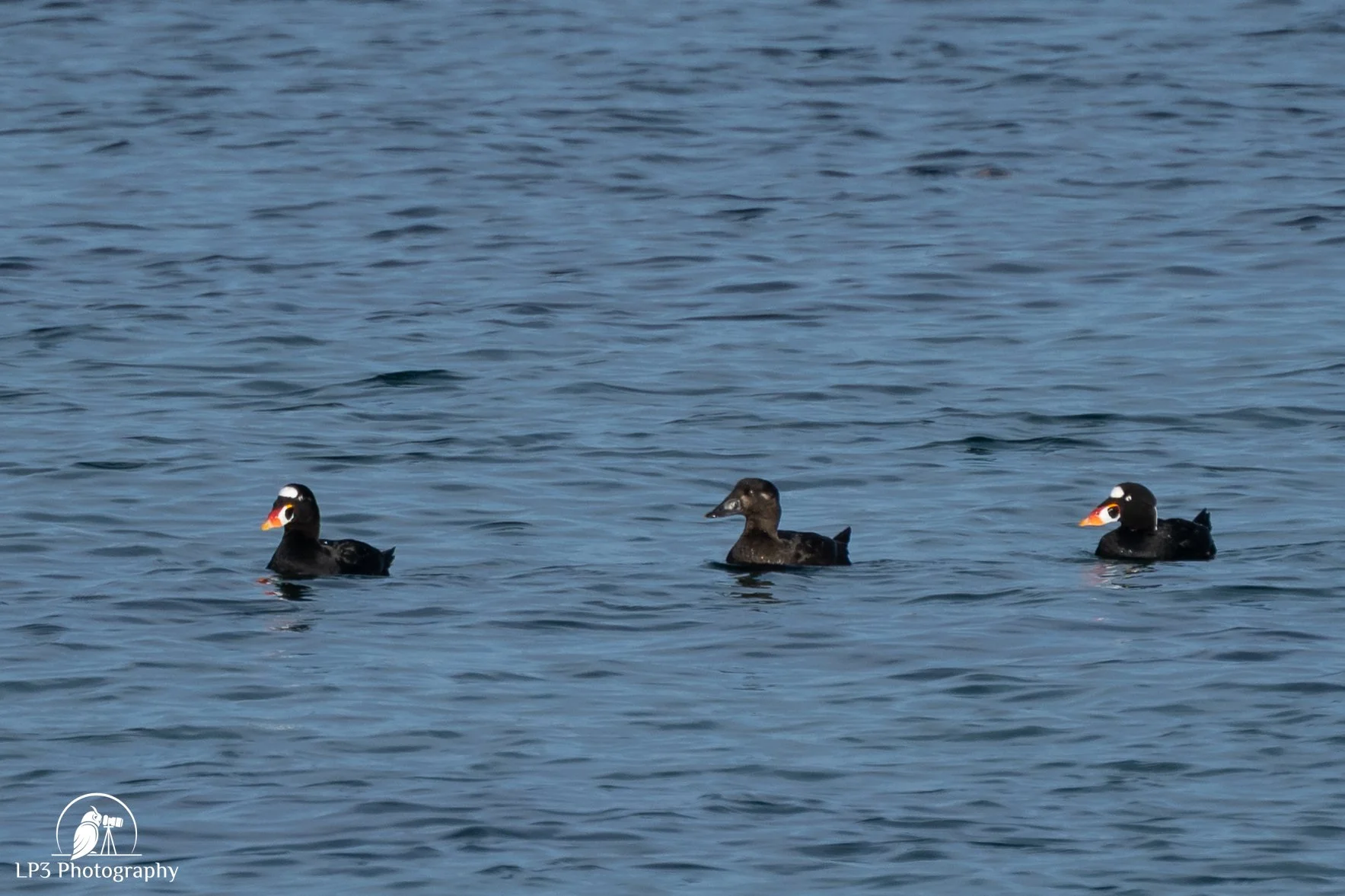
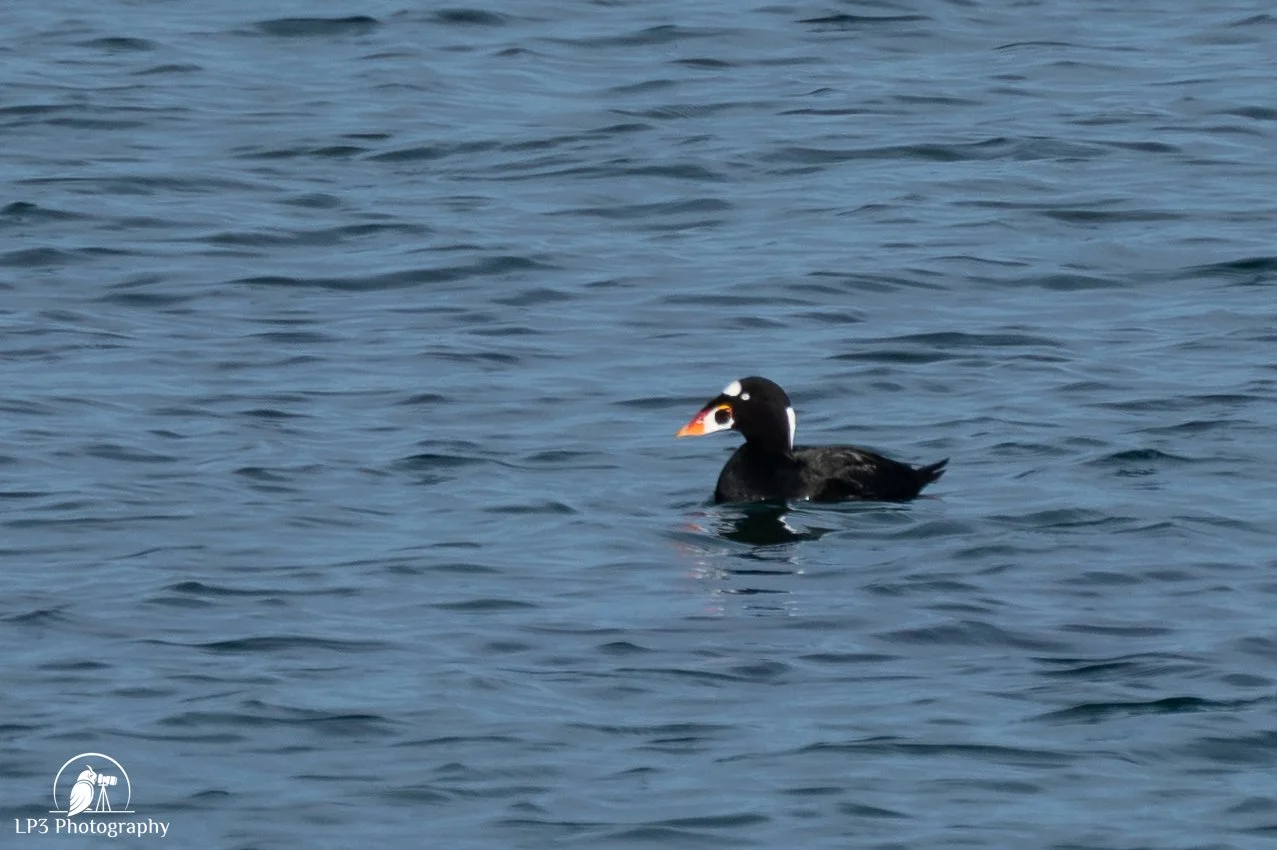
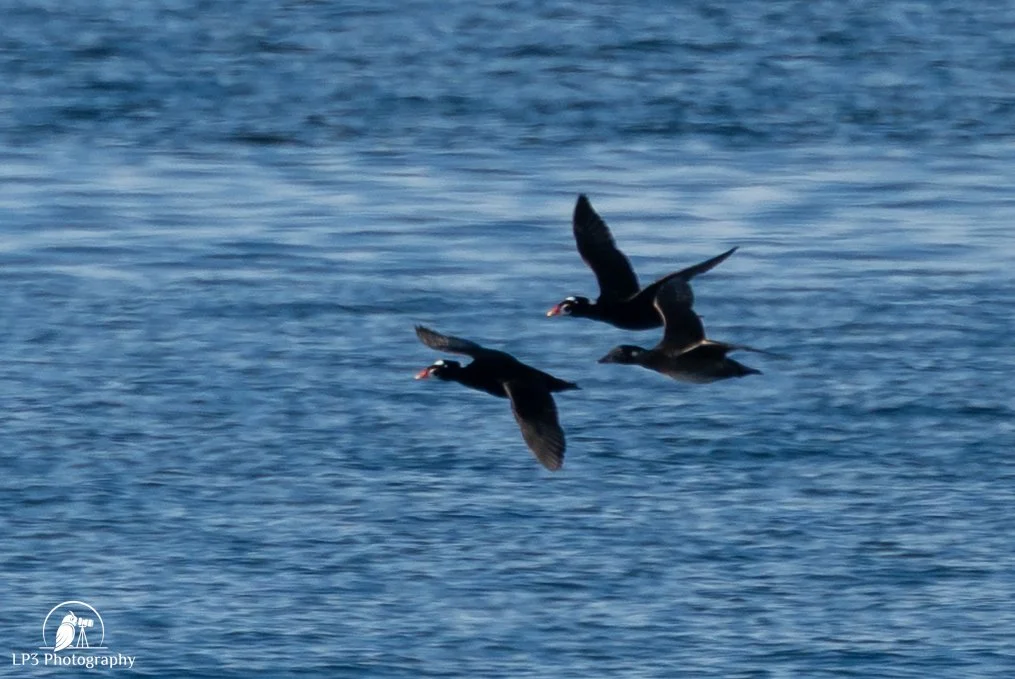
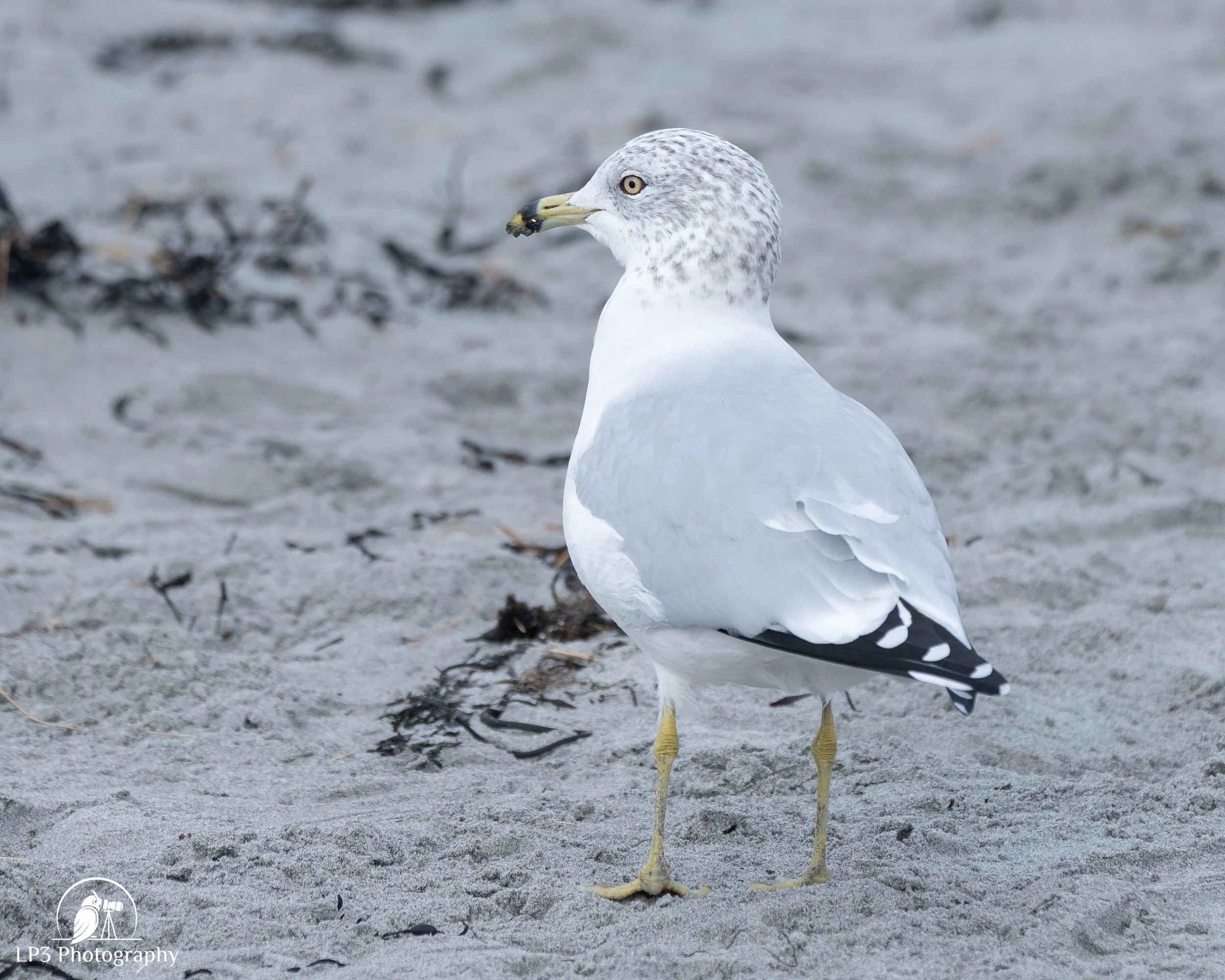
We started at Fort Foster, where we were immediately treated to fly-overs by small flocks of Pine Siskins and Eastern Bluebirds. A quick walk out onto the pier gave us great looks at many Red-breasted Mergansers and Common Loons, as well as Common Eiders, Surf Scoters, Bufflehead, and Long-tailed Ducks. From a distance, we spotted a couple of Bonaparte's Gulls and a Great Black-backed Gull among a group of Ring-billed Gulls.
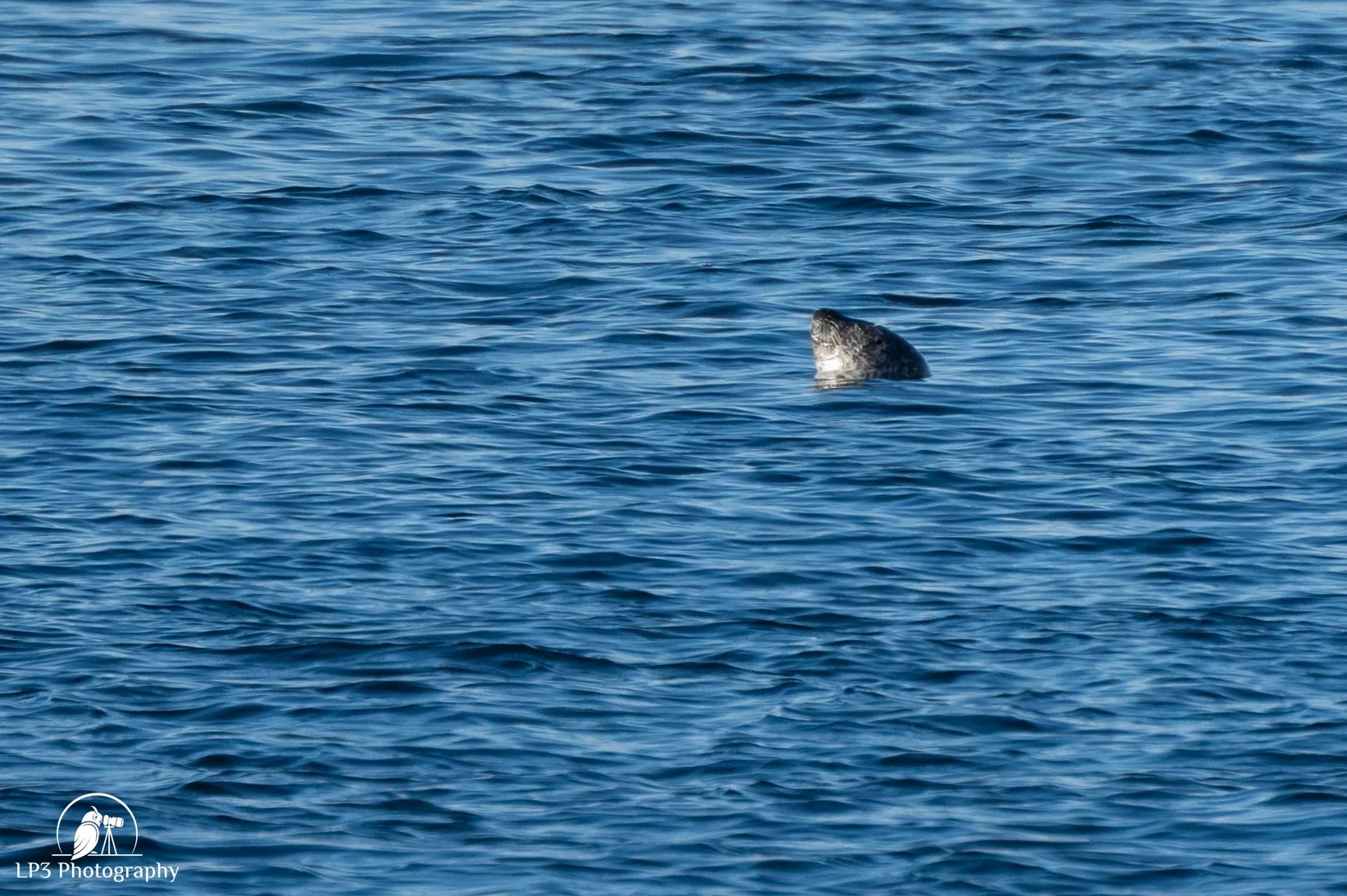
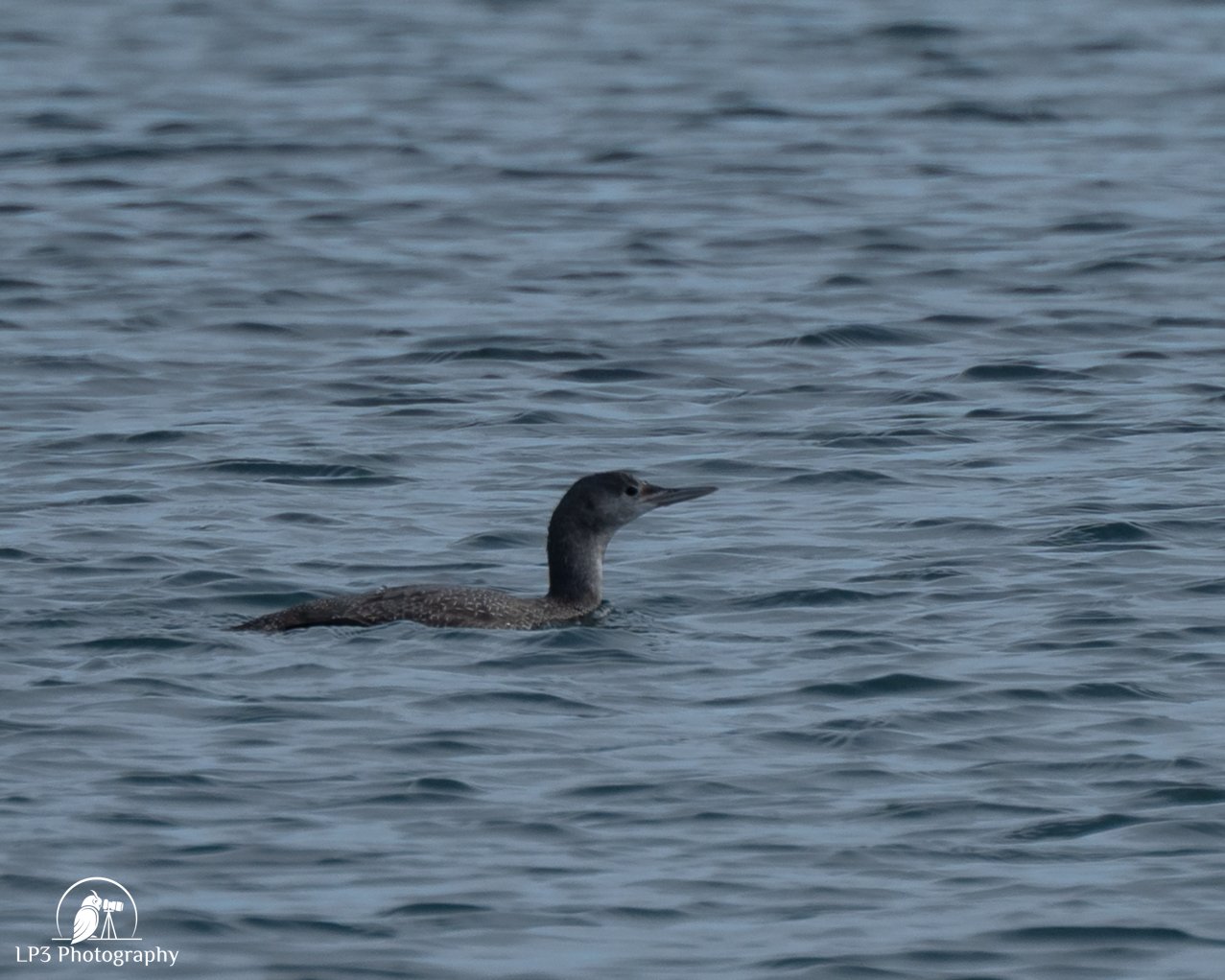
A group of Common Loons were starting to gather here for the winter. These divers nest on freshwater lakes and ponds across the northern United States and Canada during breeding season, but once their young fledge, they migrate to the coast where they'll spend the winter months alongside seaducks in the nutrient-rich marine waters. A single Red-throated Loon and a Great Cormorant — along with a few Harbor Seals and Gray Seals peeking out of the water — rounded out our observations at the pier.
Seapoint and Crescent Beaches
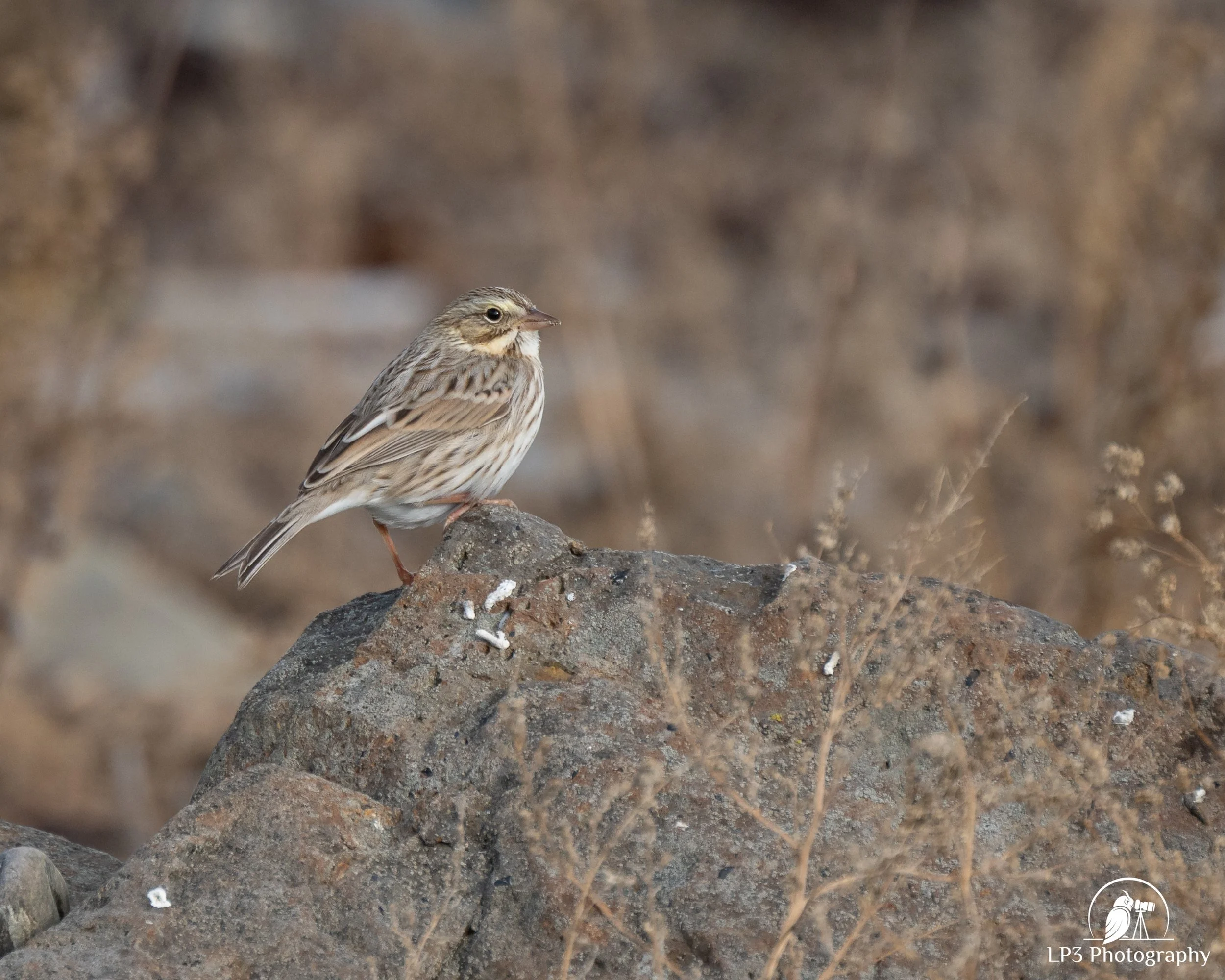
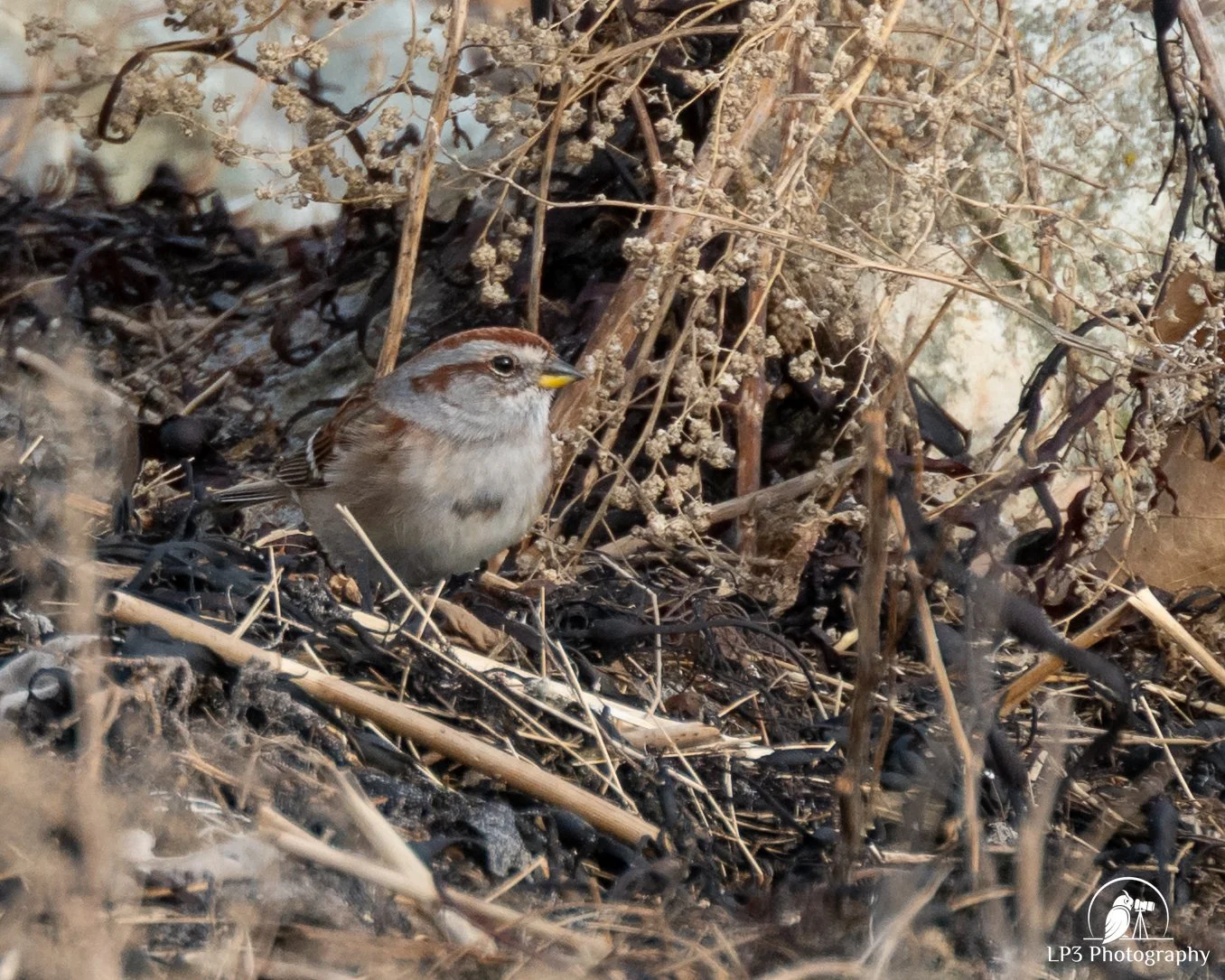
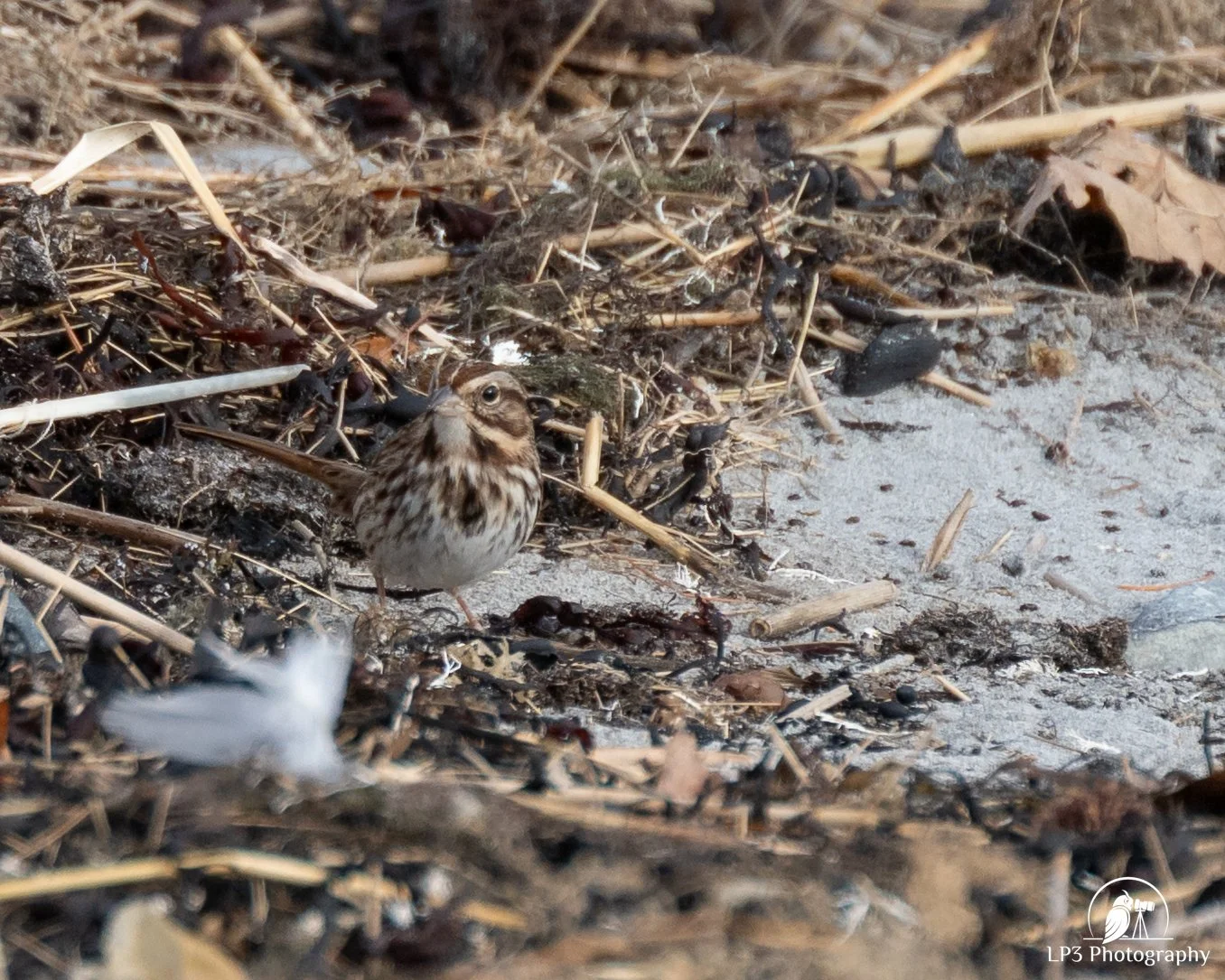
We headed over to Seapoint Beach in search of the Western Kingbird. A Common Raven and a Downy Woodpecker called out to greet us as we arrived. Walking onto the beach, we spotted an Ipswich Savannah Sparrow hanging out with an American Tree Sparrow and a Song Sparrow. Not a bad start! A birder told us that just a few minutes earlier, the Western Kingbird had been foraging along the wrack line when it was flushed by some off-leash dogs. We decided to bird Seapoint and Crescent Beach anyway, in the hopes that it would return after 10am when dogs are required to be on leash.
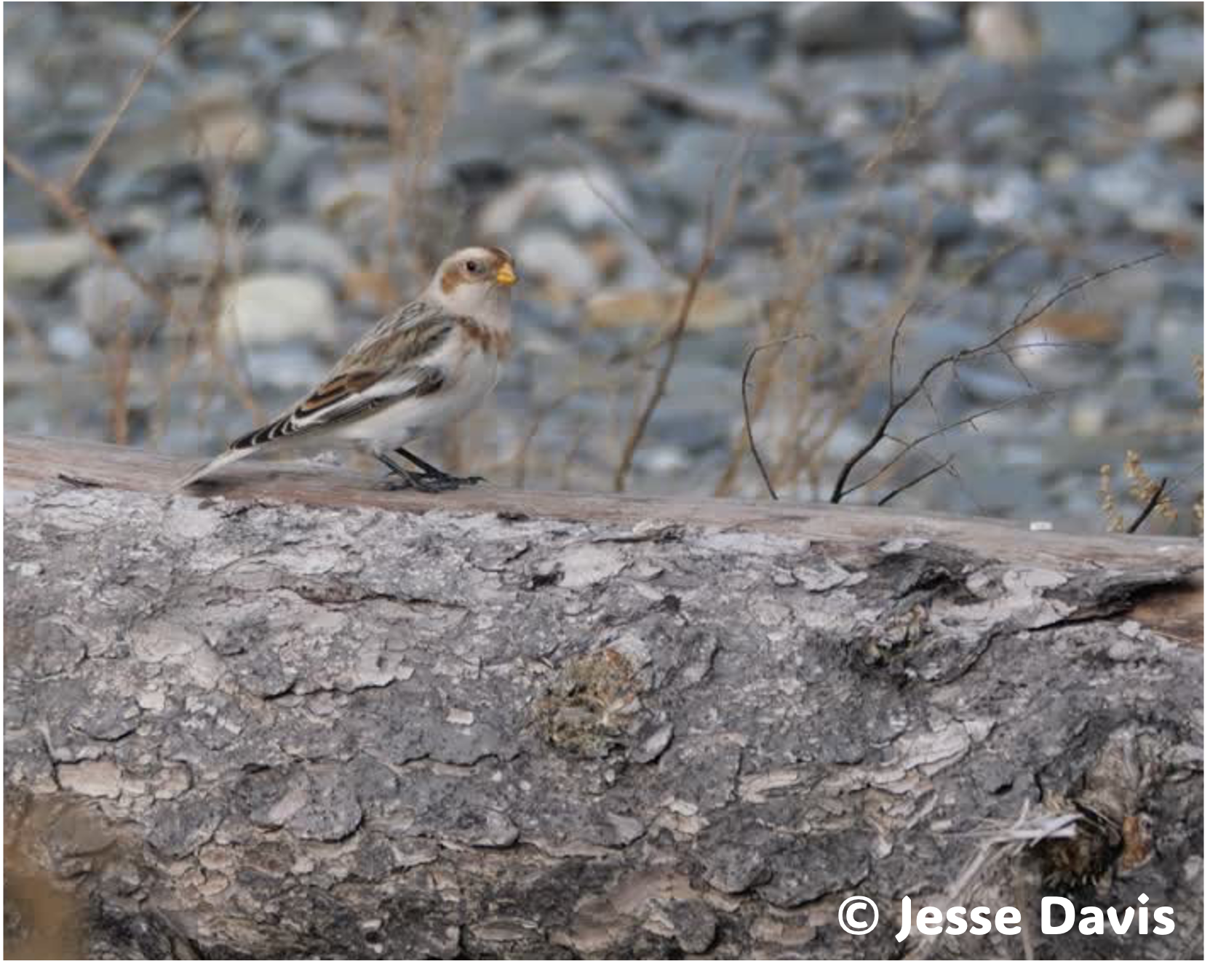
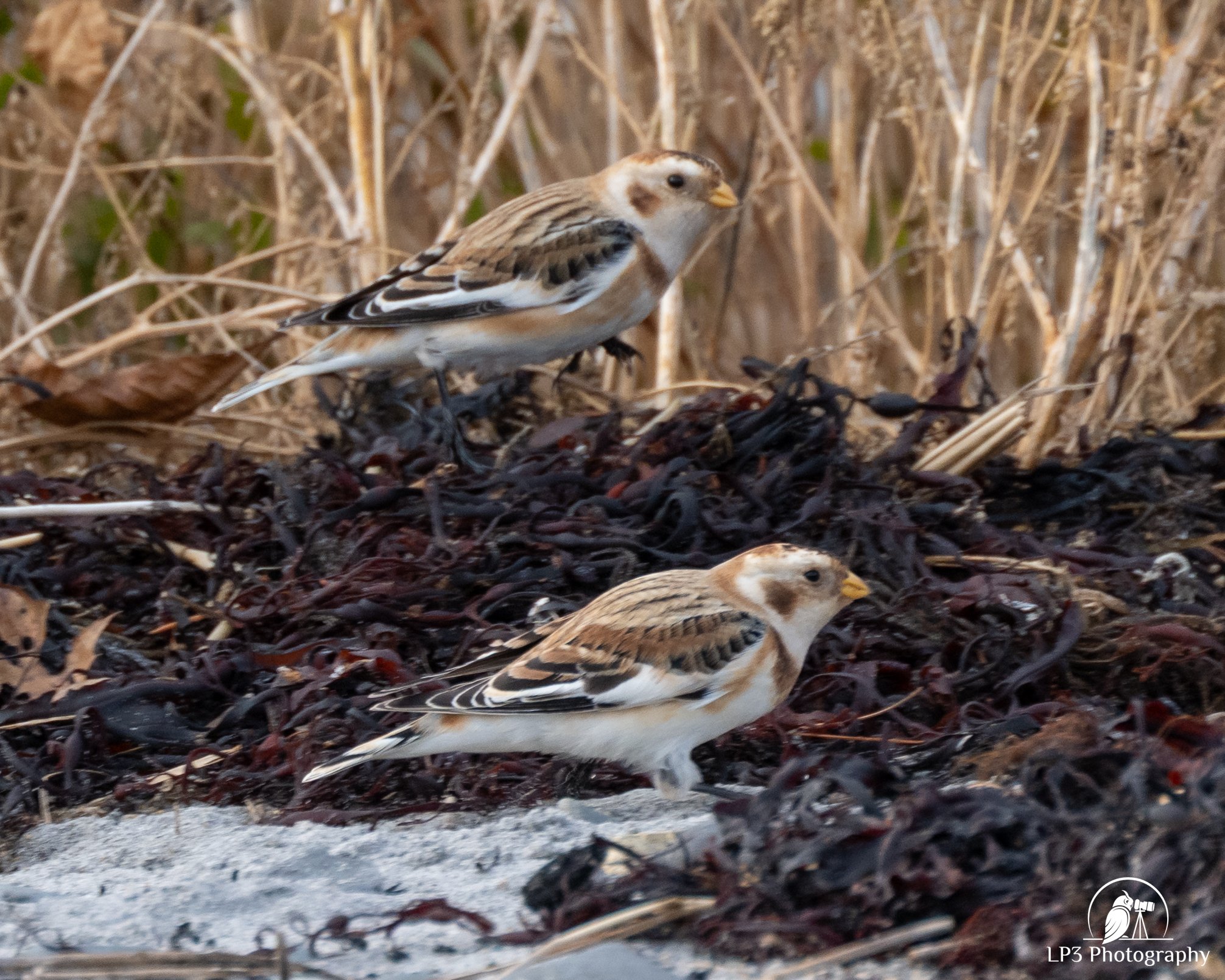
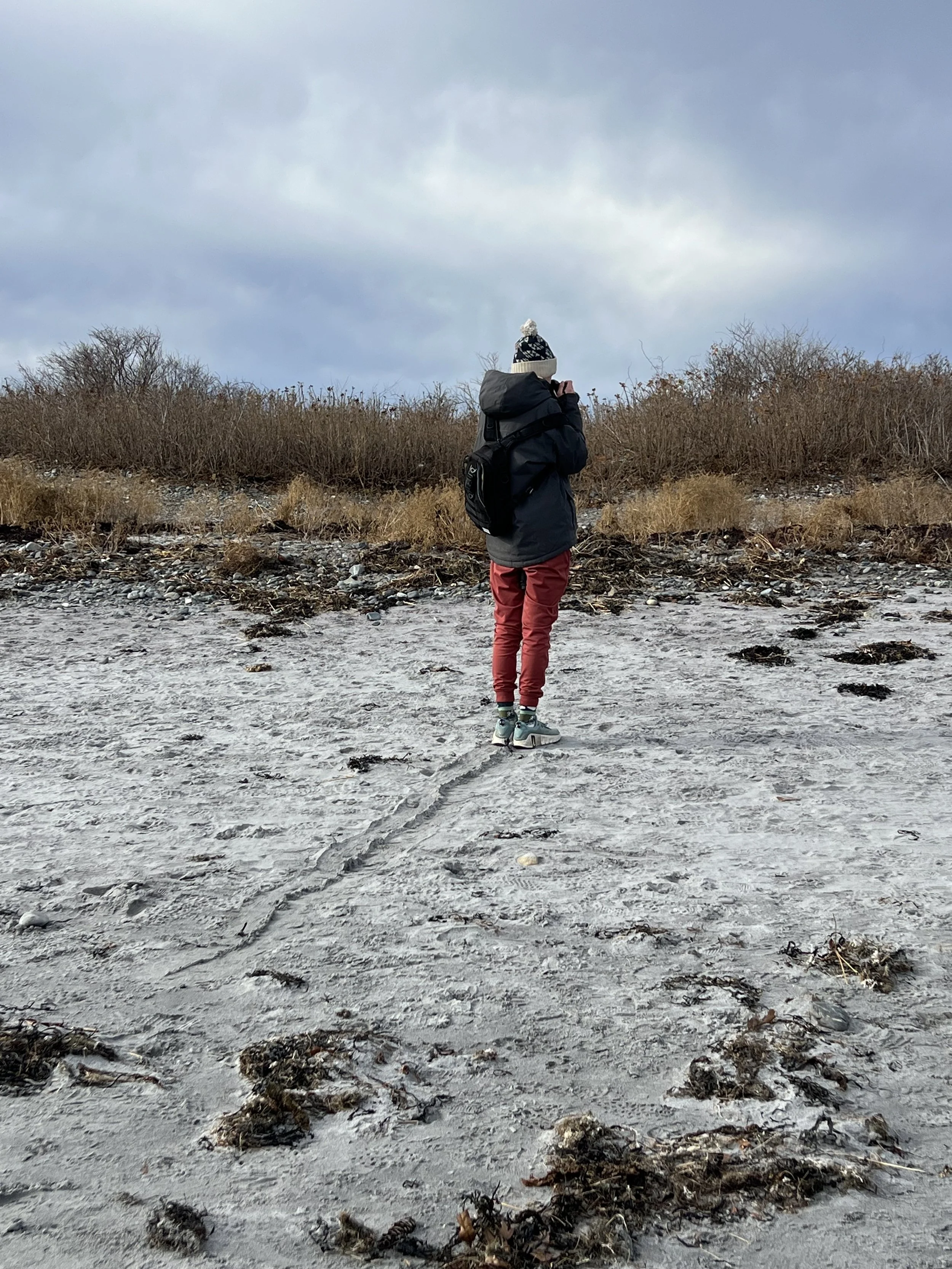
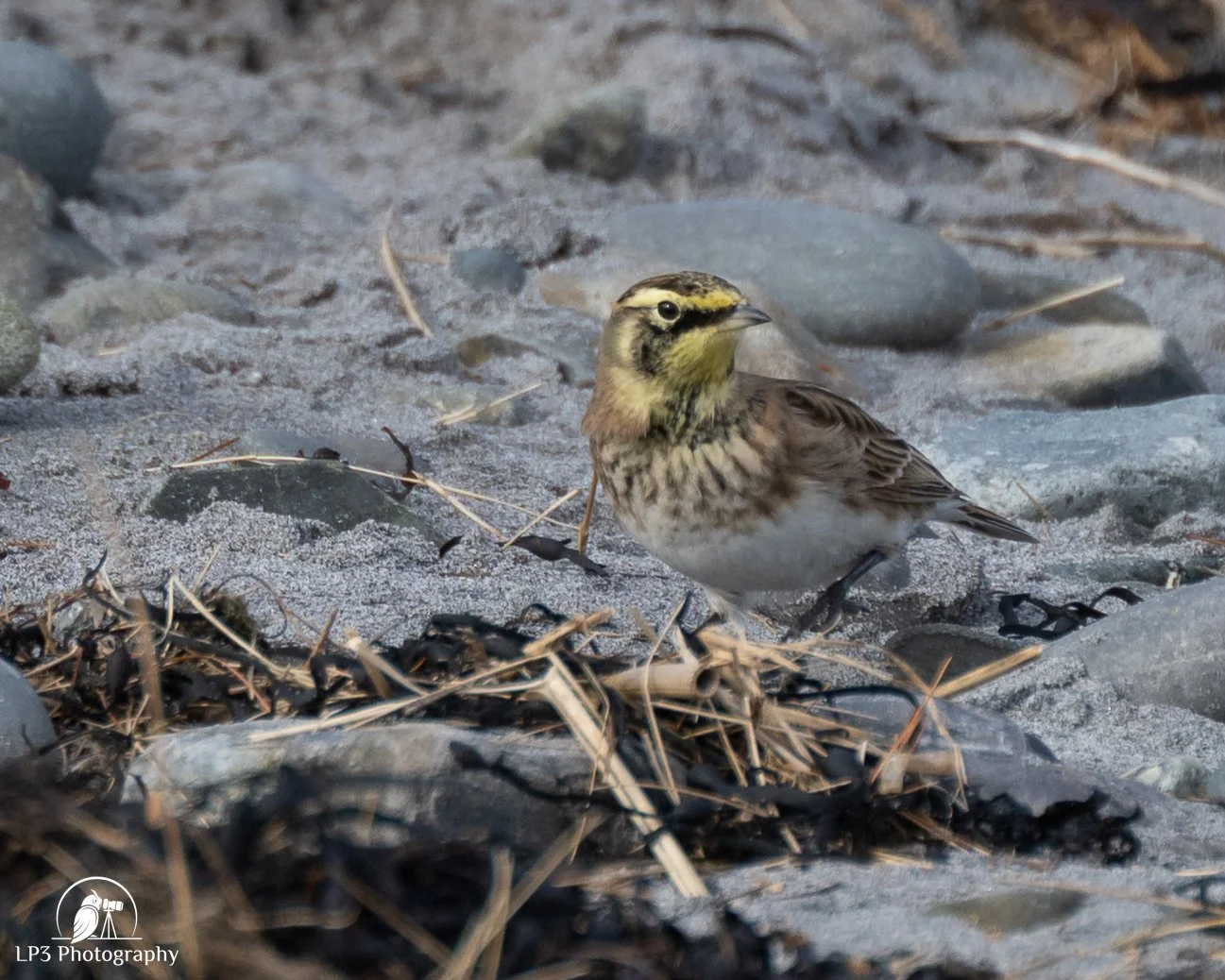
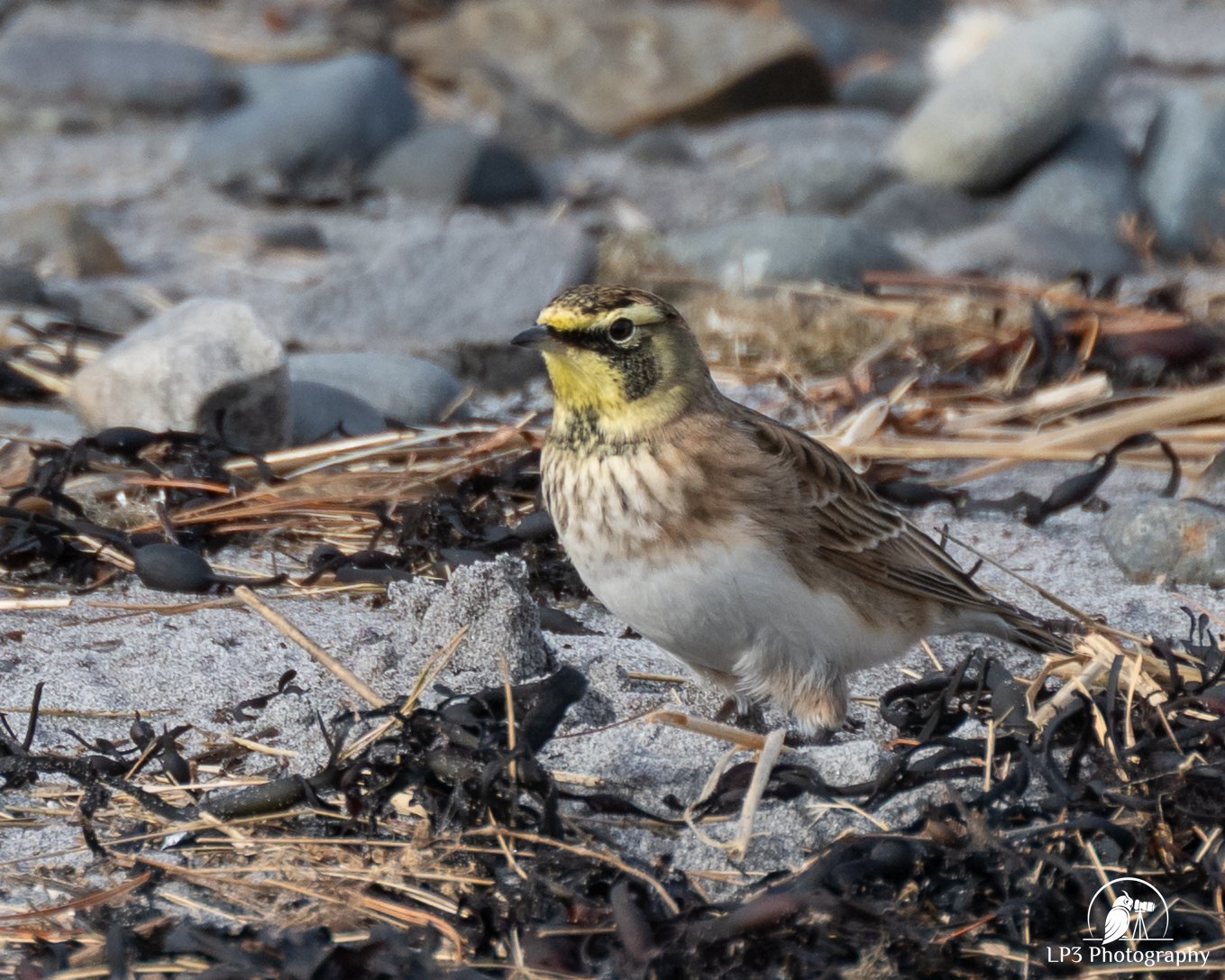
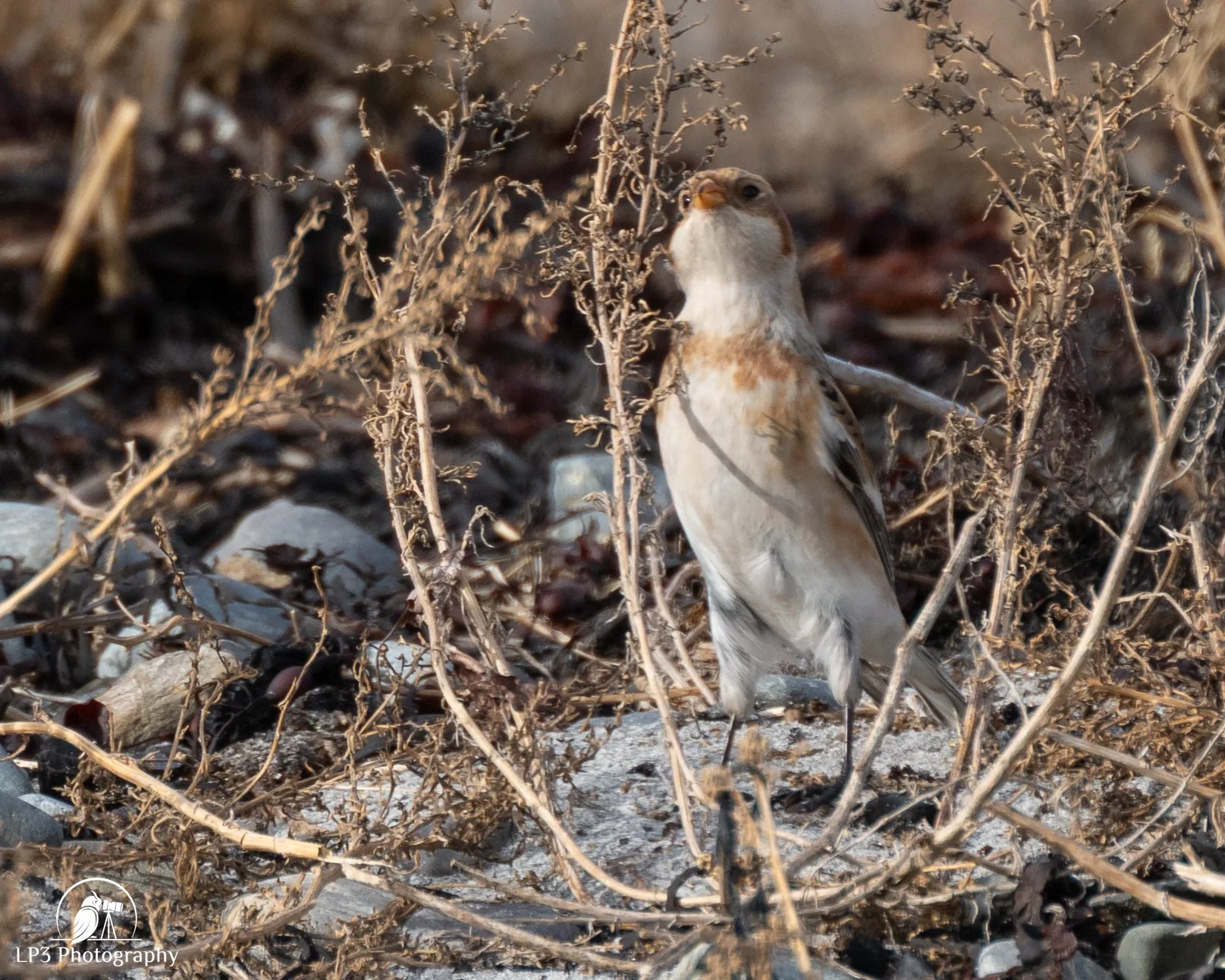
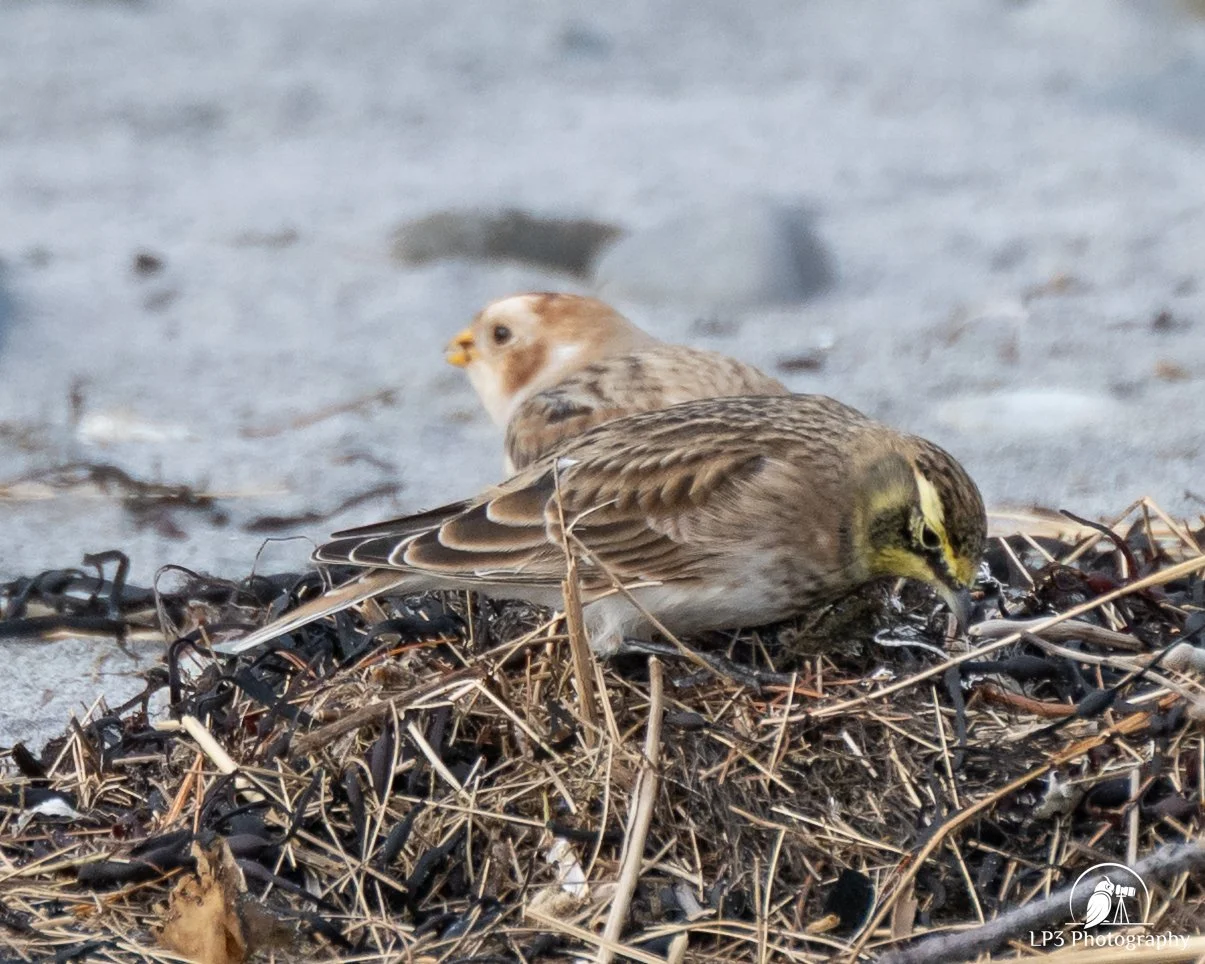
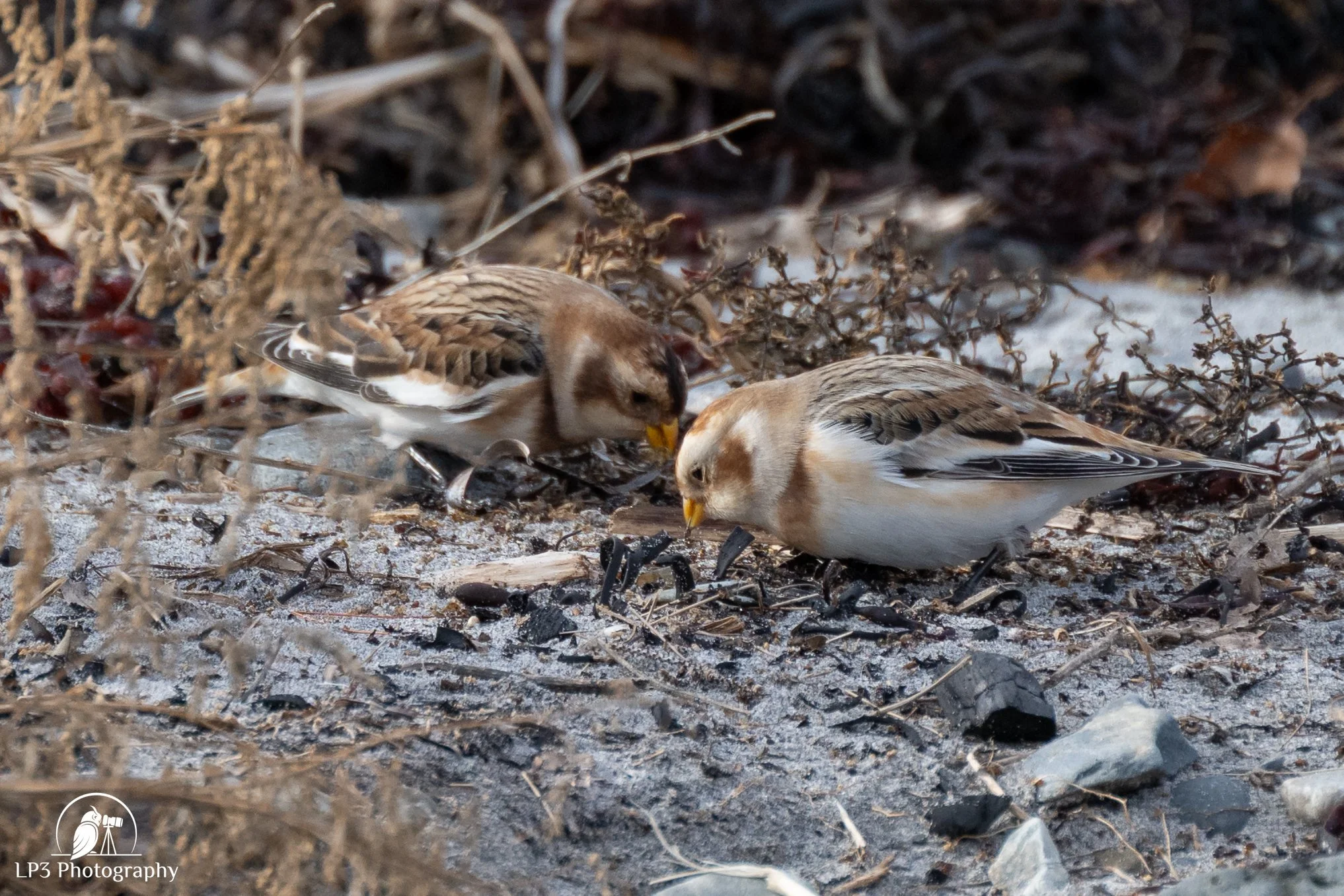
About a dozen Snow Buntings were working the wrack line, joined by two Horned Larks. We spent quite a bit of time watching these charming Arctic breeders as they foraged along the beach — observing that they resemble toasted marshmallows and listening to their soft, rambling calls. The birds were fairly tame, and a couple of birders were able to approach within 12-15 feet without disturbing them — perfect for photos and prolonged observation.
Lots more (19) Red-breasted Mergansers were actively fishing near the rocks, putting on quite a show. The gull congregation included 2 Great Black-backed, 2 Herring, and 20 Ring-billed. We added 2 more Common Loons and another Red-throated Loon, along with a Horned Grebe, 8 Canada Geese, and 3 Turkey Vultures to round out our morning.
We tallied 29 species across three Kittery locations. While we dipped on a few targets, we still had a great morning birding together.
You can see our eBird checklist here: https://ebird.org/tripreport/435188.
Stay tuned for our December trip announcement. Until then… happy birding!