by Laurie Pocher
A Trip Report from the MYBC Coordinators
January 18-24, 2026
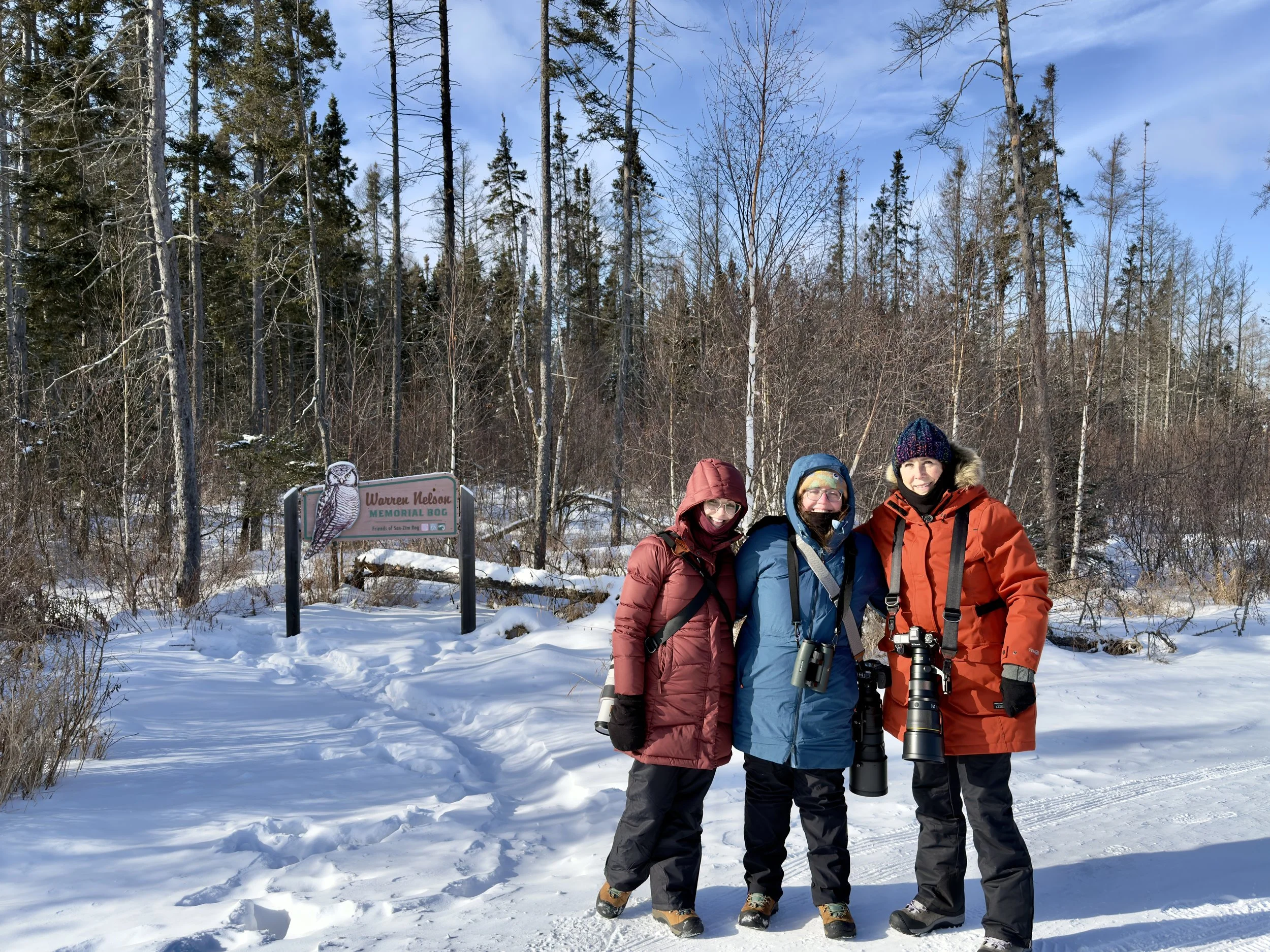
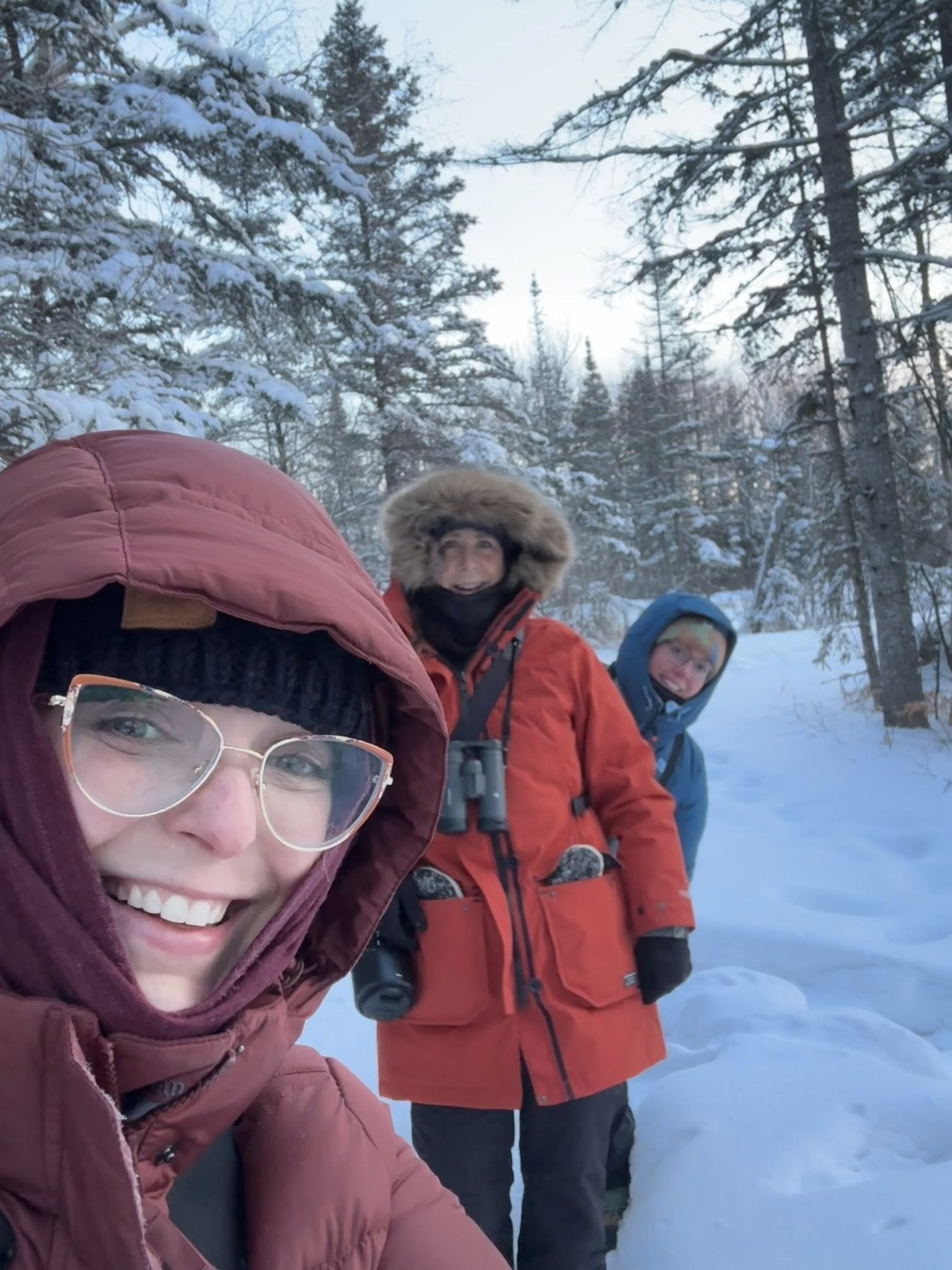
What do Maine Young Birders Club coordinators do on vacation? Bird, of course! Last year we headed to Florida to bird the Space Coast in the heat and humidity of the Sunshine State. This year we decided to try the opposite extreme: northern Minnesota in January, where the challenge wasn’t staying cool but staying warm. The three of us headed north for a week of sub-zero temperatures and truly memorable winter birding. Based in Duluth, we spent our days exploring the legendary Sax-Zim Bog, where extreme cold tested both our gear and our determination.
About Sax-Zim Bog
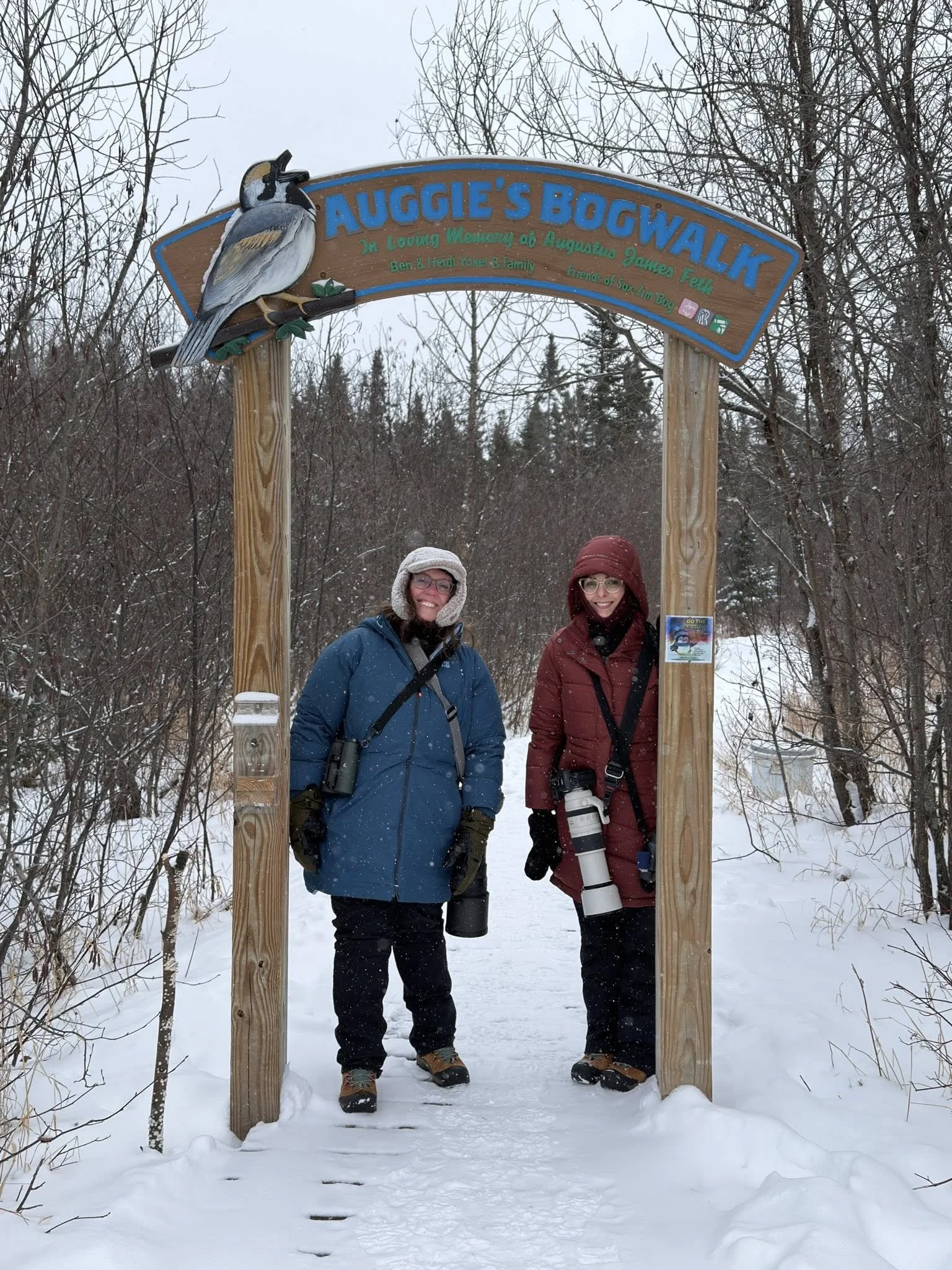
Sax-Zim Bog is a vast 300-square-mile peatland ecosystem in St. Louis County, Minnesota, renowned as one of North America’s premier winter birding destinations. This boreal habitat features a mosaic of black spruce bogs, tamarack swamps, and mixed coniferous-deciduous forests that attract an extraordinary concentration of northern specialties during winter months. The bog’s network of rural roads, well-maintained trails and boardwalks, and feeding stations make it accessible to birders seeking species rarely found elsewhere in the Lower 48.
A highlight of any visit is the Friends of Sax-Zim Bog Visitor Center. The Center became our refuge from the extreme cold—a place to warm up our frozen fingers and toes while chatting with the wonderful and knowledgeable staff. Sparky, the FOSZB Director, interviewed Brit for his YouTube channel, sharing our Maine birding experiences and our reactions to the Minnesota winter spectacle.
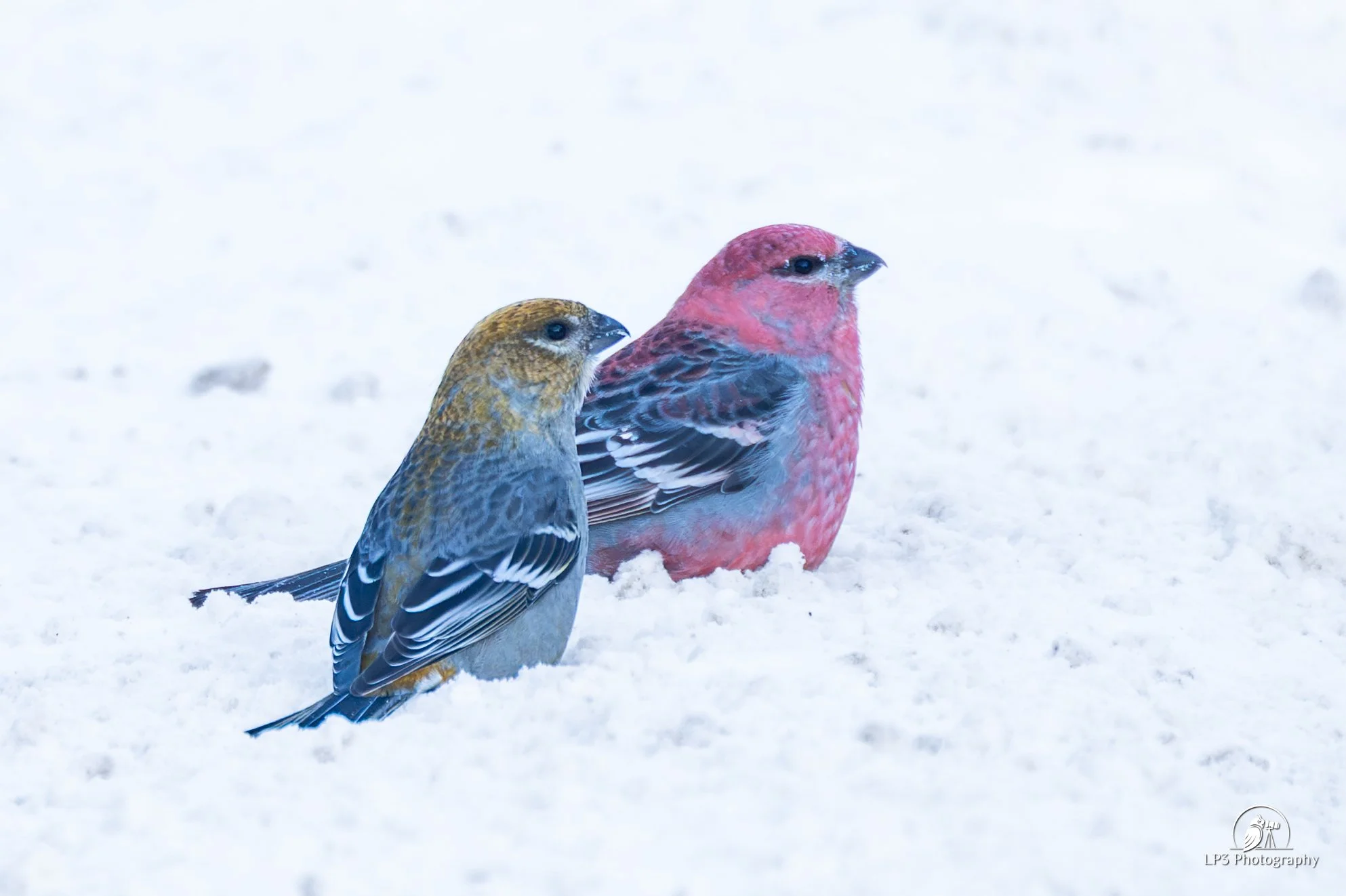
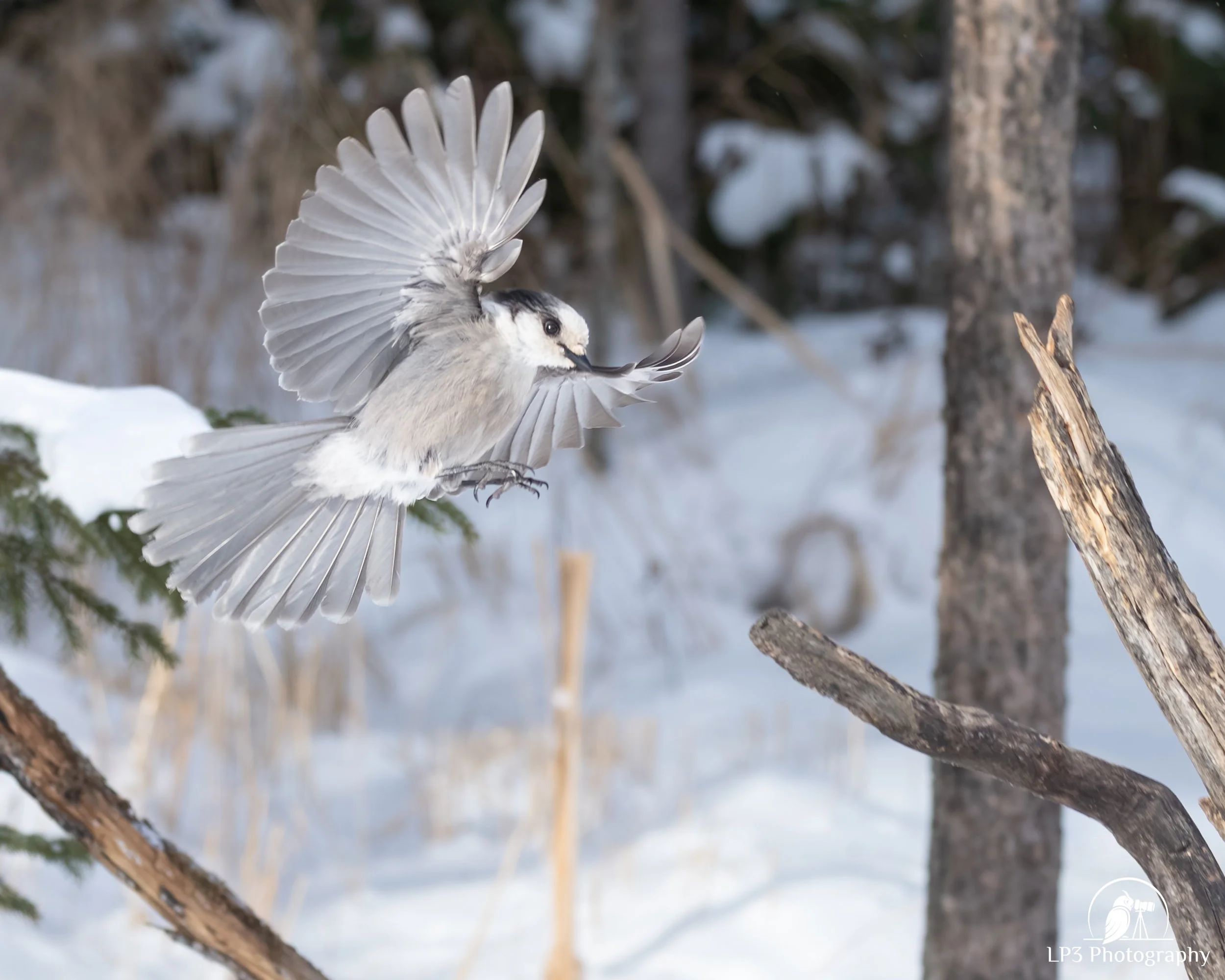
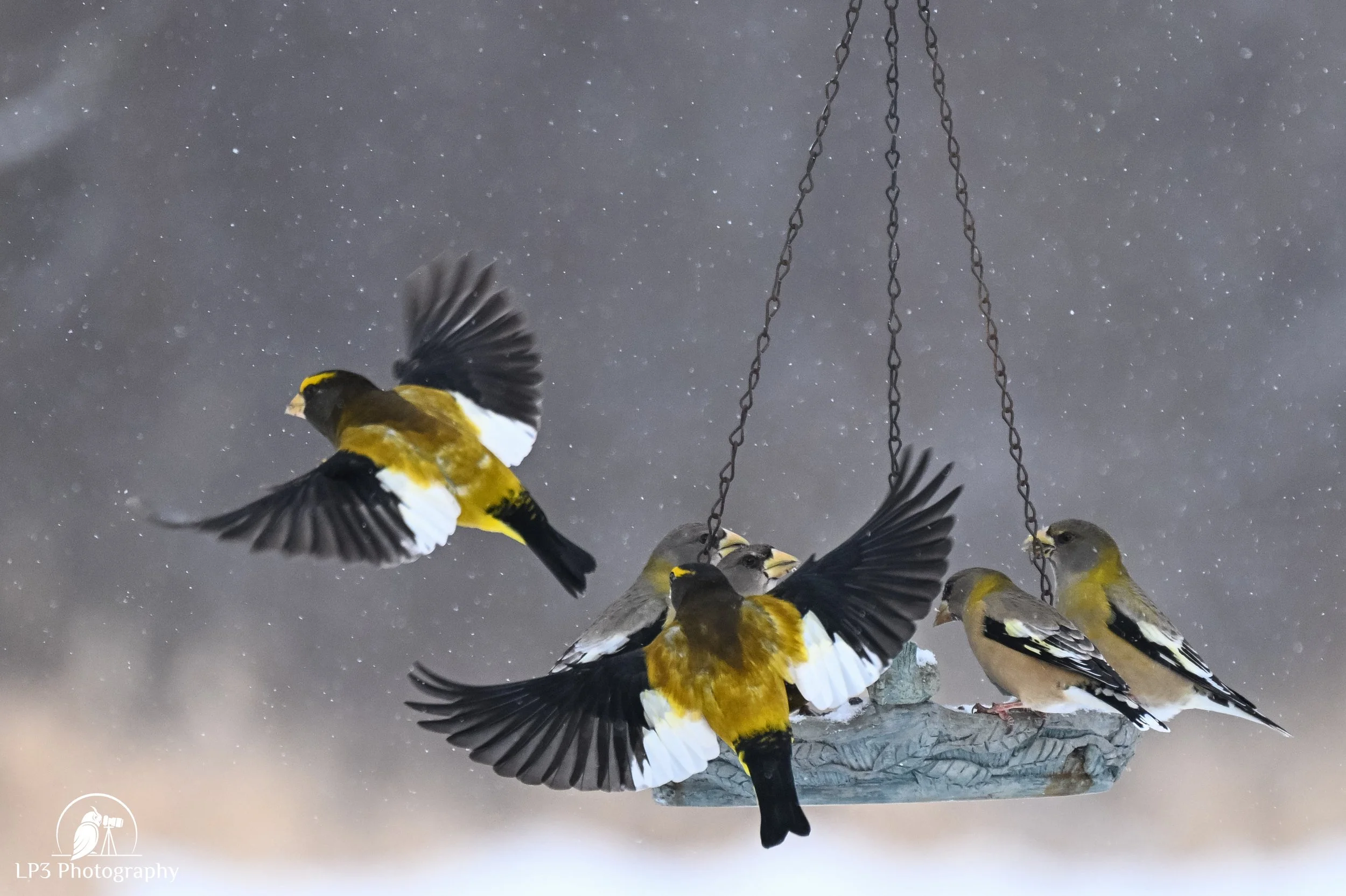
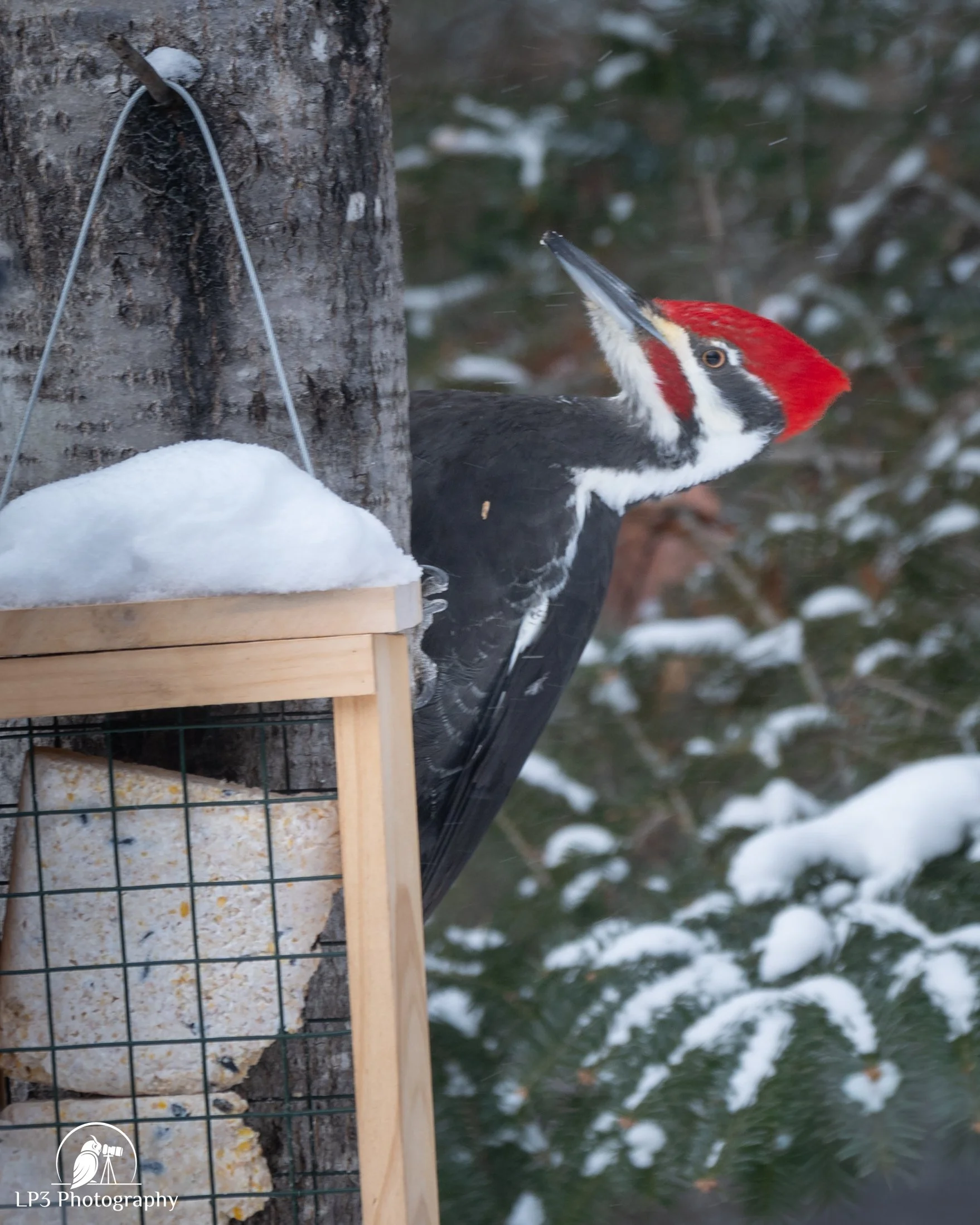
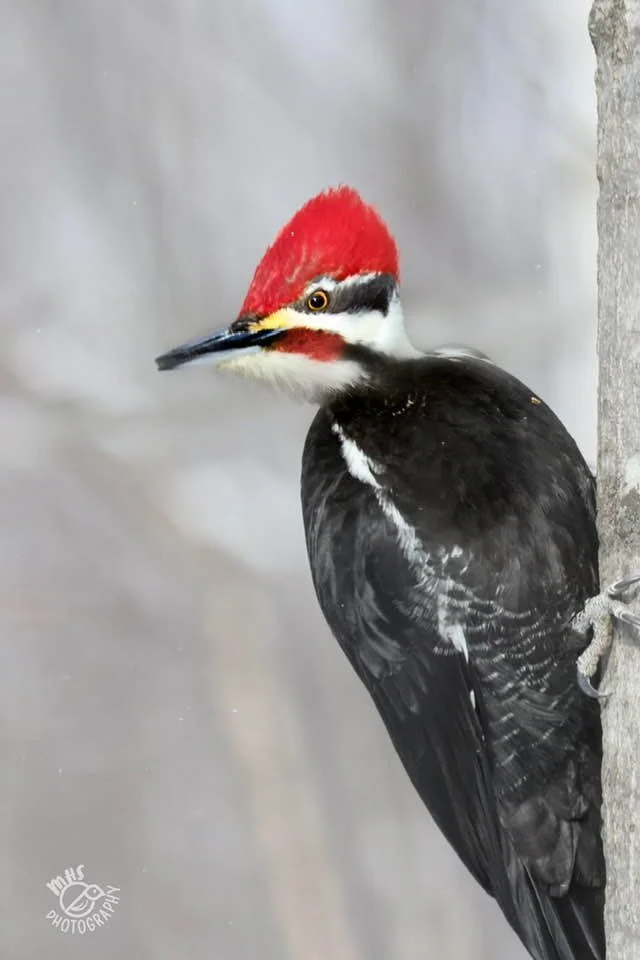
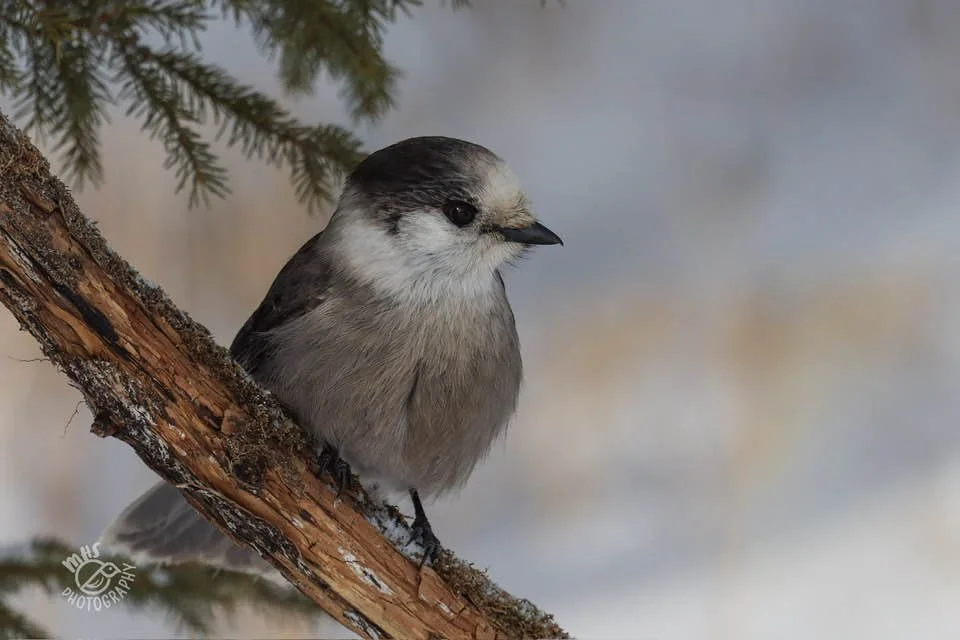
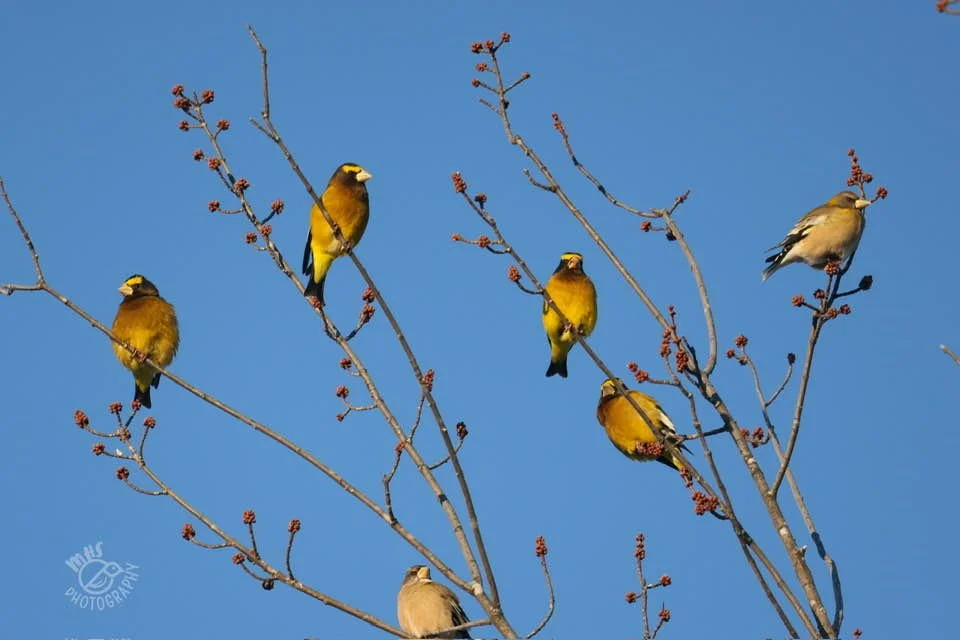
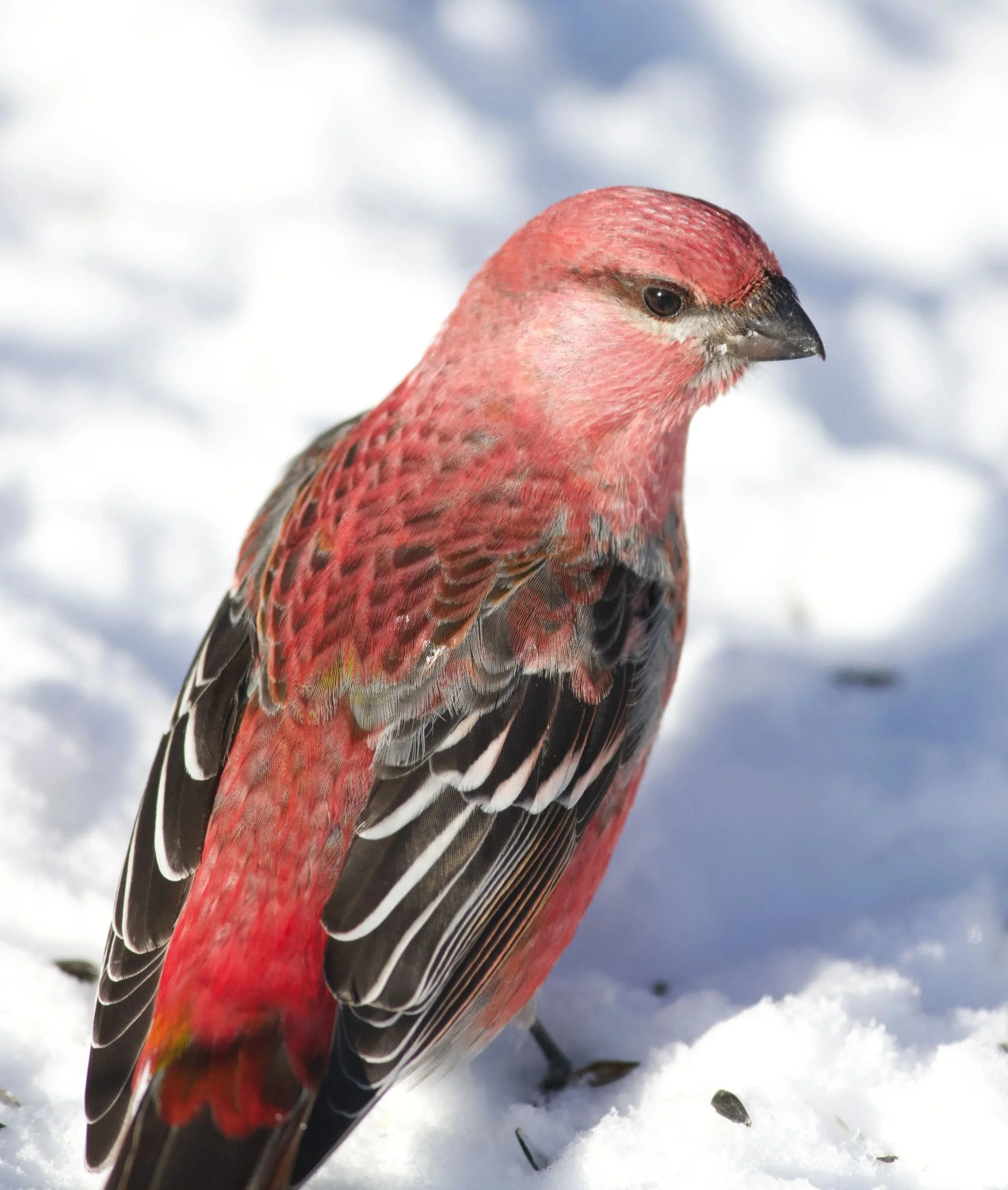
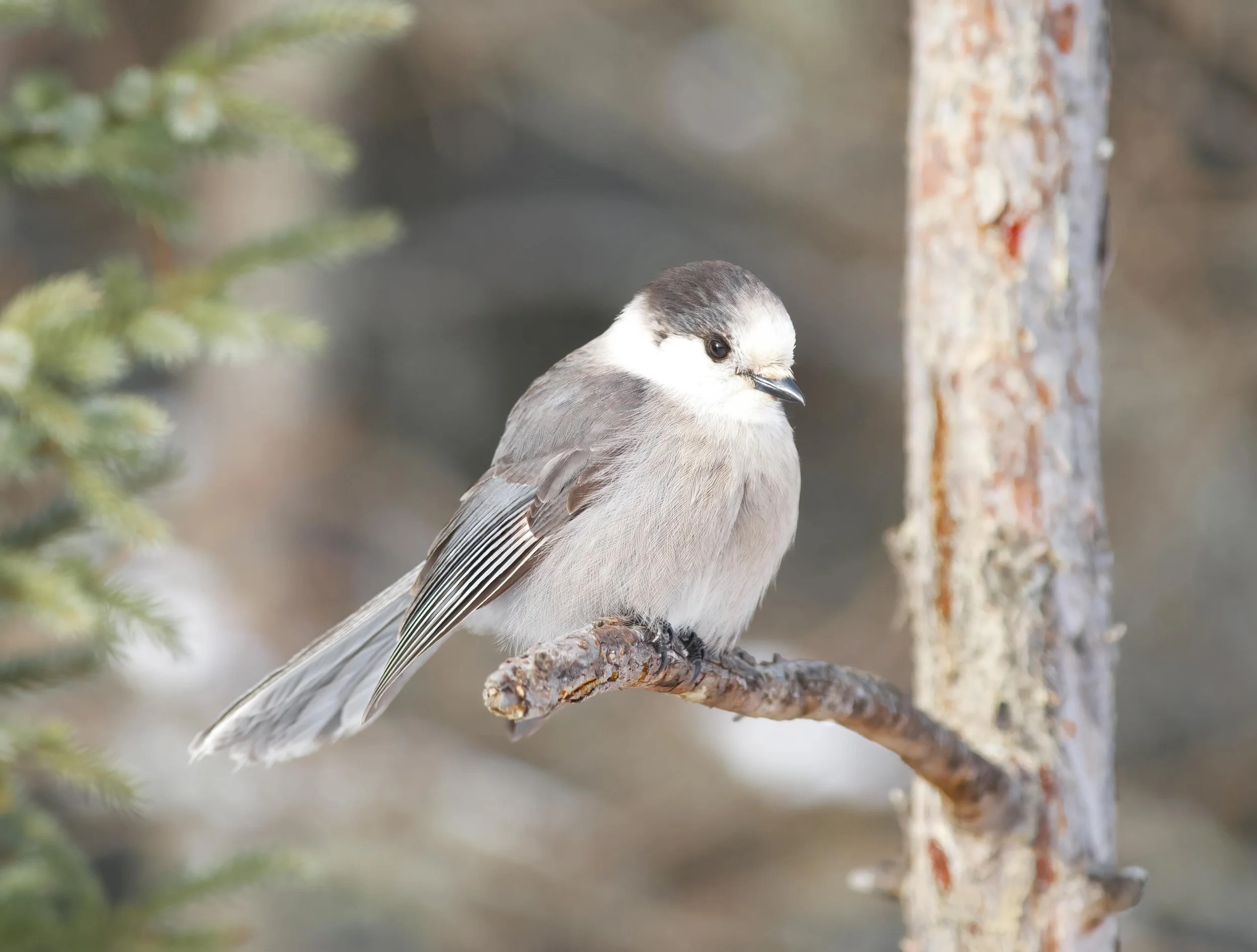
Friends of Sax-Zim Bog is a non-profit dedicated to the conservation, restoration, and understanding of this unique ecosystem through education, research, and sustainable recreation. We were happy to support their important work by purchasing hats, tote bags, sweatshirts, magnets, and stickers—both as mementos of our trip and as a way to contribute to the bog’s conservation. The feeders at the visitor center drew in Canada Jays, Evening and Pine Grosbeaks, Pileated Woodpecker, and the ever-present Black-capped Chickadees.
The Weather: A Test of Endurance
We will remember this trip as much for its extreme cold as for its birds. Living in Maine, we thought we could handle Minnesota cold—this week knocked us down a few pegs. Temperatures ranged from a ‘balmy’ 12°F on Wednesday to a bone-chilling -26°F (feeling like -40°F) on Friday morning, with Extreme Cold Warnings in effect for most of the week. At one point we noted it was literally 100 degrees warmer inside our heated vehicle (68°F) than the outside air (-32°F). Friday morning our rental car refused to start at our Airbnb—after AAA jump-started the battery, we kept the engine running until lunch, a sobering reminder of the genuine dangers of northern Minnesota winters.
Layering Up: Winter Birding Gear
Preparation was everything. We bundled in multiple wool layers, deployed hand and toe warmers liberally, and relied on heated gloves and vests to maintain dexterity and core warmth. It was so cold the windows didn’t steam—instead, frost formed on the inside of the glass, forcing us to buy an ice scraper so the back seat passengers could see out. We walked on most days, braving the boardwalks and trails for 10-45 minutes at a time when we could manage it. Friday—the day our car wouldn’t start—was the only day we stayed vehicle-bound, birding from the car and stepping out only briefly for an occasional photo. The car became both our warming station and our observation blind, though we tried to get out and stretch our legs whenever the combination of temperature and wind allowed.
The Birding: Northern Treasures
Despite—or perhaps because of—the extreme cold, the birding was productive. We tallied 26 species, a respectable total given the limited diversity of Minnesota’s winter avifauna.
Sunday, January 18 marked our arrival day. During our drive from the airport to our Airbnb, we saw a Red-tailed Hawk near Saint Paul, a Rough-legged Hawk hunting along I-35 north of Columbus, followed by a Bald Eagle near Barnum. Near Cloquet, we spotted a flock of 30 Snow Buntings in an agricultural field visible from the highway—a welcome bonus species. Rock Pigeons near Duluth rounded out our arrival day sightings. By 9pm that first night in Duluth, temperatures had already dropped to -1°F (feeling like -23°F) with a Severe Weather Advisory in effect.
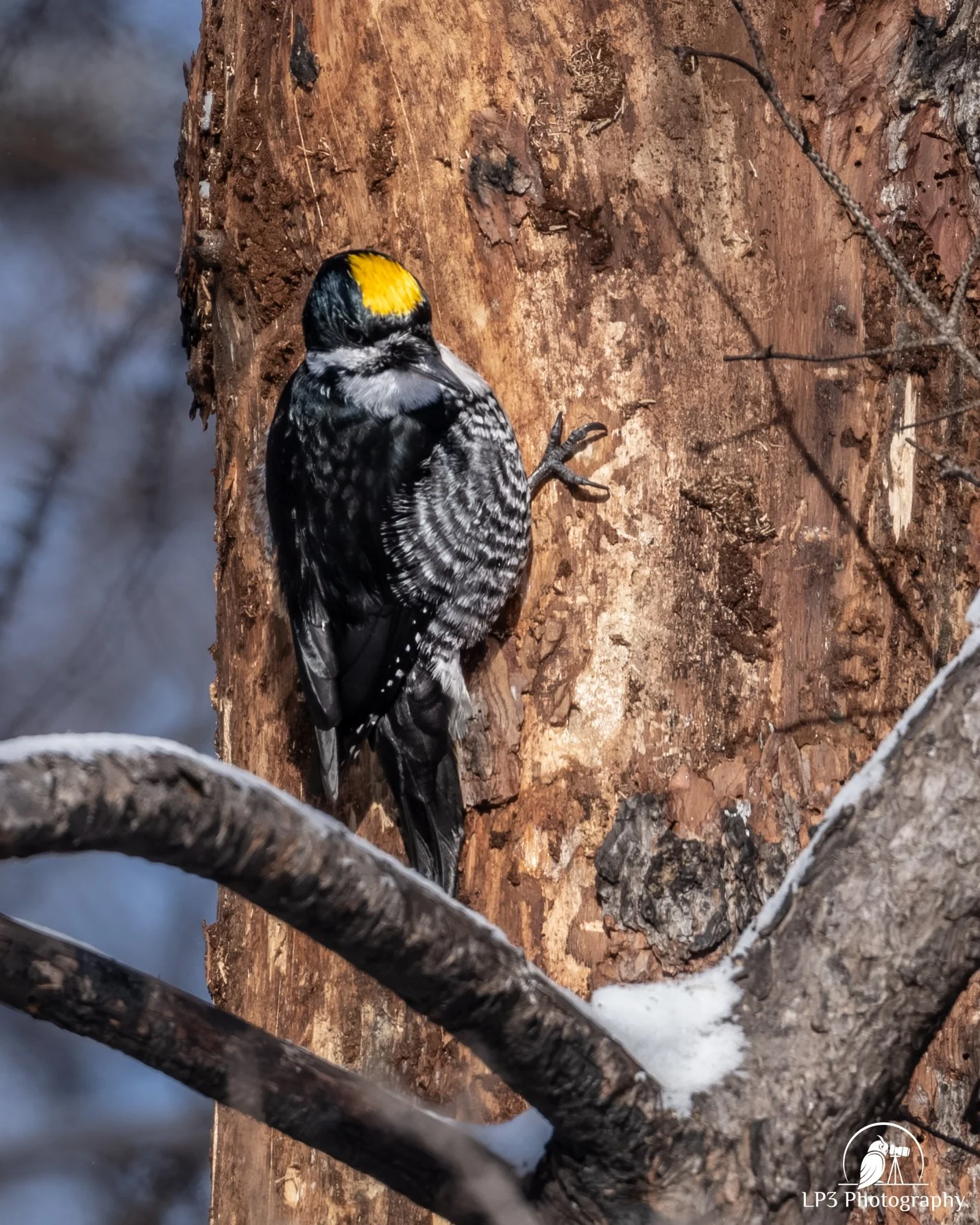
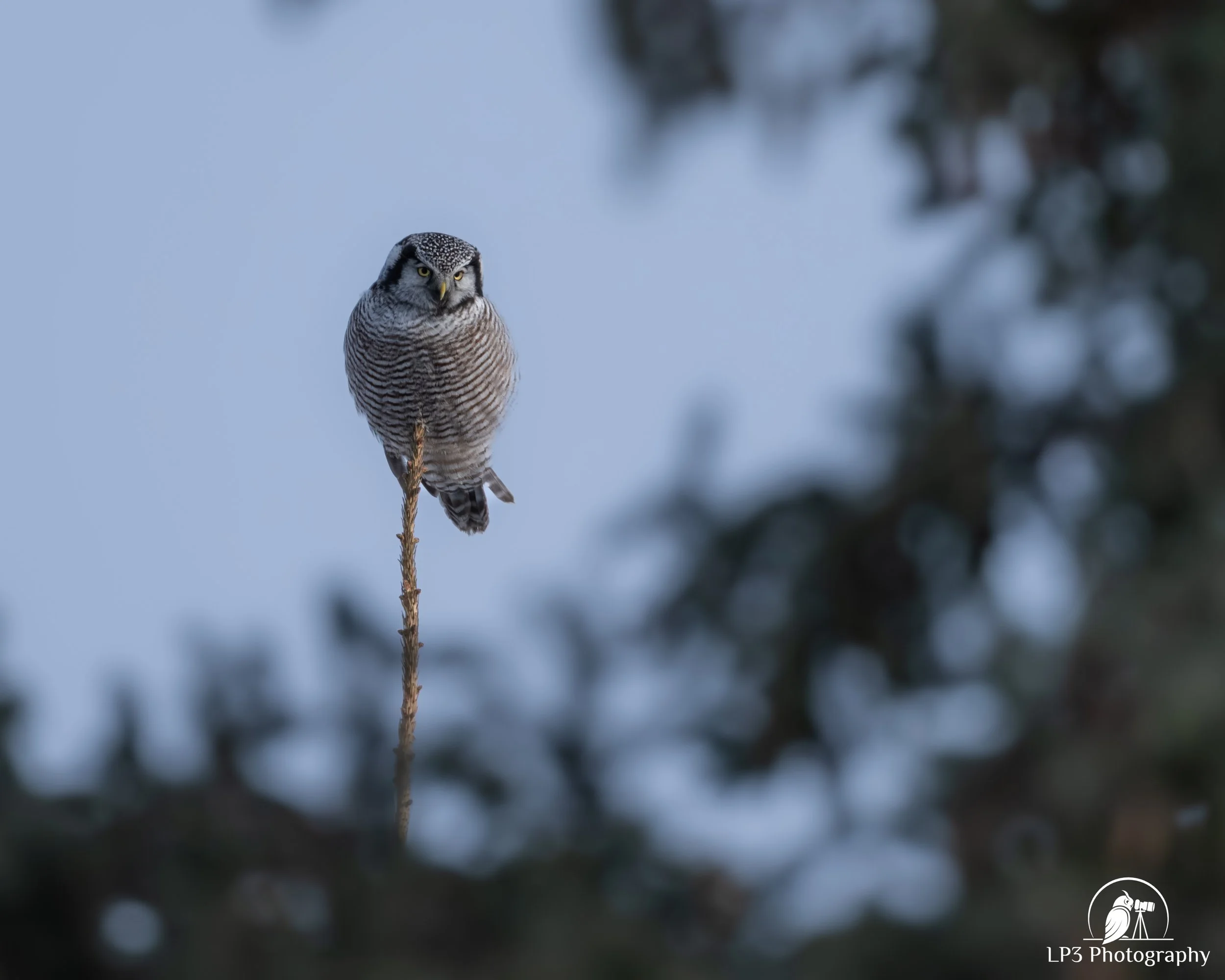
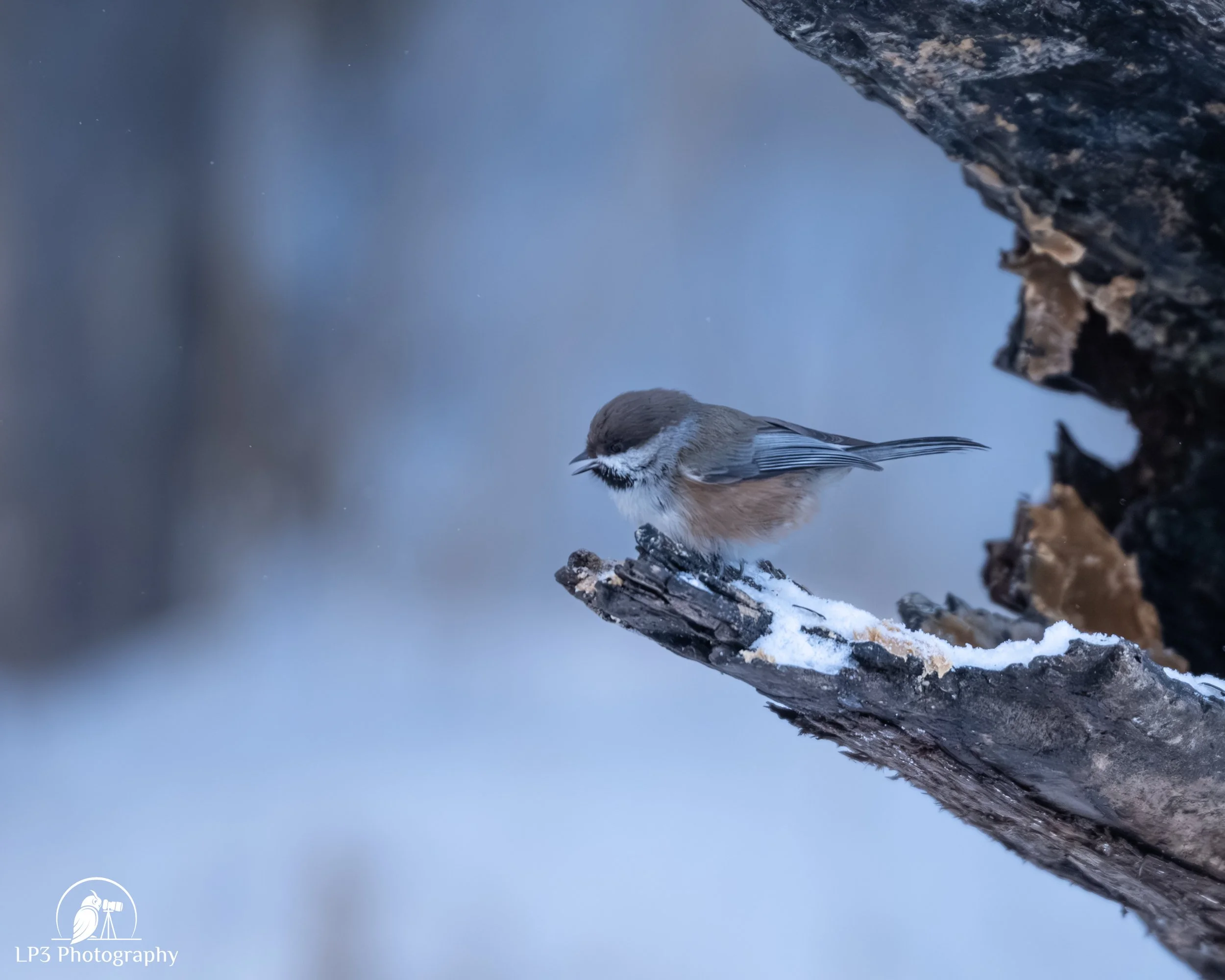
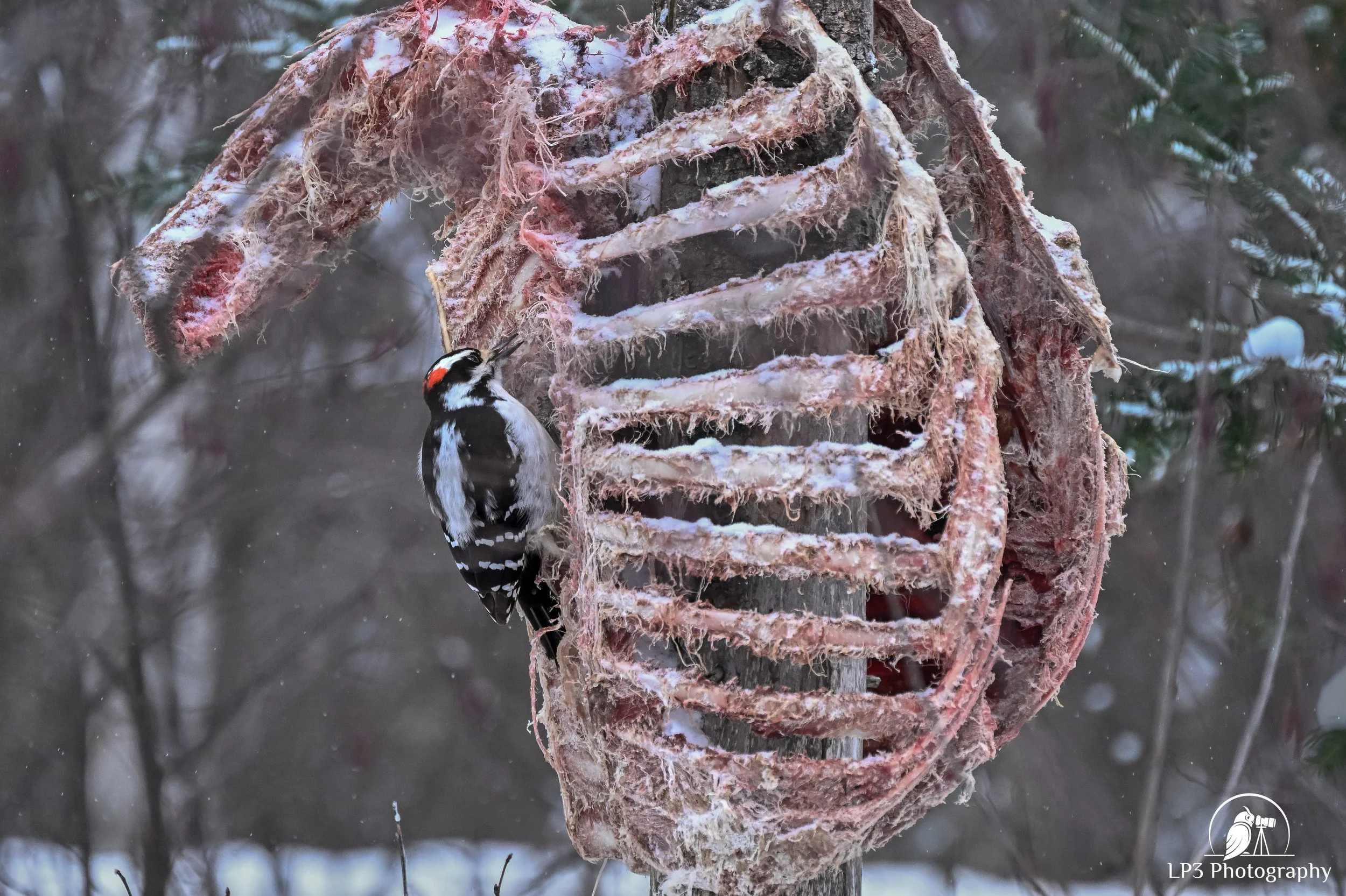
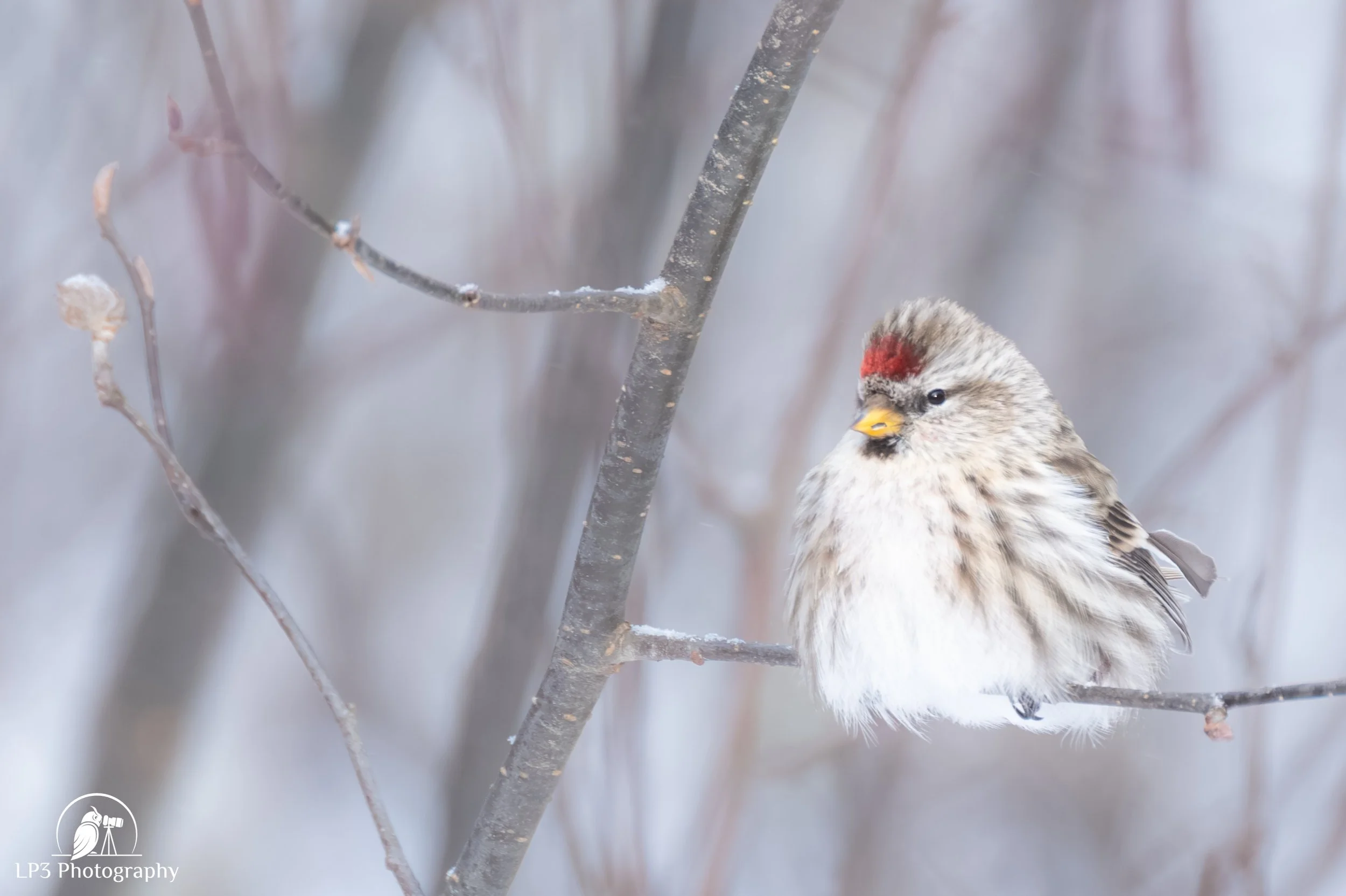
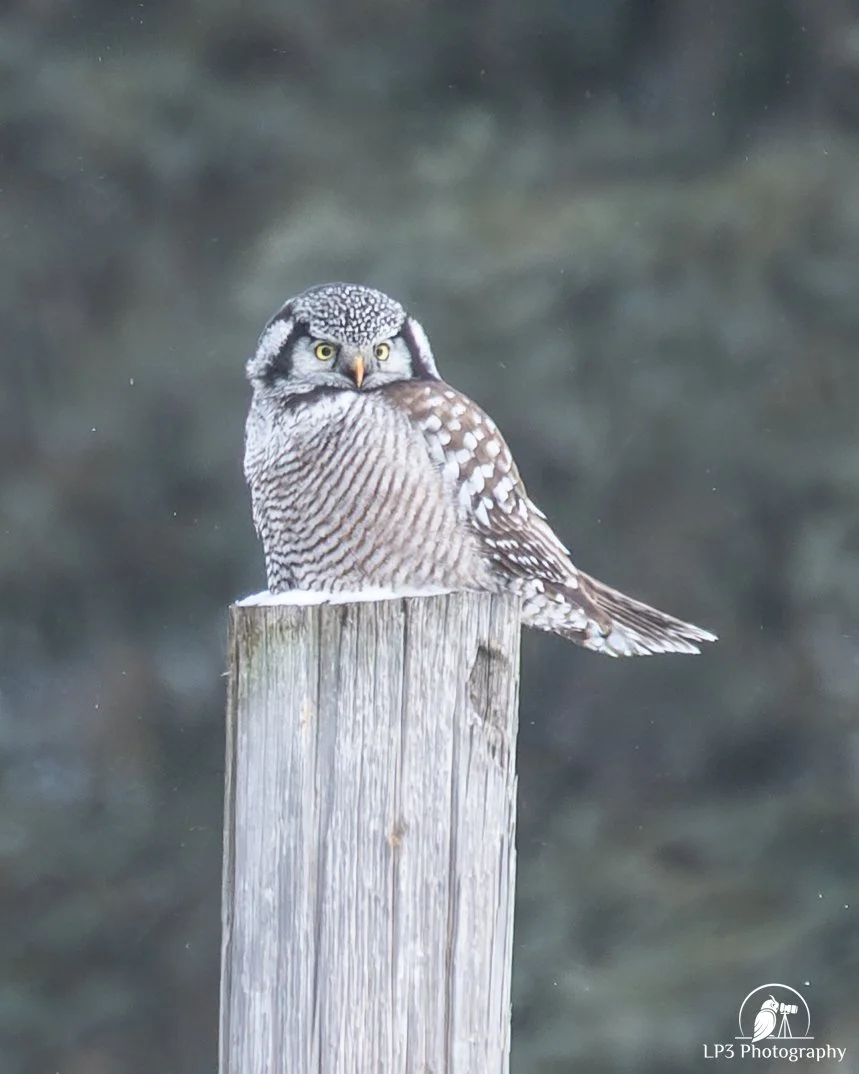
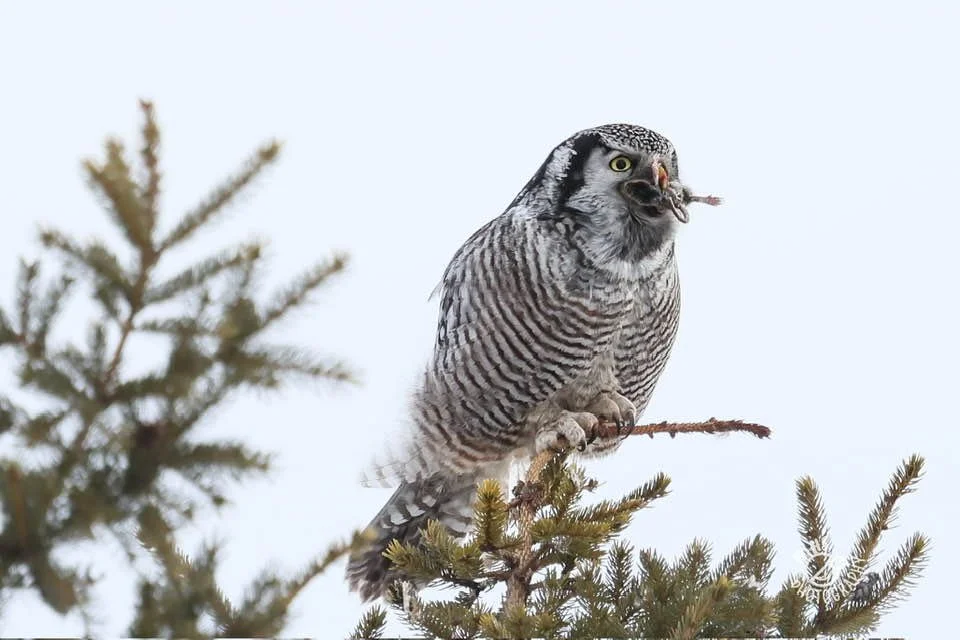
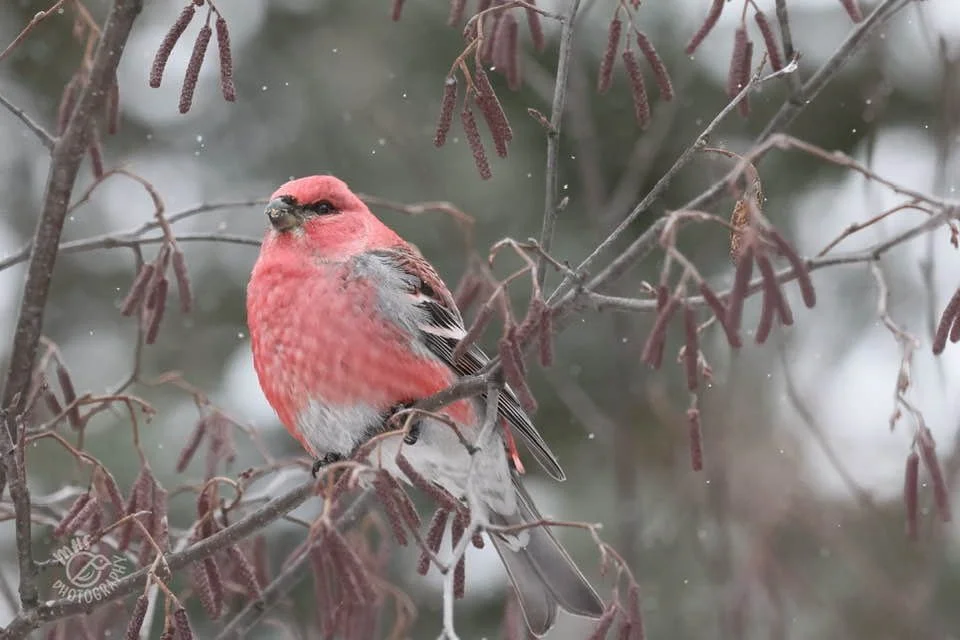
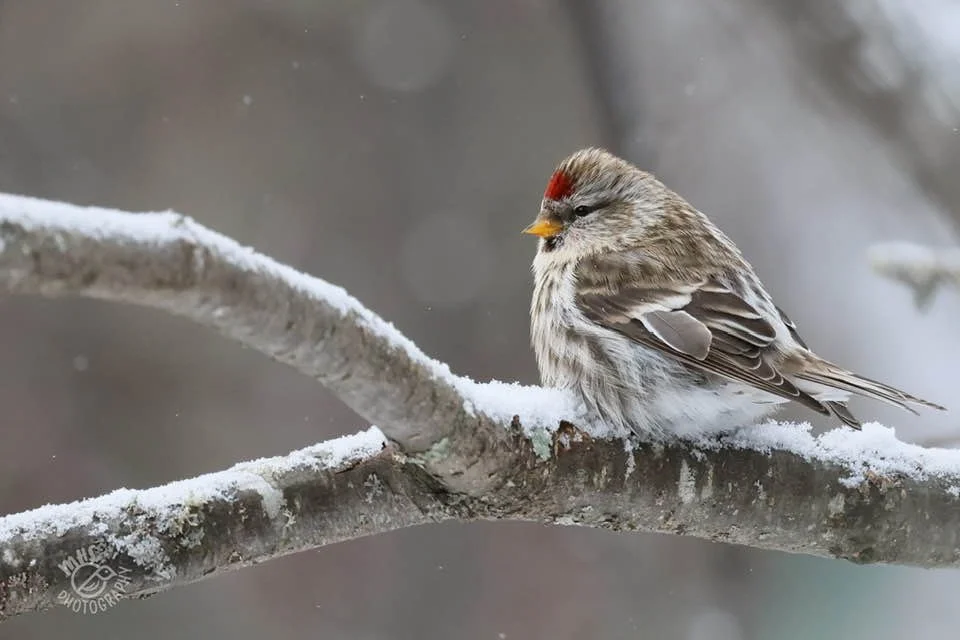
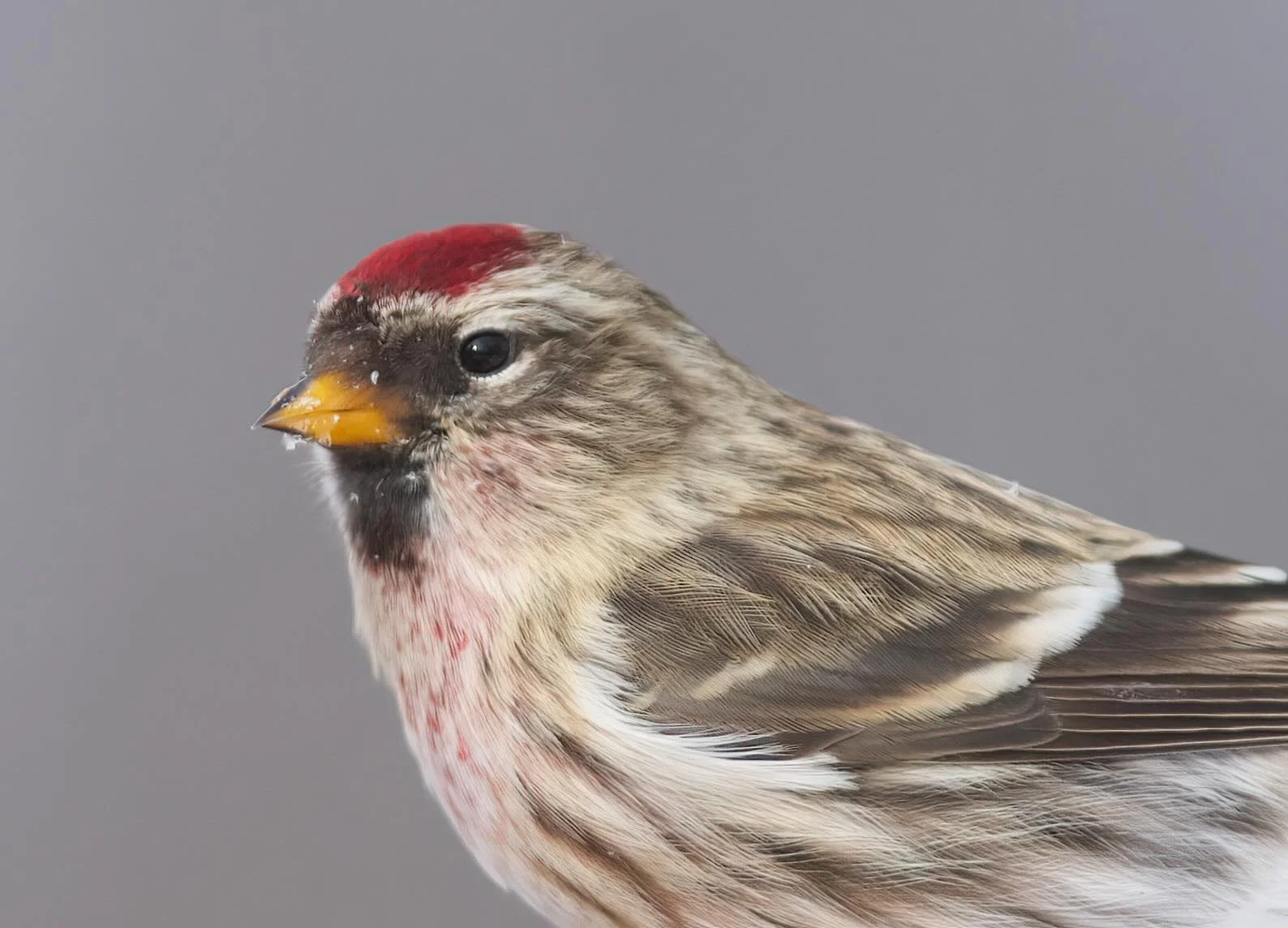
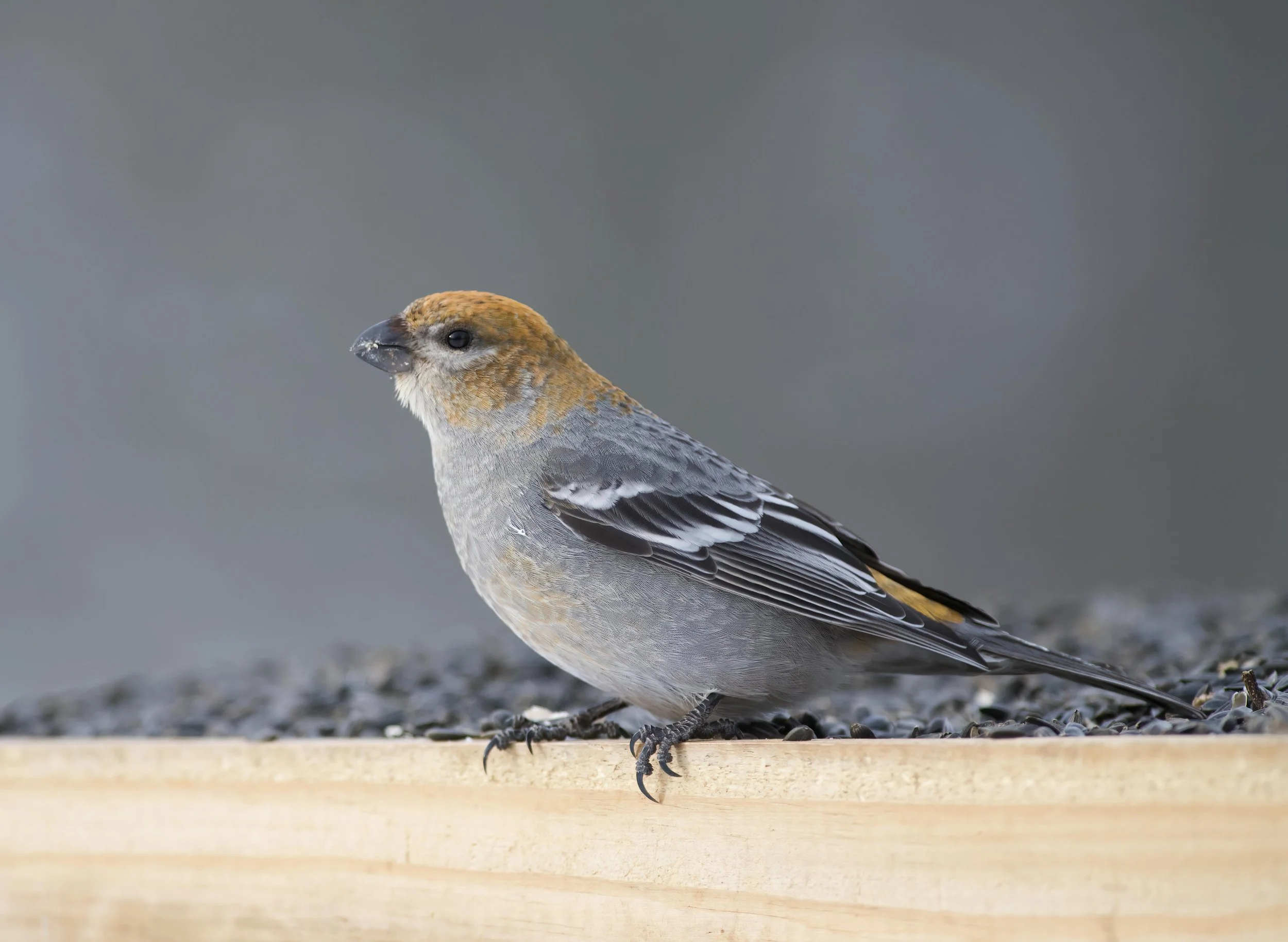
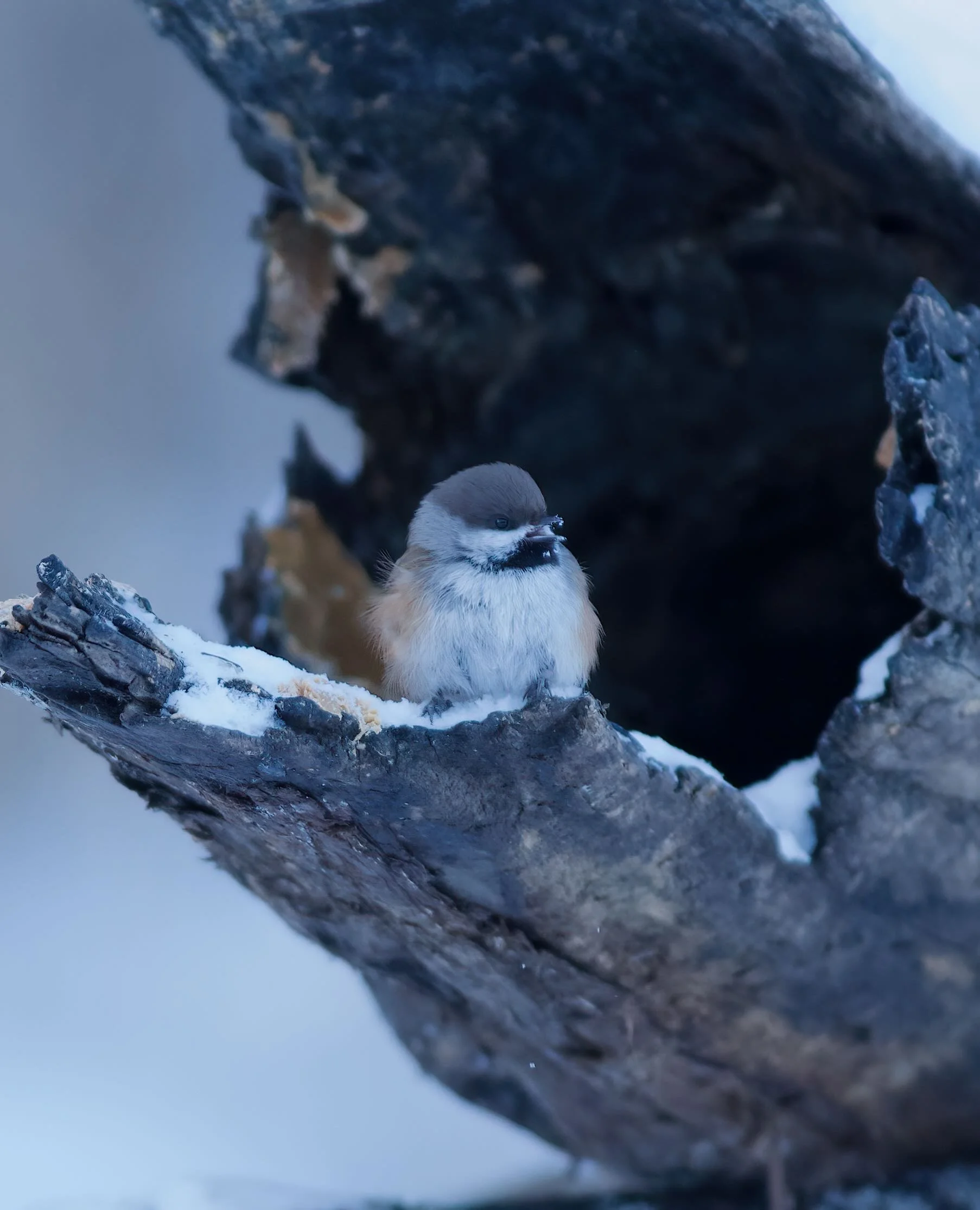
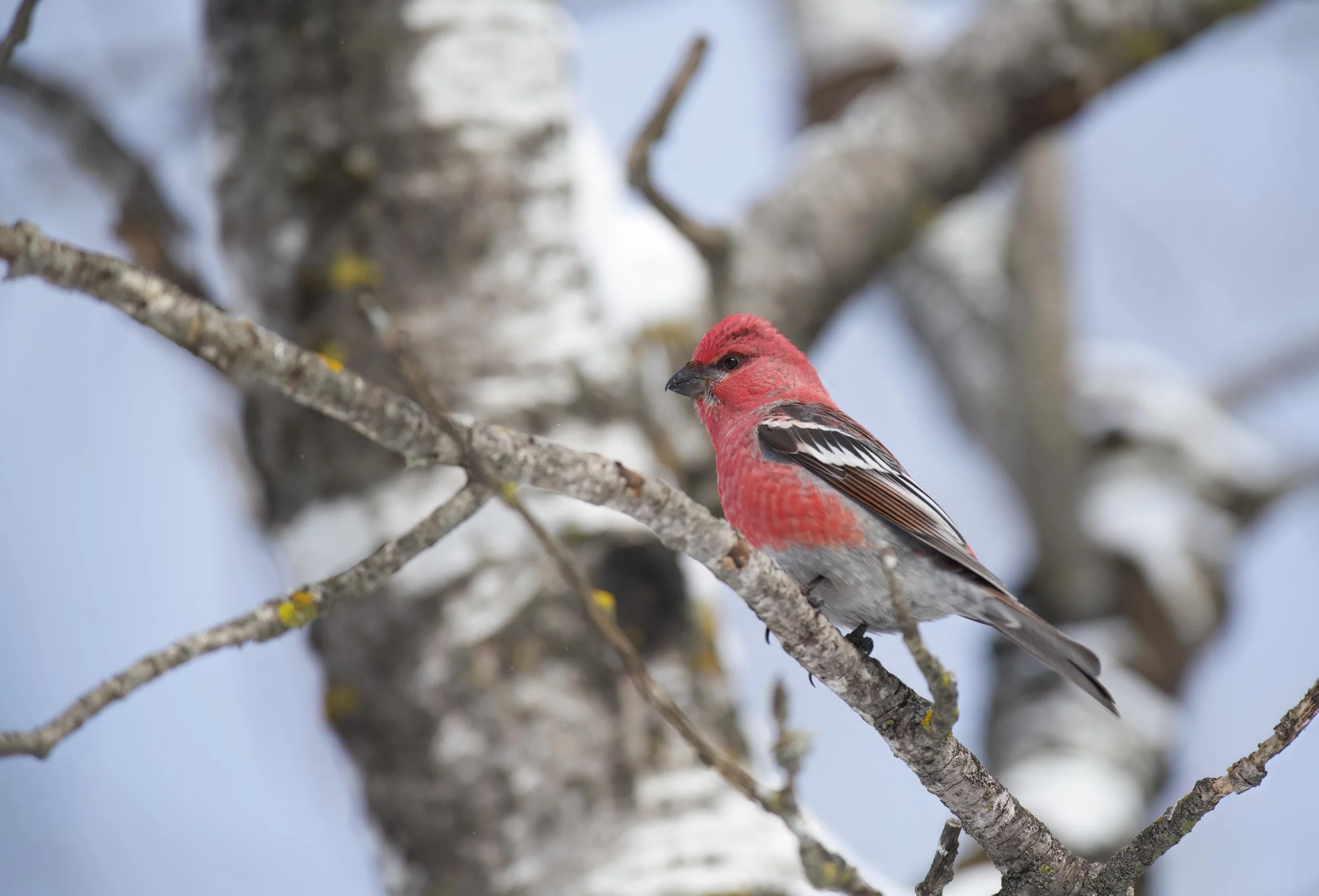
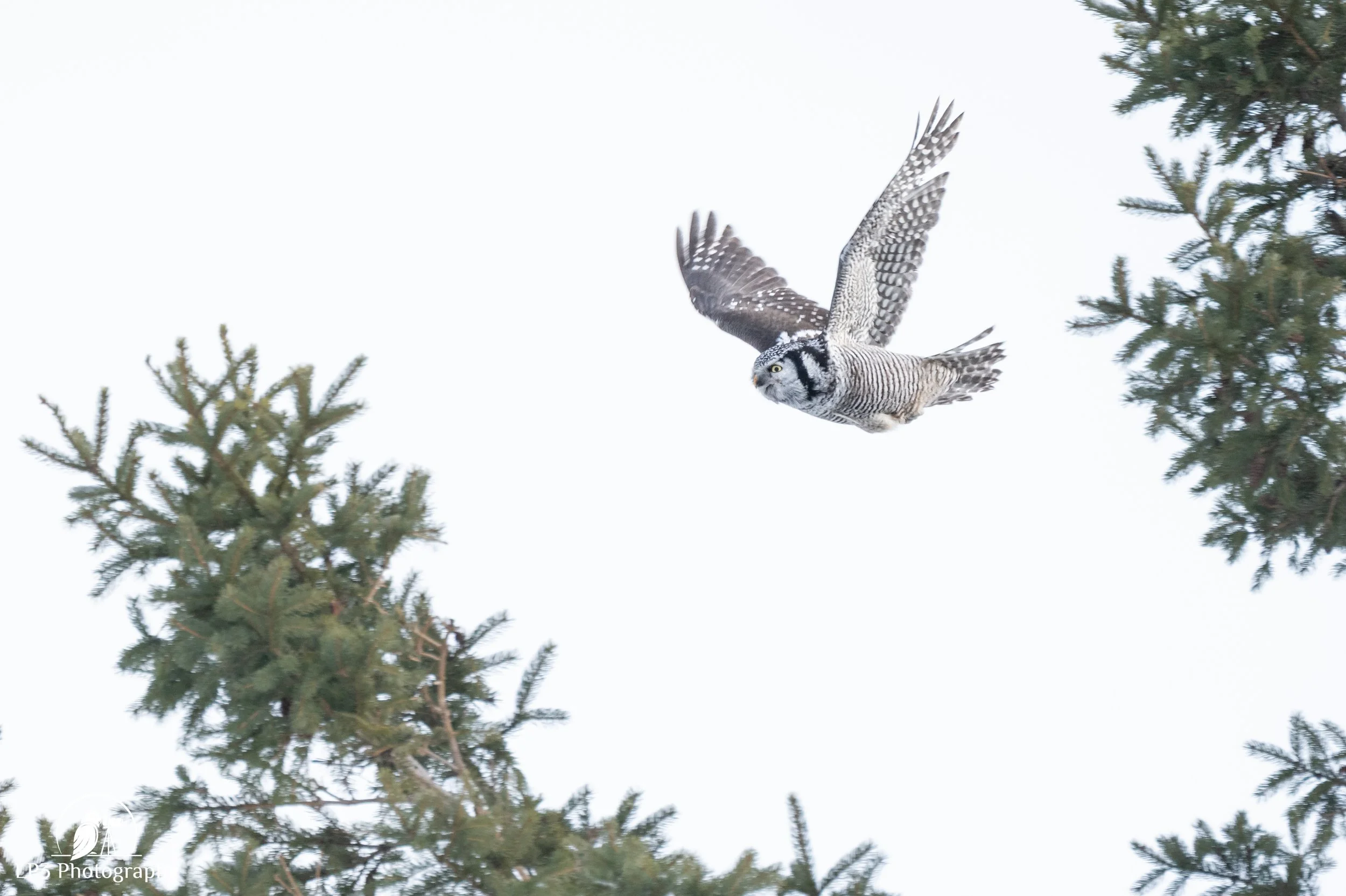
Monday, January 19 brought our first major target birds. We spotted Pine Grosbeaks feeding along the roadside on our way to the Brimson Burn area, where we found two Black-backed Woodpeckers. Later, we located a Northern Hawk Owl at its well-established hunting territory near Meadowlands on CR-47—a bird that would prove faithful to this same spot throughout the week. At Warren Nelson Memorial Bog, the end of the boardwalk yielded both Downy and Hairy Woodpeckers, Blue Jays, Black-capped Chickadees, and a pair of Redpolls. The day’s highlight came at Admiral Road feeding station, where a half-hour visit produced our first Canada Jay and, thrillingly, a Boreal Chickadee—one of our primary target species.
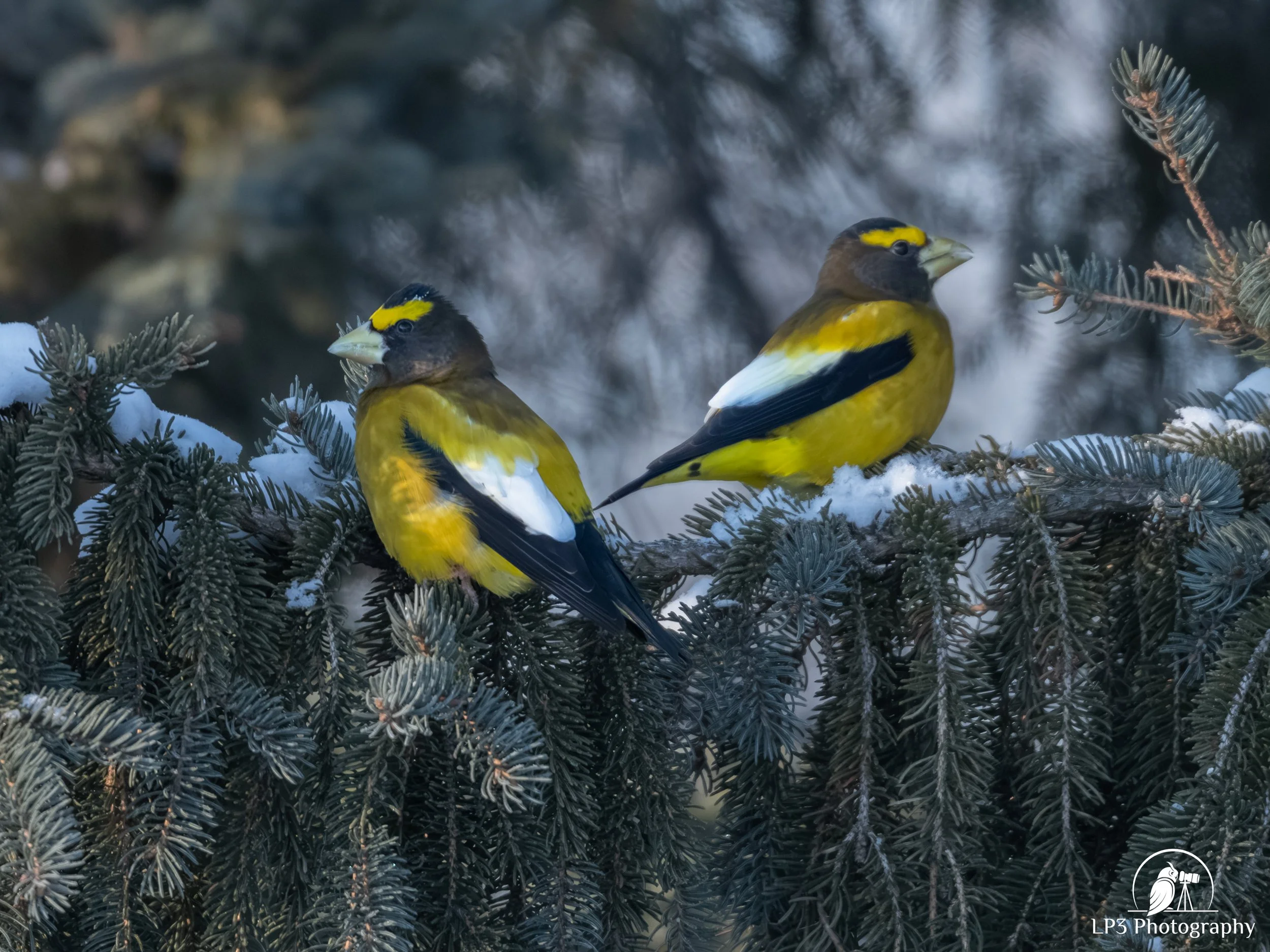
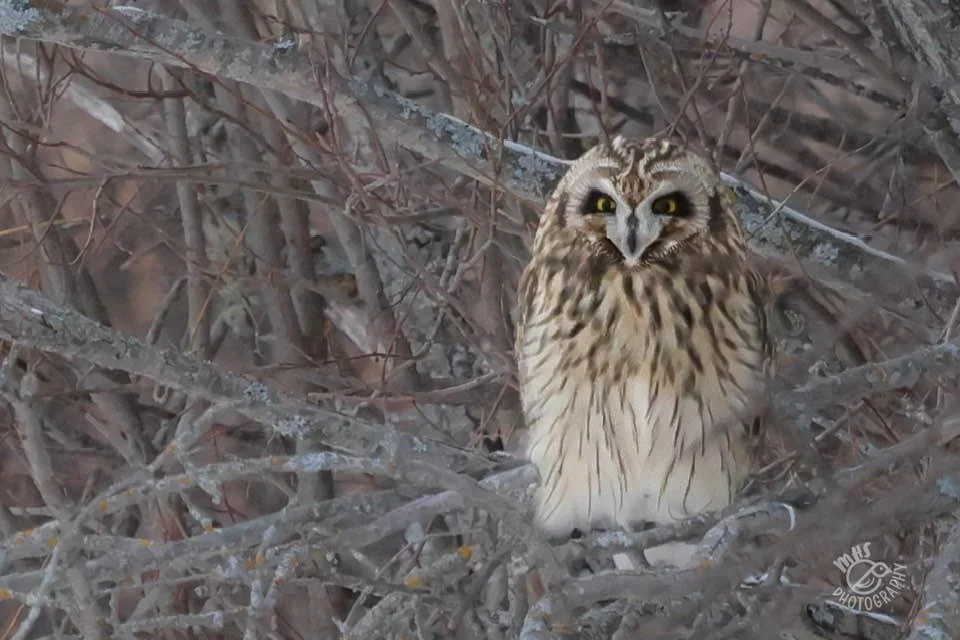
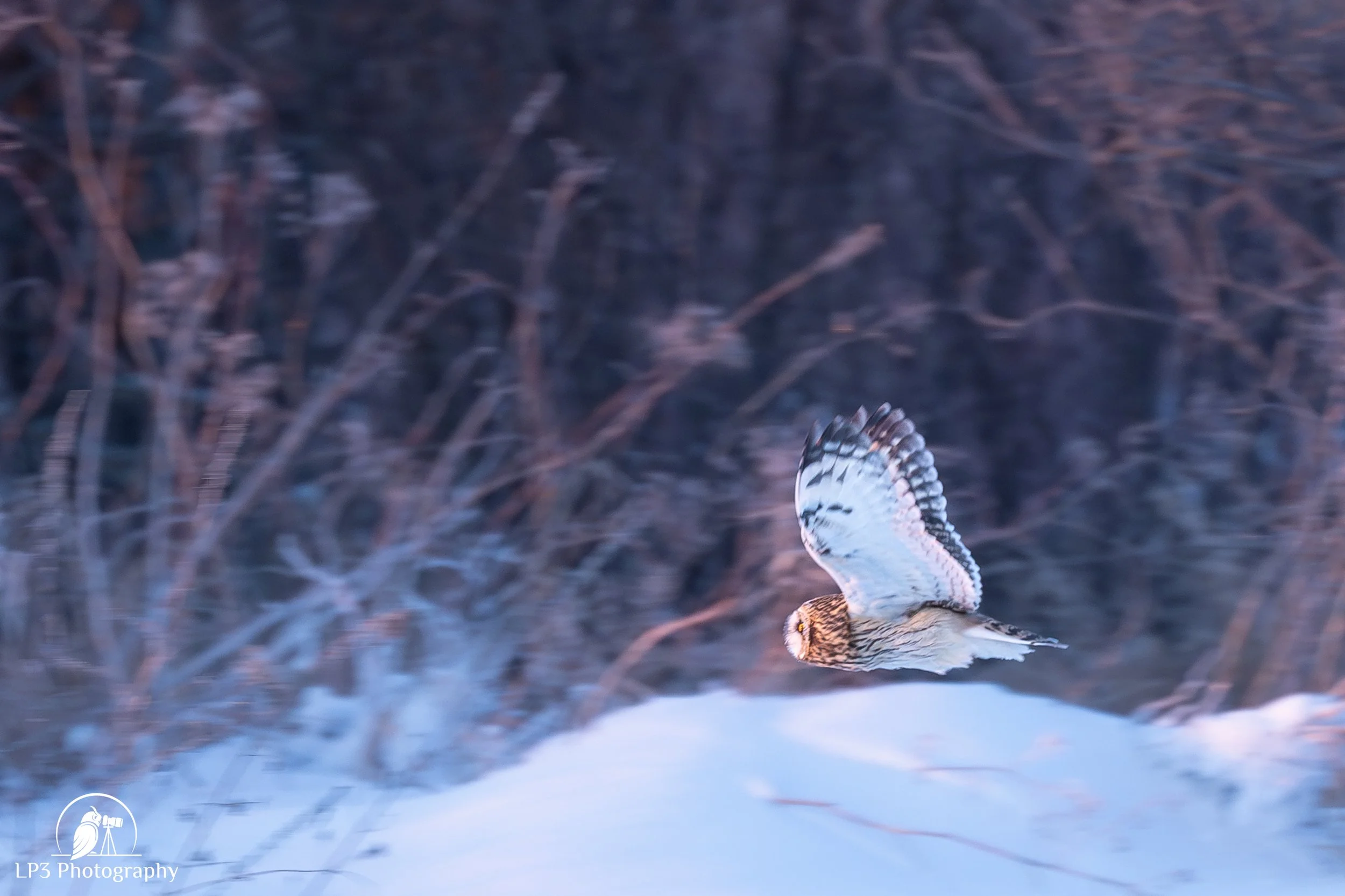
Tuesday, January 20 was our most productive day. We started before dawn in brutal -16°F temperatures (feeling like -21°F) and found a Short-eared Owl perched along Sax Road near Cotton—a rare sighting for the bog. We returned at lunchtime and at sunset to see it twice more, though it would prove to be a one-day wonder that was not reported again that week. At Mary Lou’s Feeding Station, we spent an hour watching an incredible assemblage of winter finches: 60 Evening Grosbeaks and 5 Pine Grosbeaks dominated the feeders, joined by Downy and Hairy Woodpeckers, Black-Capped Chickadees, White-Breasted Nuthatches, Blue Jays, and even a European Starling.
Later stops at Admiral Road feeding station and Winterberry Bog added more close looks at Canada Jays and winter finches. We checked on the Northern Hawk Owl at its usual territory on CR-47, spending a half hour with this bird. The day concluded with two Ruffed Grouse encounters near Forbes.
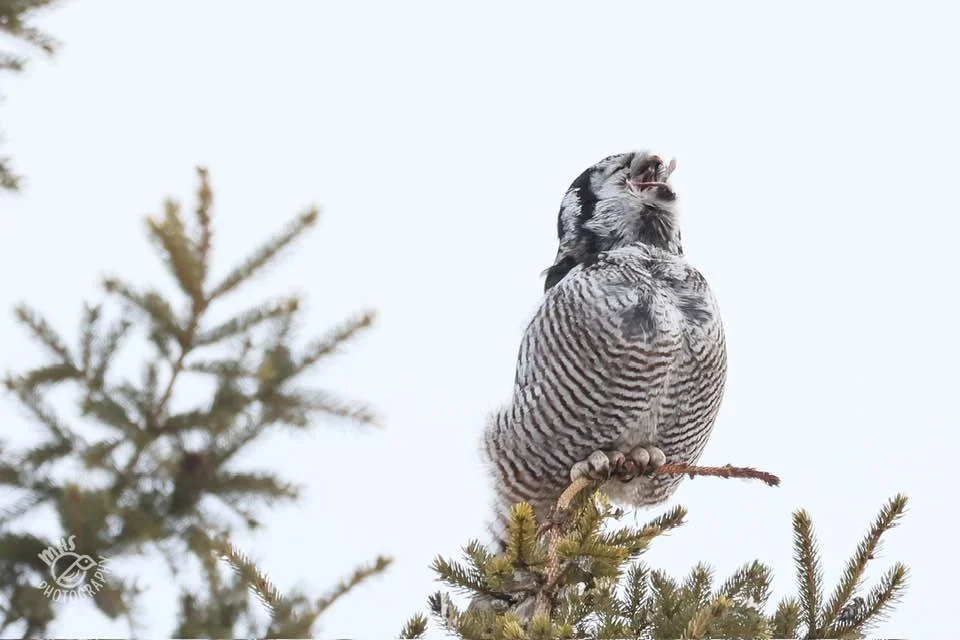
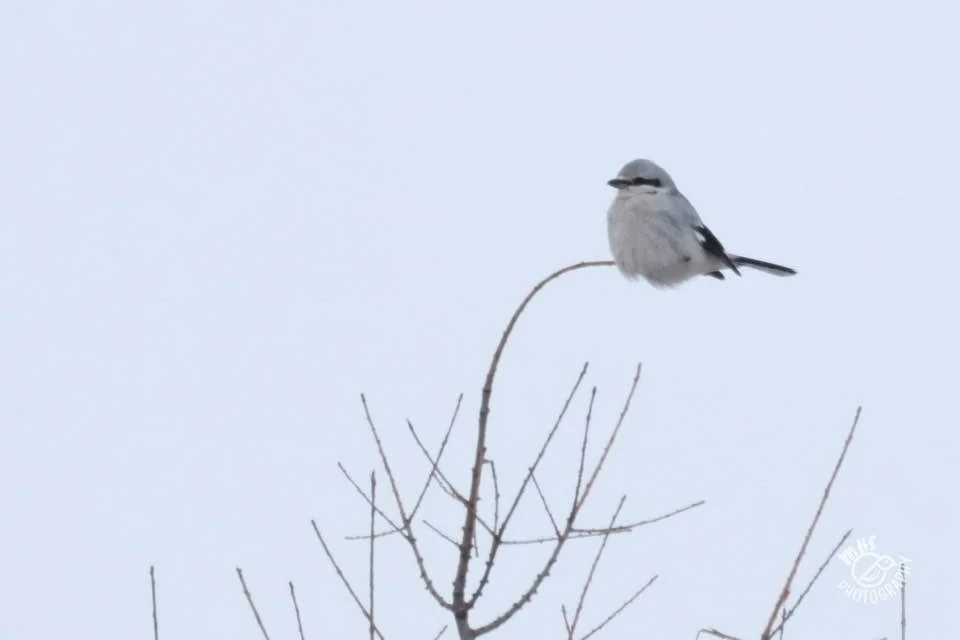
Wednesday, January 21 brought a welcome temperature increase to a ‘balmy’ 12°F in Cotton—warm enough that we could actually feel our faces again. Mary Lou’s feeding station once again produced Evening Grosbeaks, Pine Grosbeaks, and both Downy and Hairy Woodpeckers. At the Northern Hawk Owl’s usual spot, we were treated to an incredible show: the owl repositioned to a tree very close to the road, then swooped down to snatch a meadow vole from the roadside. We photographed and recorded video of it returning to the treetop, where it quickly devoured the vole. Later that afternoon while looking for Great Gray Owls, we added a Northern Shrike and Wild Turkey to our trip list. Rock Pigeons, typically considered mundane, seemed almost exotic in this frozen landscape.
Thursday, January 22 started with temperatures slightly more moderate around 1°F in Forbes. The Northern Hawk Owl remained faithful to its territory, and we added more observations of Pileated Woodpecker and Wild Turkey. We saw Redpolls again. A gorgeous red fox crossed the road in front of us during our travels—a stunning reminder that the bog’s wildlife extends well beyond birds. We had some intel for other potential Great Gray Owl sightings about an hour outside the bog, so we drove around scanning trees at dusk as the temperature started to plummet.
Friday, January 23 began with a dramatic wake-up call when our rental car refused to start in the extreme cold: -26°F in Duluth (feeling like -40°F). Fortunately, we discovered this at our Airbnb rather than stranded at a remote bog location. After AAA jump-started the battery, we made another attempt to find Great Gray Owl, and on our return to the bog stopped at Brimson Burn to visit with the pair of Black-backed Woodpeckers again. Our final rounds of the feeding stations produced the Boreal Chickadee once more at Admiral Road, a Northern Shrike at a different location, and one last look at the faithful Northern Hawk Owl at its established territory.
Saturday, January 24 was our departure day. As we drove back to the airport, we encountered another Rough-legged Hawk hunting along I-35 in roughly the same area where we’d seen our first one on arrival—a perfect bookend to the week. We spotted a House Sparrow en route, and a pair of coyotes loping across a snowy field added another wildlife highlight to our journey home.
As we landed in Boston Saturday evening, the pilot announced that it was a “very cold 10°F” and we laughed. We now know what very cold really means… and 10°F isn’t it!
Target Species: The Final Tally
Of our primary target birds, we successfully found Northern Hawk Owl, Black-backed Woodpecker, Boreal Chickadee, Canada Jay, and lots of Pine and Evening Grosbeaks.
The species that eluded us were Great Gray Owl, American Three-toed Woodpecker, and Pine Marten. But that only gives us a good reason to return!
Additional Highlights
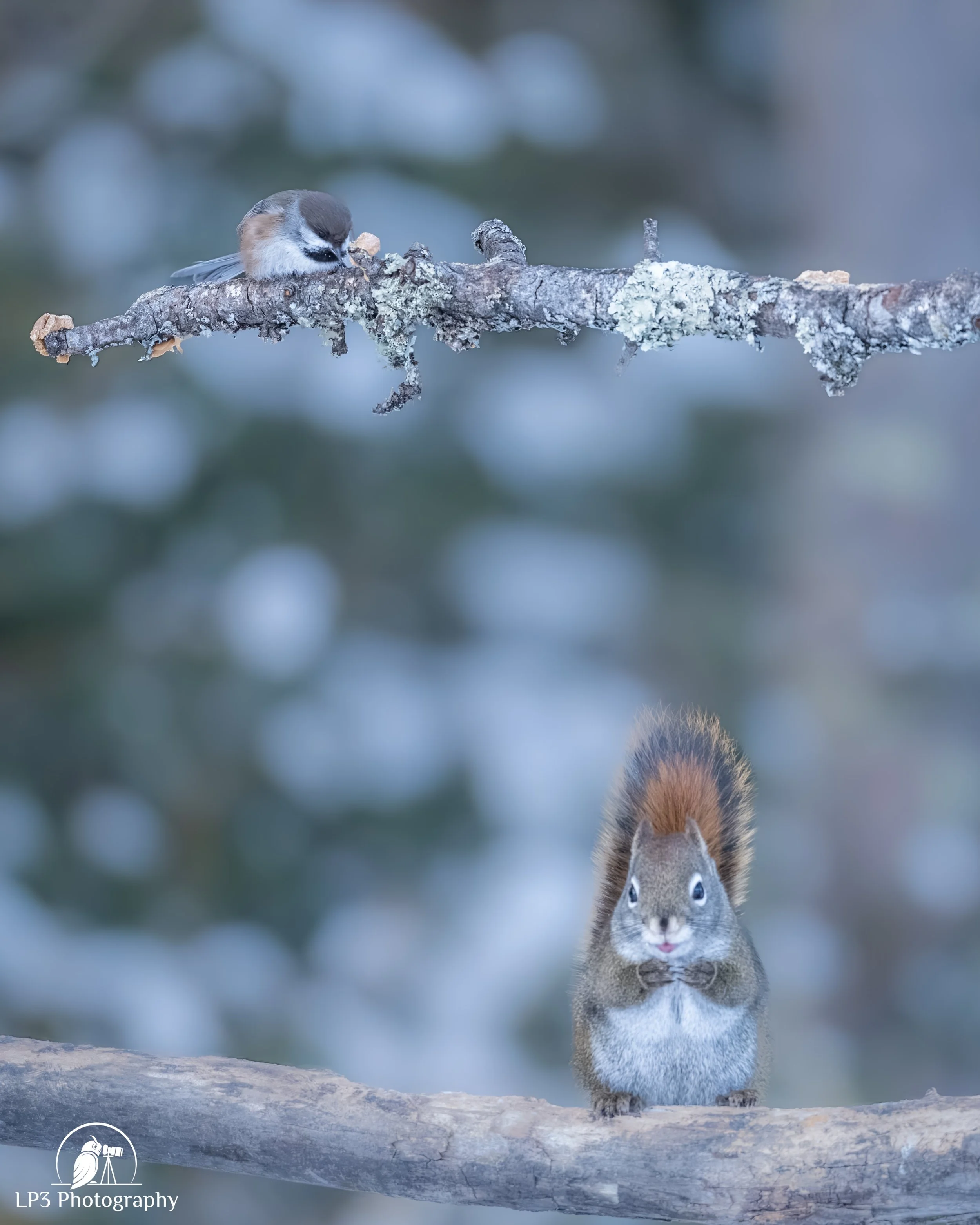
Beyond our target birds, the trip delivered several memorable moments. Mammal sightings added their own dimension to the experience. White-tailed deer were a constant presence throughout the bog, Red Squirrels enjoyed the feeders as much as the birds did, and a gorgeous red fox crossed the road in front of us one afternoon.
The Rough-legged Hawks we spotted on both arrival and departure were a special treat—we rarely see them in Maine. And who could forget bundling up in the pre-dawn darkness to search for owls when the thermometer read -40°F windchill?
The Other Mission: Cheese Curds
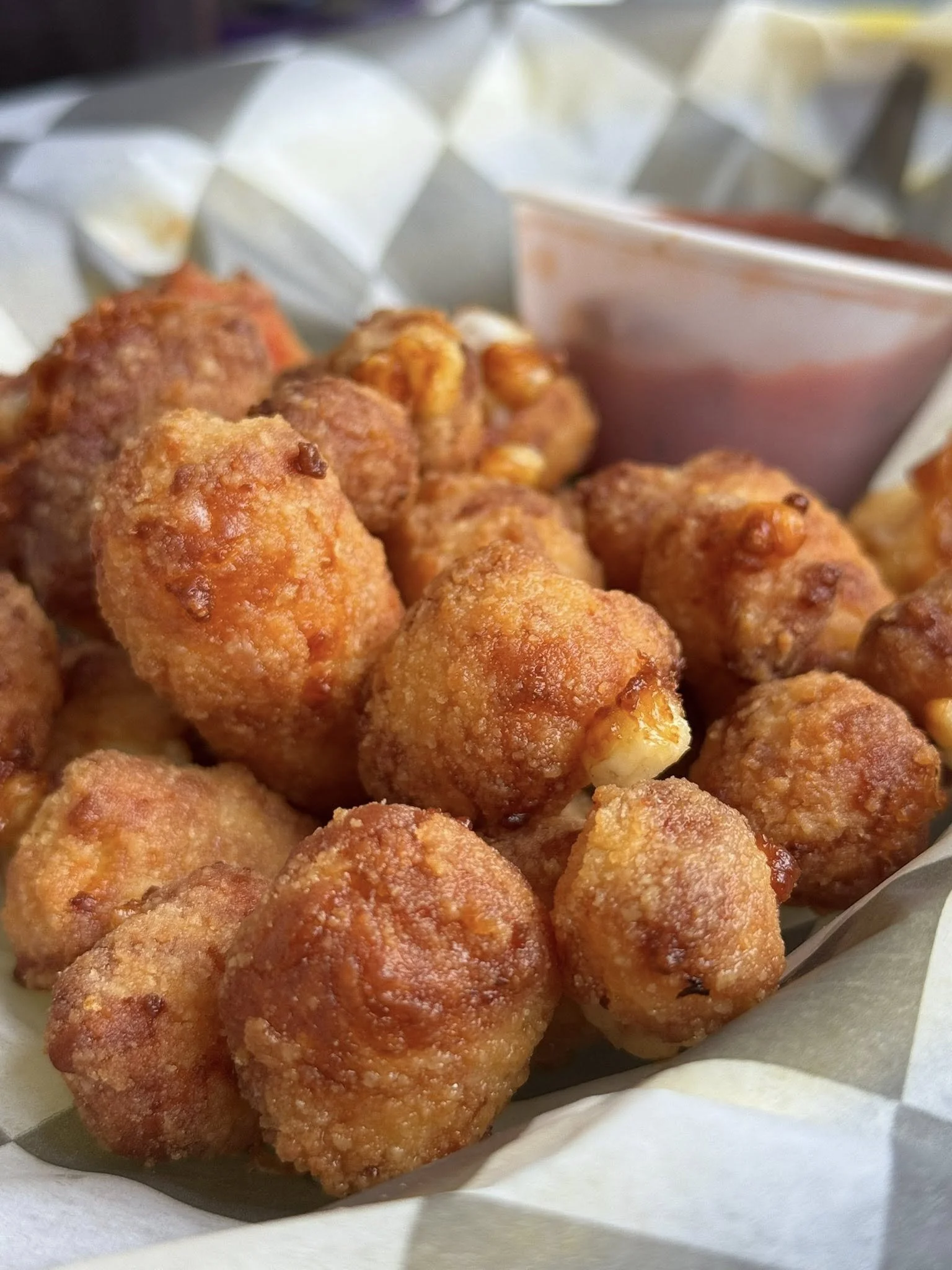
While owls and winter finches were our primary targets, we had another objective: to have cheese curds every day. This quintessential Wisconsin and Minnesota specialty—fresh cheese in its unaged form, ideally with a satisfying squeak against your teeth—became our daily ritual. Good cheese curds should be fresh (preferably made that day), lightly battered if fried, and served hot enough that the cheese is melty inside while the exterior stays crispy. The squeak when you bite into fresh curds is the hallmark of quality.
The best we had all week were at Wilbert Cafe near the bog, where the curds were perfectly fried with a light, crispy batter that didn’t overwhelm the cheese.
Reflections
Birding in extreme cold demands physical preparation, mental fortitude, and flexible expectations. The 100-degree difference between outside and inside our vehicle wasn’t just a number—it represented the thin margin between comfort and danger, between successful birding and hypothermia. Our heated gloves and vests weren’t luxuries; they were essential tools that allowed us to maintain the finger dexterity needed to operate binoculars and cameras.
The morning our rental car refused to start drove home just how serious these conditions were. Had we been at a remote location rather than safely at our Airbnb, the situation could have become dangerous quickly. It was a humbling reminder that extreme cold birding requires constant vigilance and backup plans.
Yet these challenges made the rewards sweeter. Finding the Boreal Chickadee, watching the Northern Hawk Owl hunt, seeing Redpolls and Grosbeaks in large numbers—each sighting felt earned in a way that summer birding rarely does. The cold sharpened our focus and deepened our appreciation.
Final Thoughts
Would we do it again? Absolutely! Northern Minnesota in January is not for the faint of heart, but for those willing to embrace the challenge, it offers birding experiences found nowhere else in the eastern United States. The boreal specialties, the winter-hardy resident species, and the raw beauty of a frozen landscape make Sax-Zim Bog a destination every serious birder should experience at least once.
Trip Statistics:
Dates: January 18-24, 2026
Total Species: 26
Temperature Range: -26°F to 12°F (actual); -40°F to 0°F (wind chill)
Coldest Morning: Friday, January 23 at 6am: -26°F in Duluth (feels like -40°F)
Warmest Moment: 12°F in Cotton, Wednesday, January 21 (feels like 0°F)
Target Species Found: Northern Hawk Owl, Black-backed Woodpecker, Boreal Chickadee, Canada Jay, Pine Grosbeak, Evening Grosbeak
Target Species Missed: Great Gray Owl, American Three-toed Woodpecker, Pine Marten