by Britney Fox
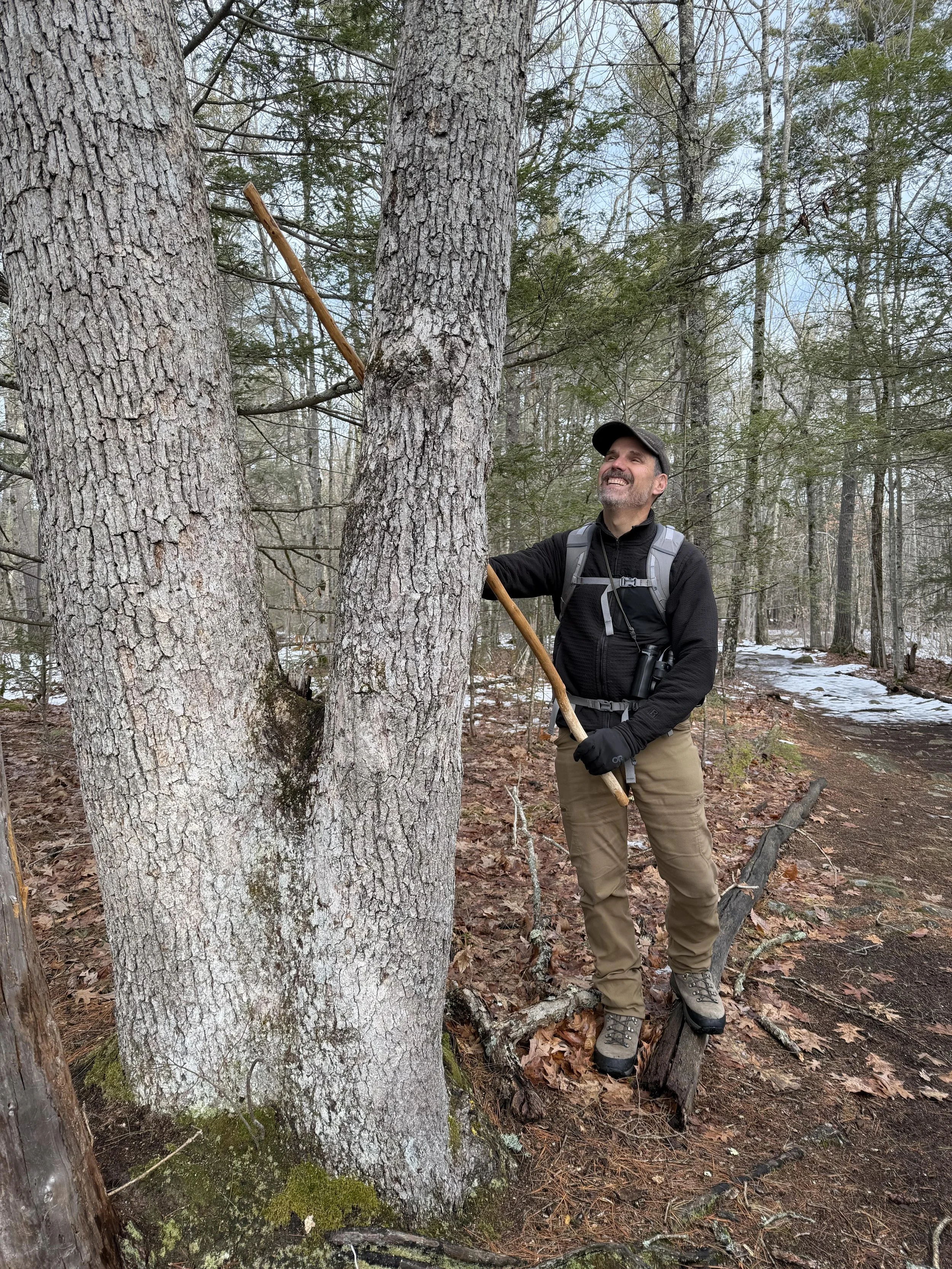
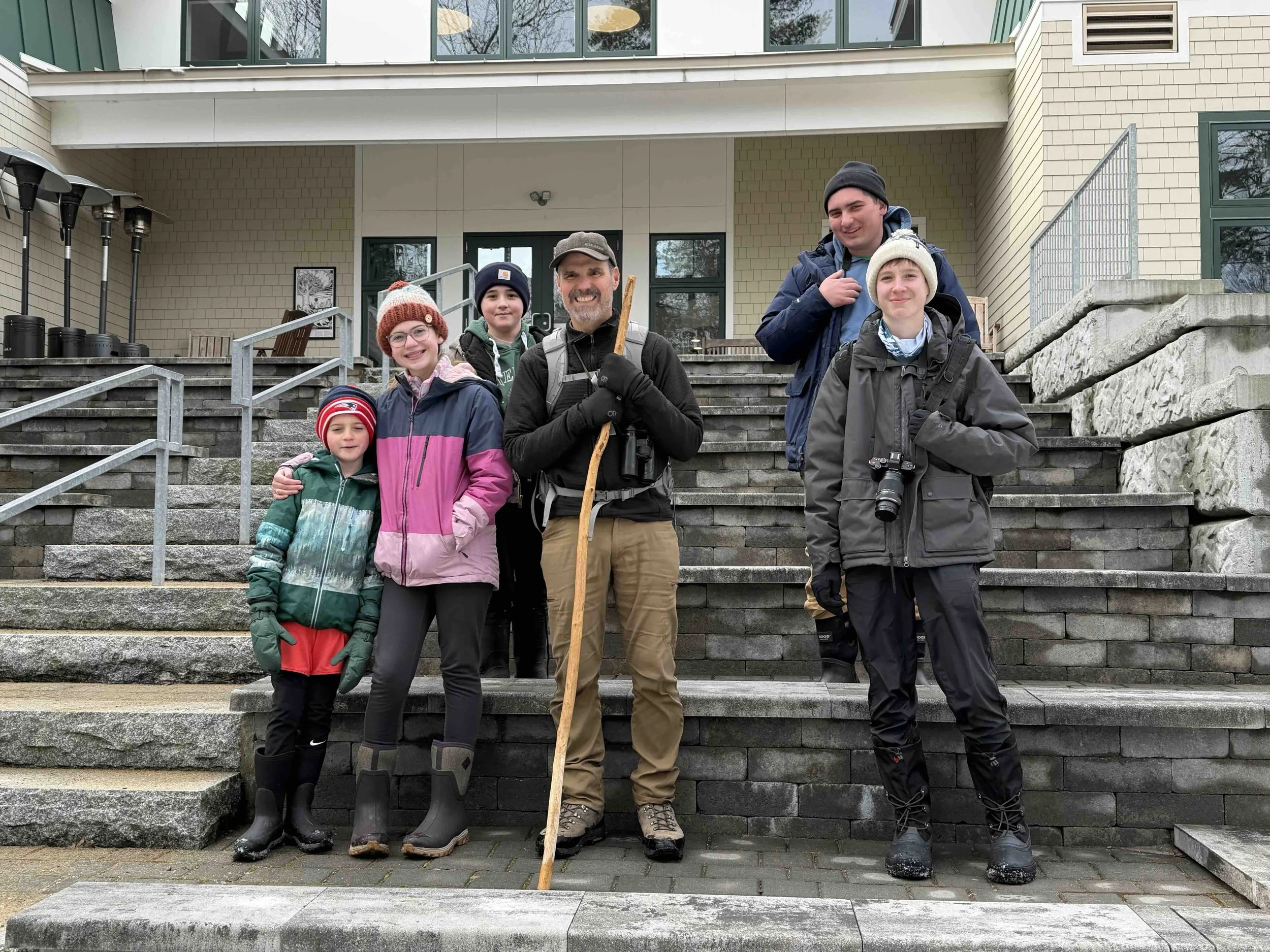
Our outing to the Center for Wildlife for our 2026 winter tracking trip with Dan Gardoqui took place on a truly beautiful morning. Winter trips can be unpredictable, but for this one we experienced the best that a Maine winter has to offer. When we met Dan Gardoqui in the Center for Wildlife parking lot, the morning was cold and icy, but it quickly warmed into an unseasonably mild winter day. While waiting for the rest of the group to arrive, we spent time examining an incredible collection of animal track casts that Dan has created over the years. Dan’s depth of knowledge is remarkable, and his teaching style—part storytelling, part science—is endlessly engaging. Before we even set foot on the trail, we had already learned something new.
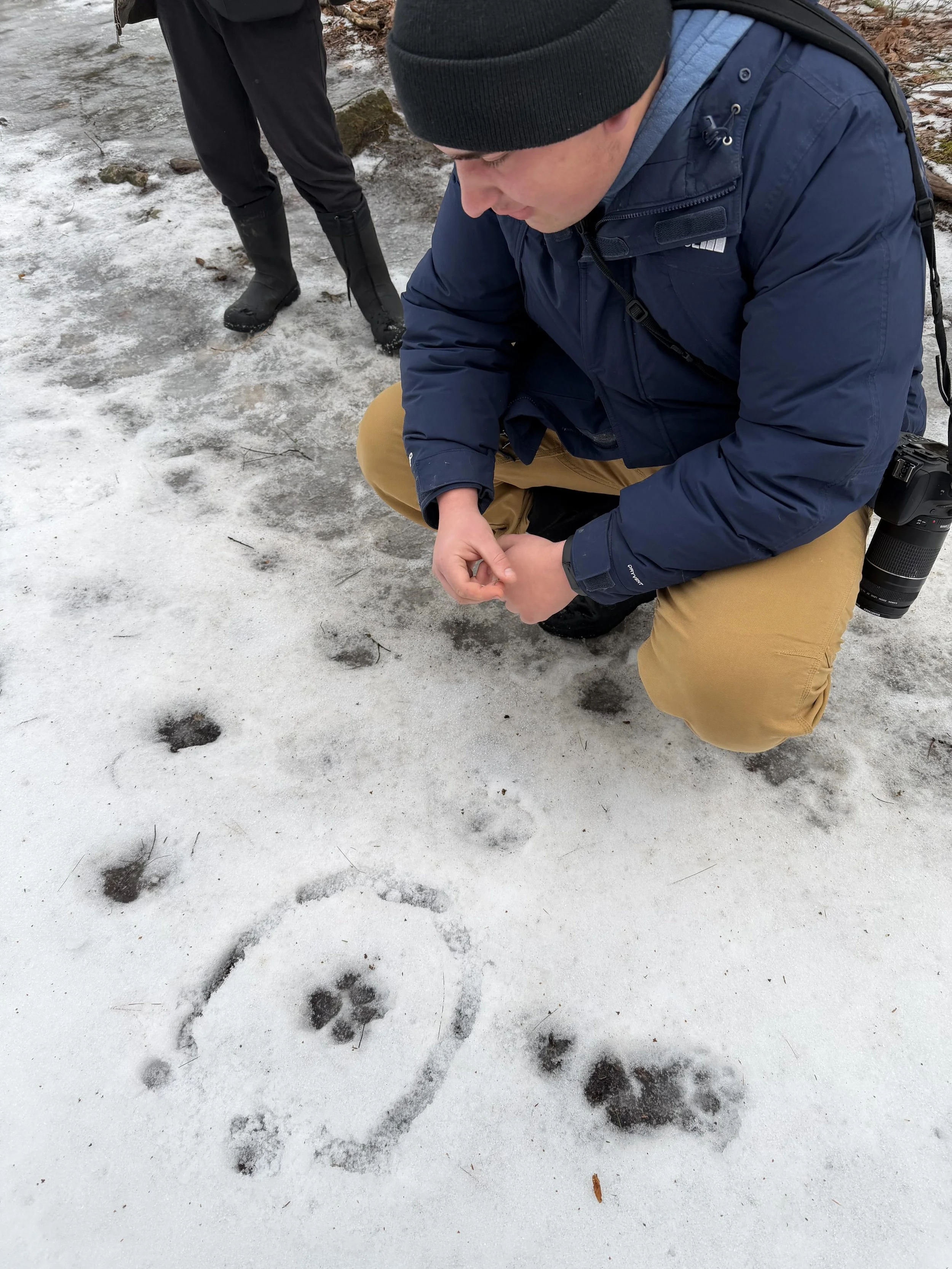
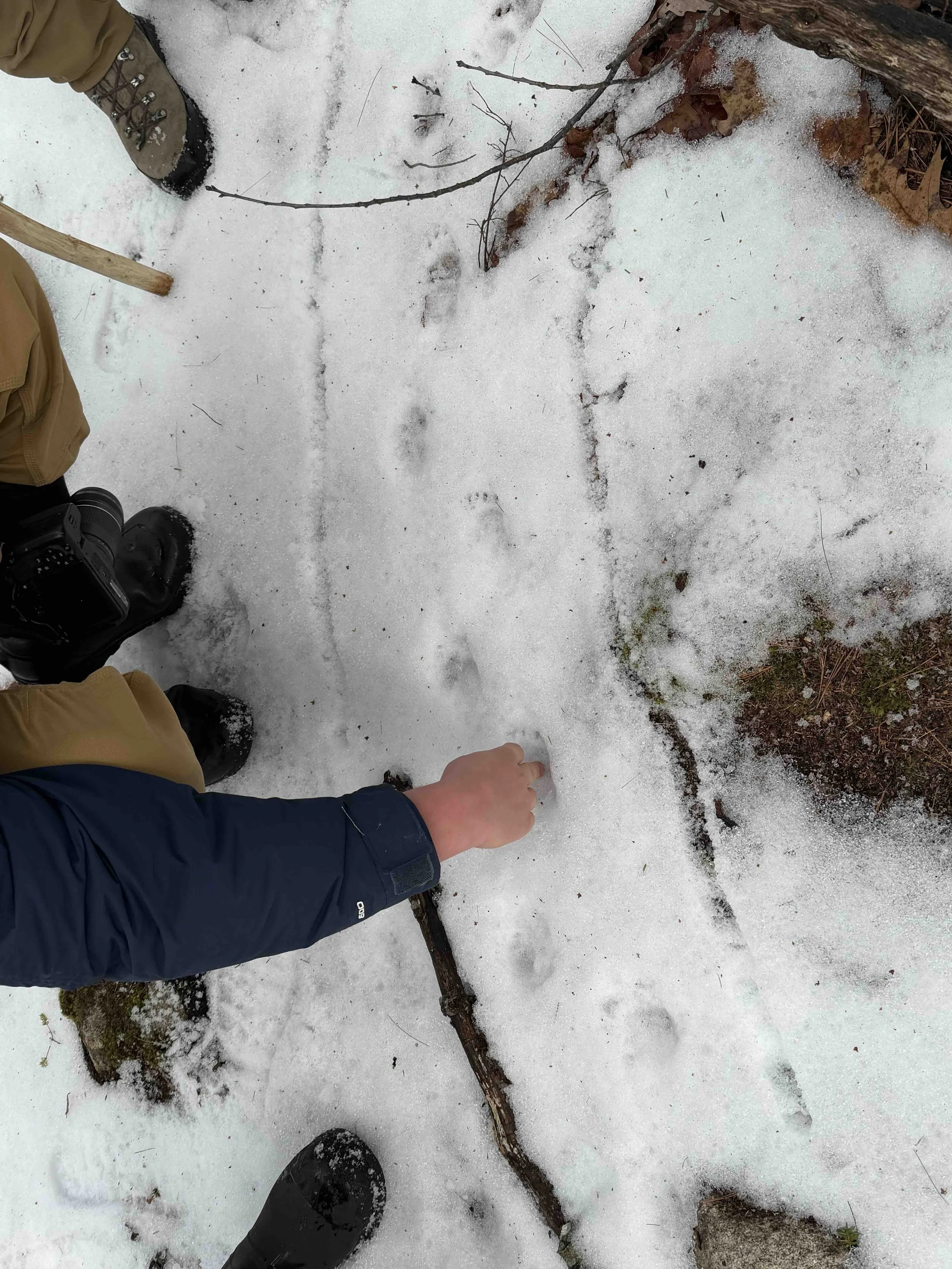
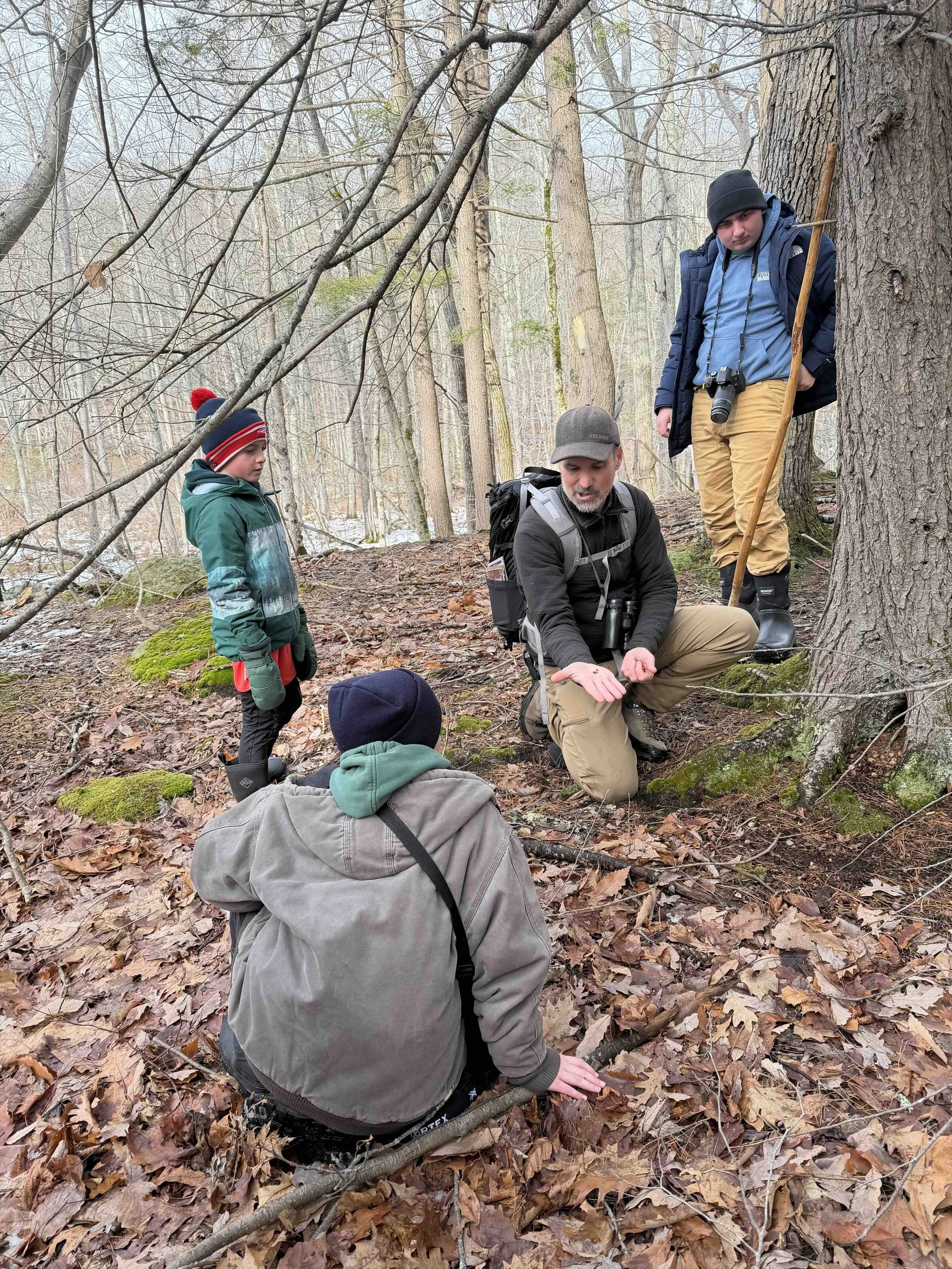
We then set off behind the Center on its network of trails. Just enough snow remained on the ground to preserve clues and evidence of the many animals that had passed through. Using size, symmetry, shape, and pattern, we studied prints to determine who had been there, what they were doing, and where they were headed. We identified squirrel tracks and discussed the many ways animals move, including hopping, bounding, and leaping. We noticed small squirrel caches and signs of recent meals in the snow. We also found raccoon and domestic dog prints, which provided a great opportunity to compare how wild animals move versus domestic pets.
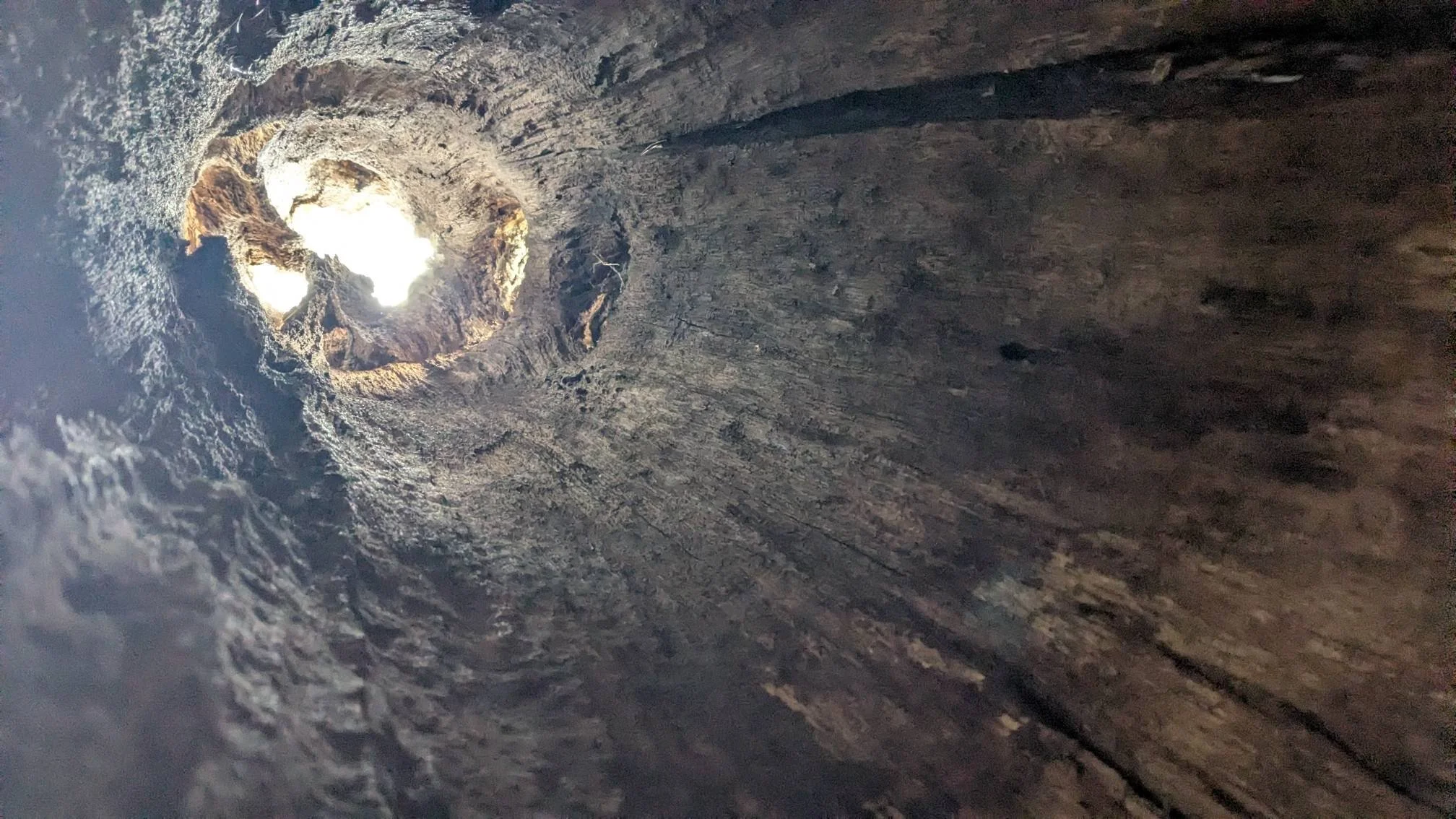
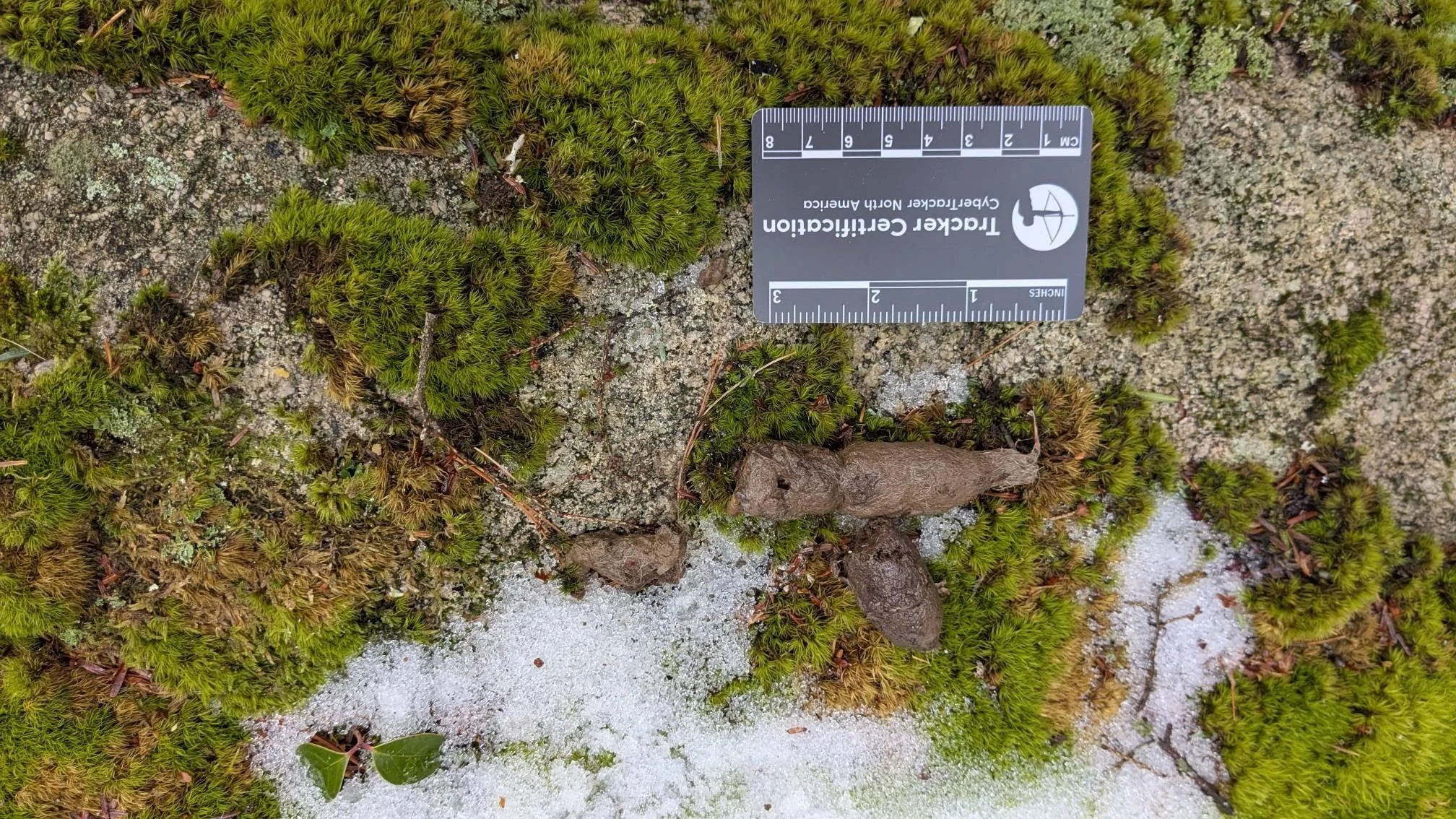
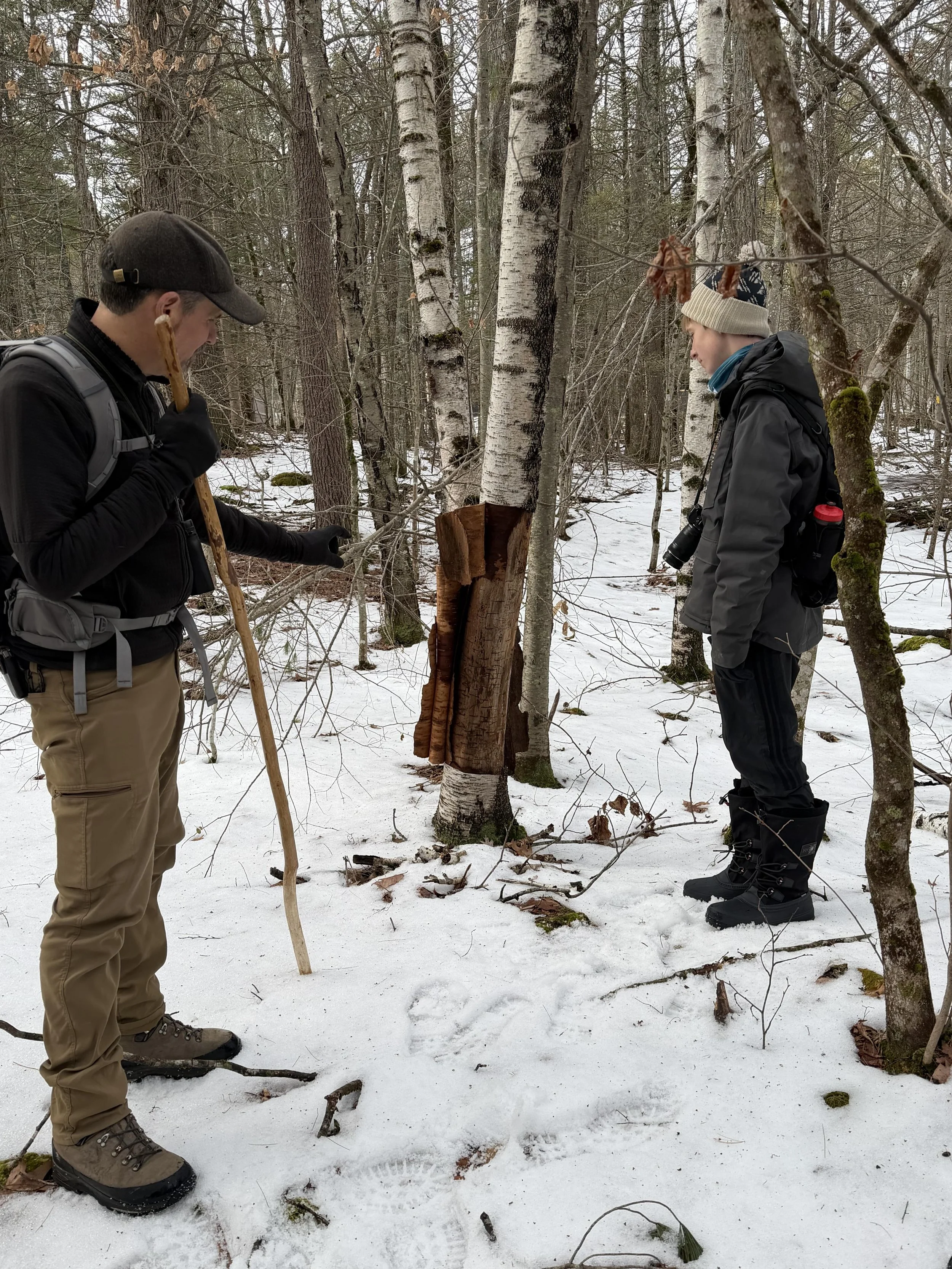
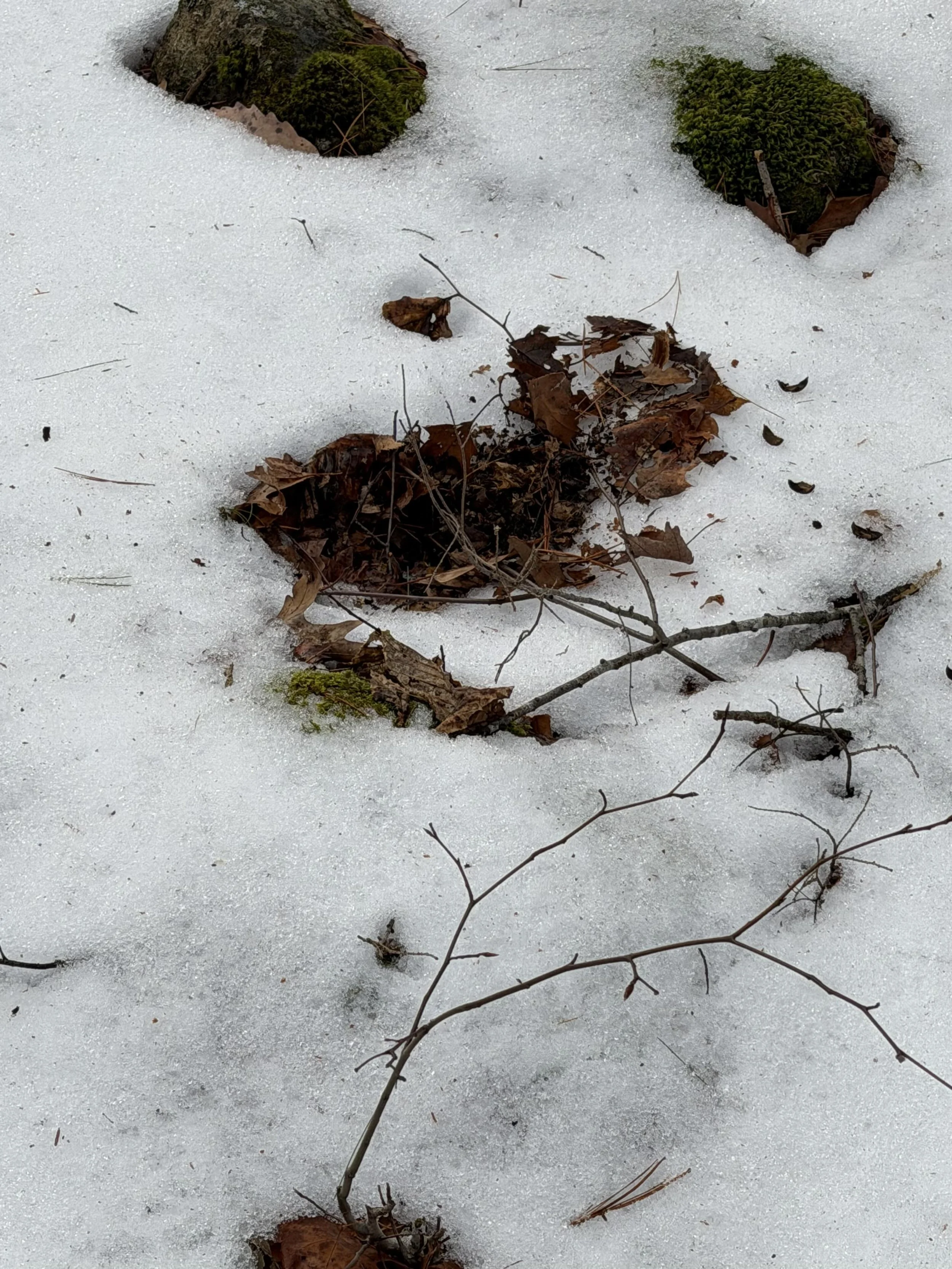
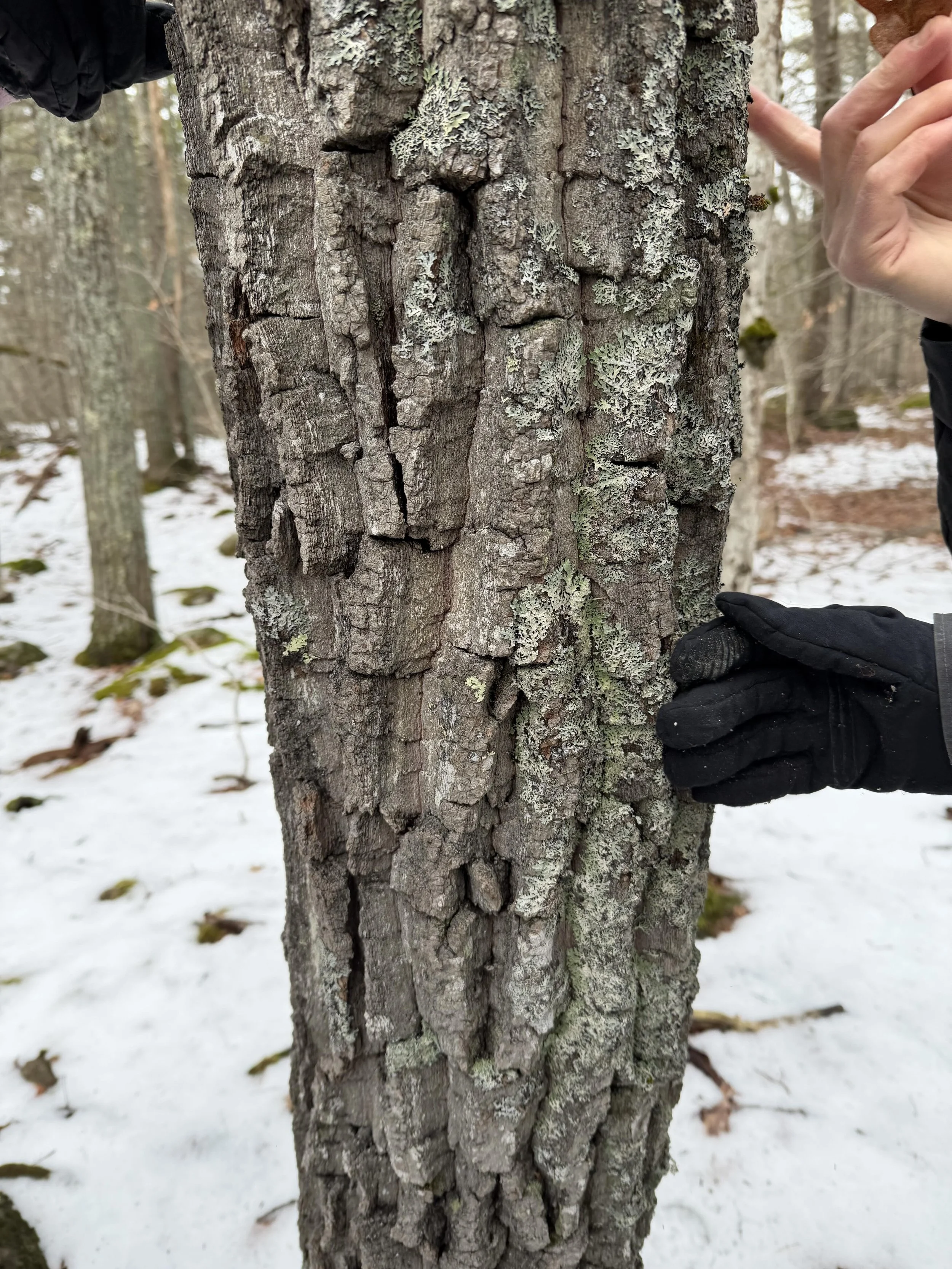
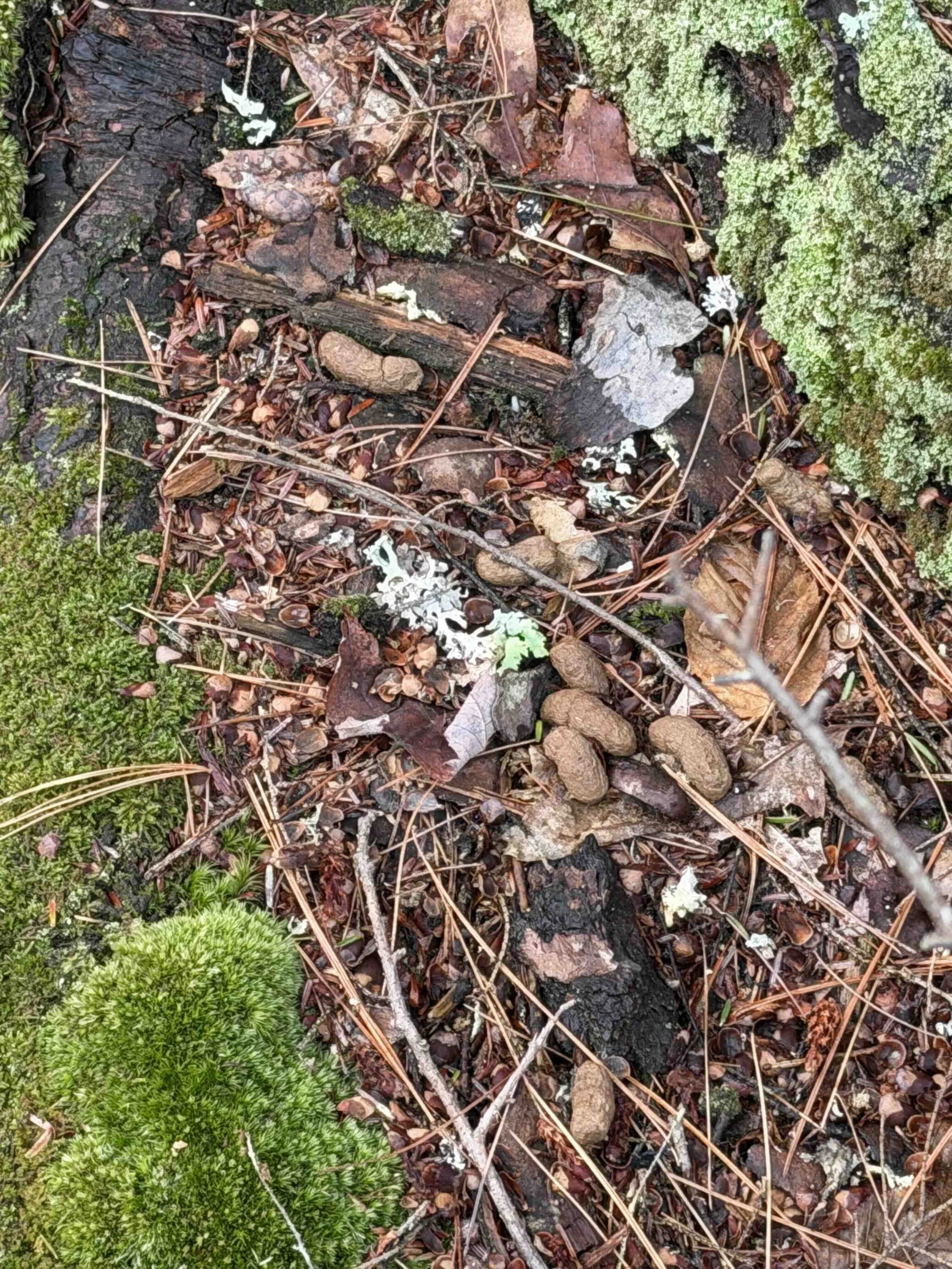
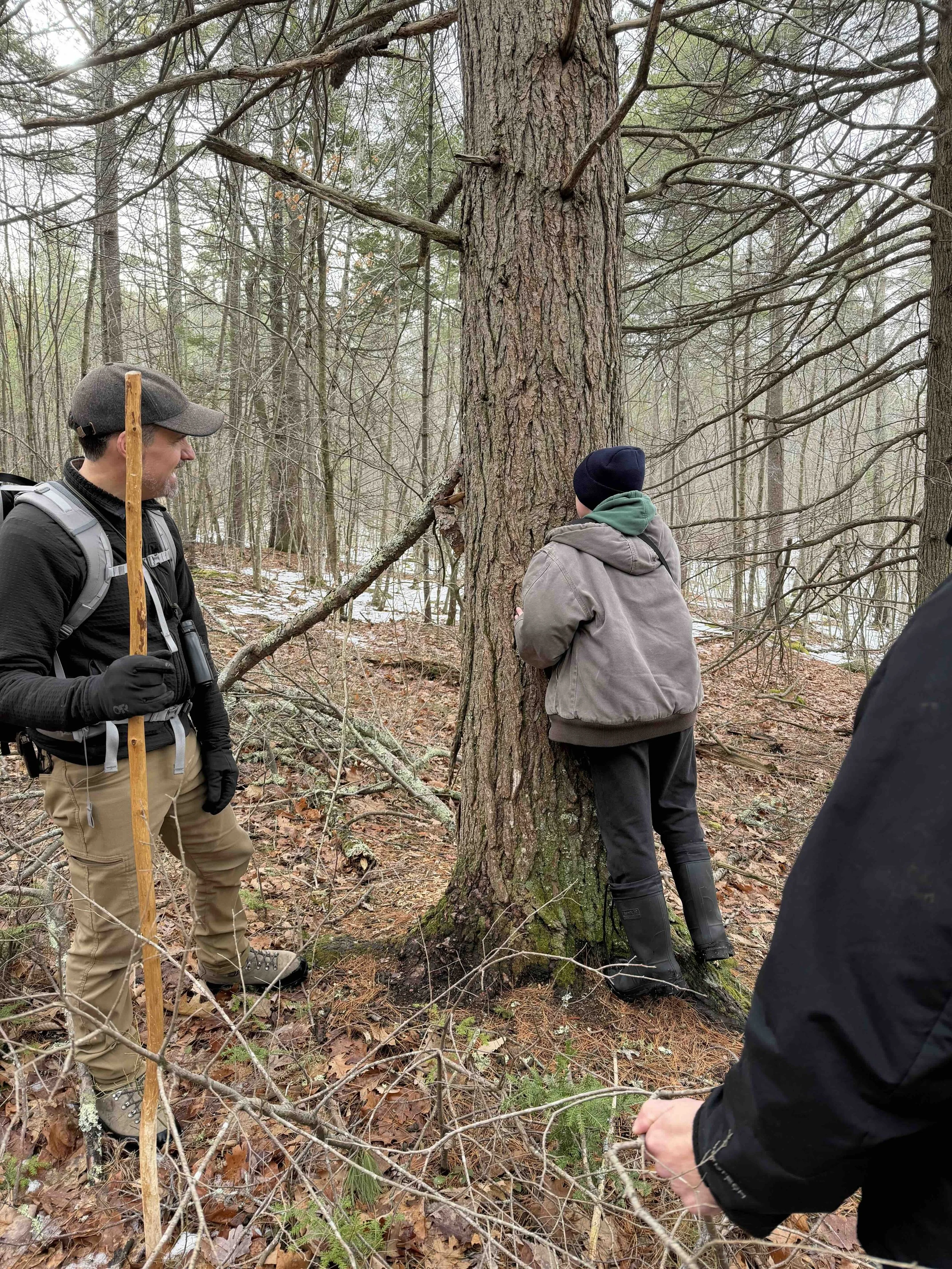
On another trail, we picked up the signs of a porcupine. We followed tracks, scat, hemlock snips, discoloration on trees marking travel paths, and even scent. We learned that tracking is a truly full-sensory activity. Eventually, we came upon a porcupine den—an outcropping of moss-covered stones—where we found fur, scat, and unmistakable porcupine odor tucked among the craggy rocks. Nearby, we also discovered bobcat scat perched on one of the stones, a reminder that unlikely companions often share and travel through the same spaces. Dissecting bobcat poop turned out to be surprisingly informative. Our adventure with porcupines ended at a hollowed out tree that that these animals climb into and use as a place to snooze and protection from predators.
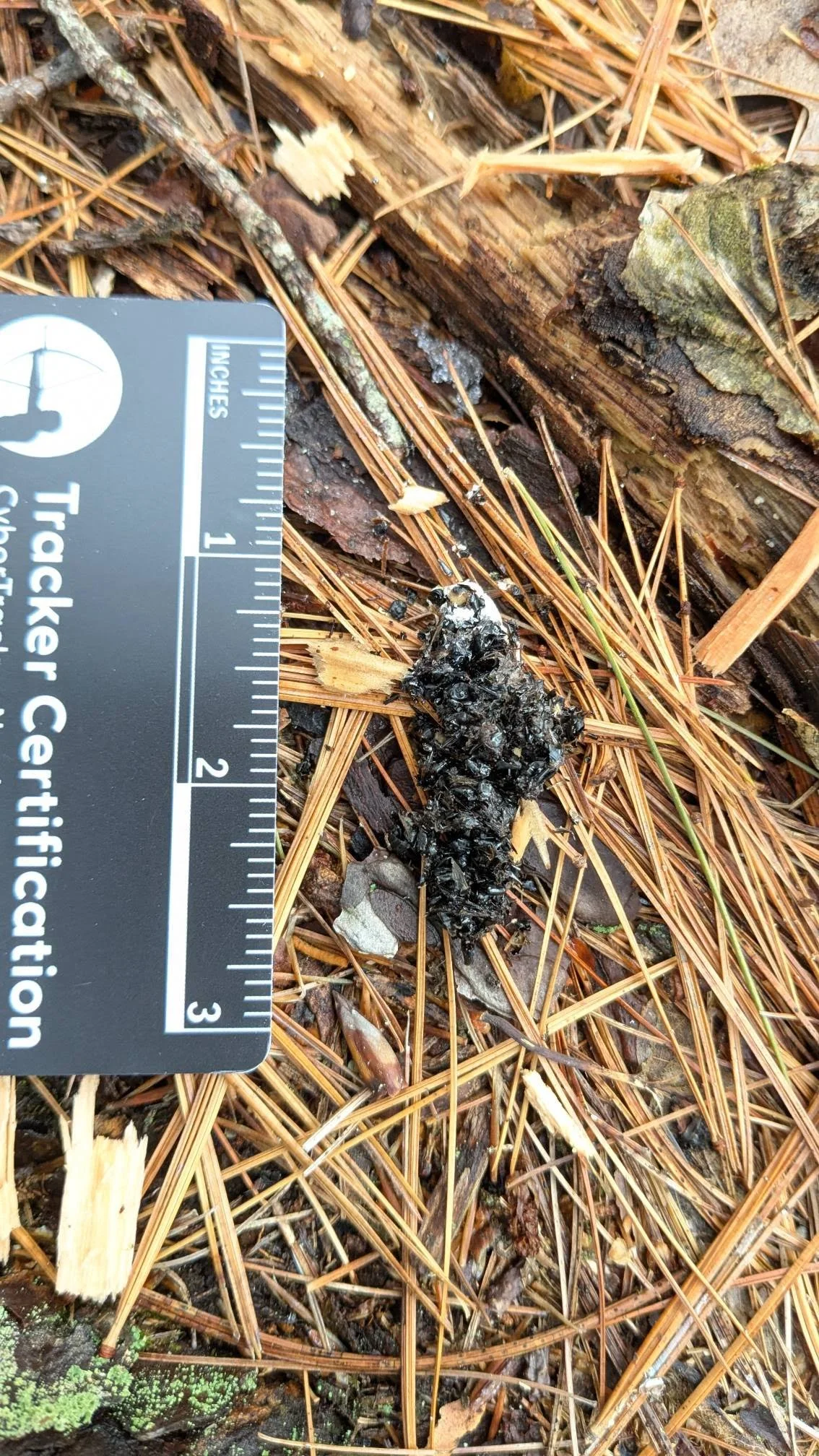
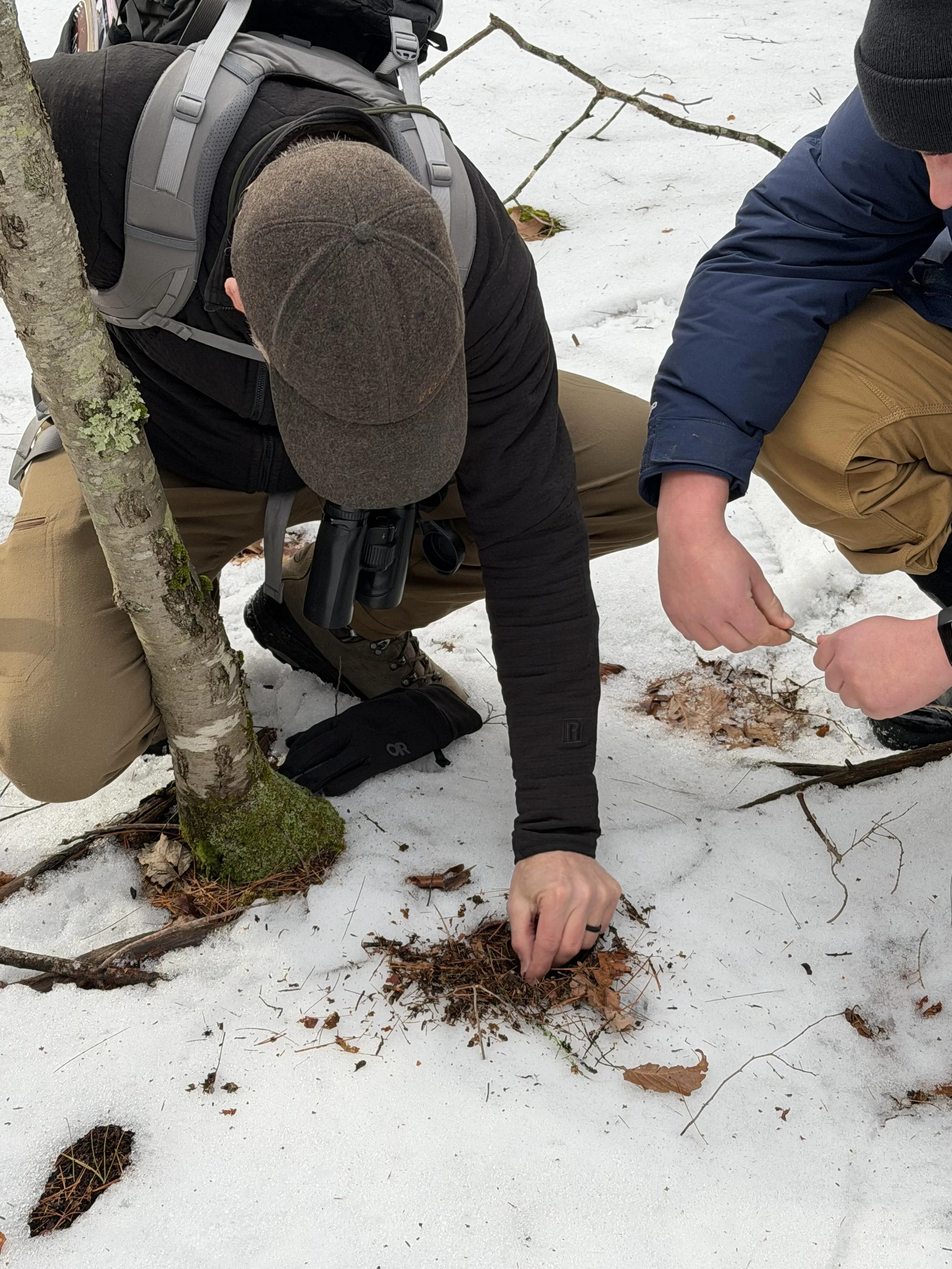
One of our objectives for the day was to find pileated woodpecker scat, which differs from the bird droppings we’re most familiar with. Beneath clear evidence of pileated excavation on a dead tree, we found unusual scat containing the exoskeletons of carpenter ants. Bingo! Pileated woodpeckers are voracious predators of carpenter ants and expel the hard, indigestible outer shells of their favorite prey.
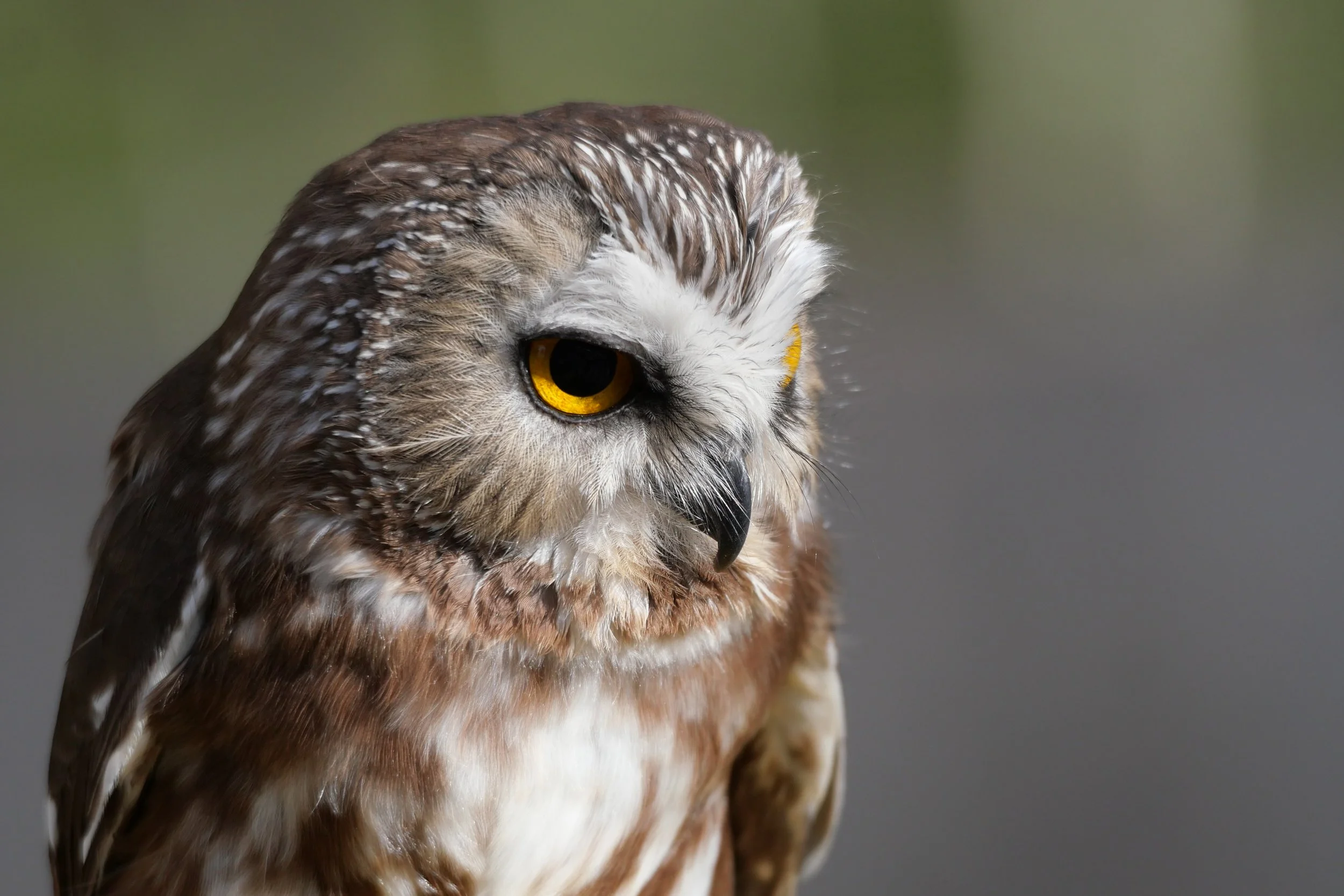
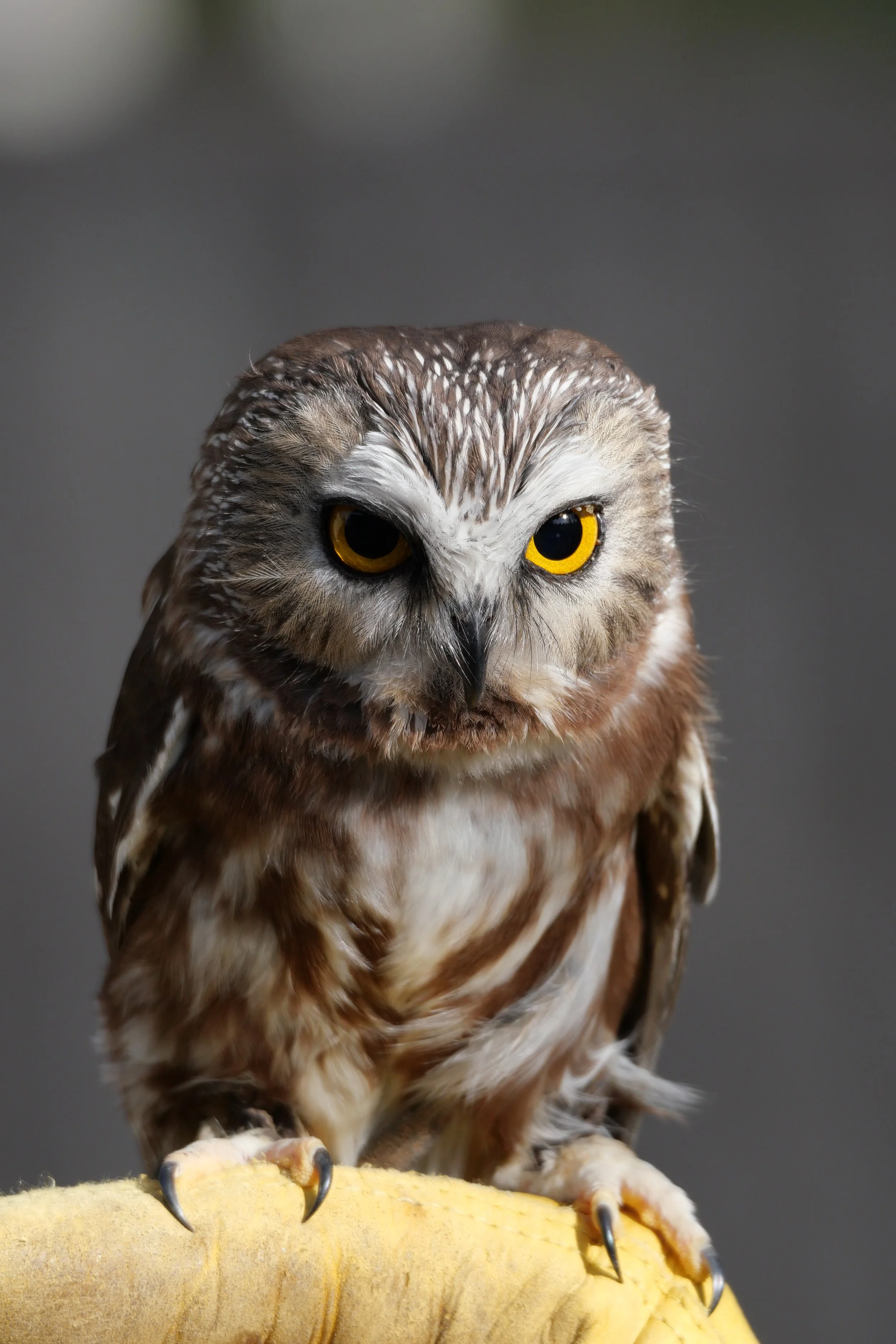
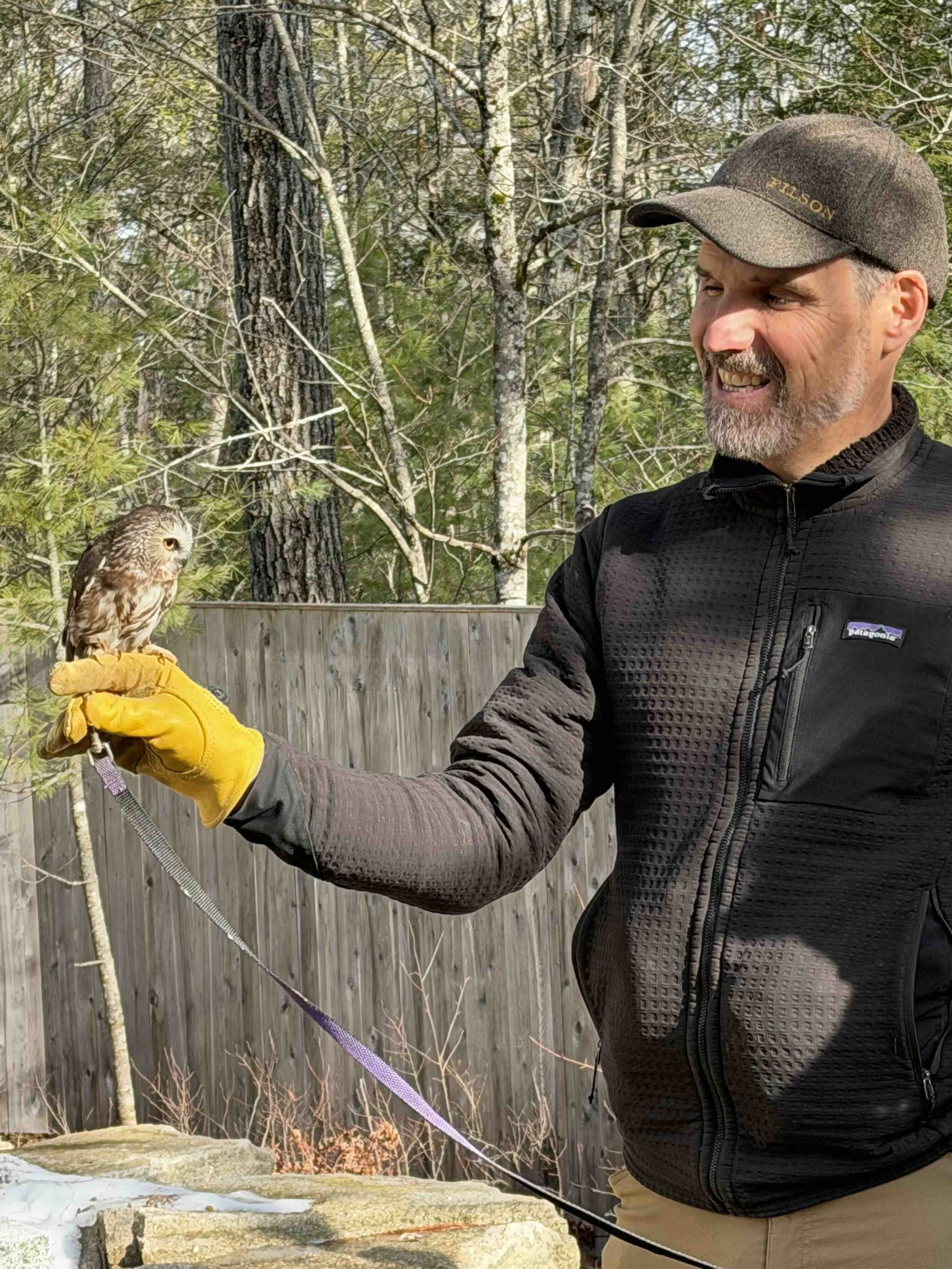
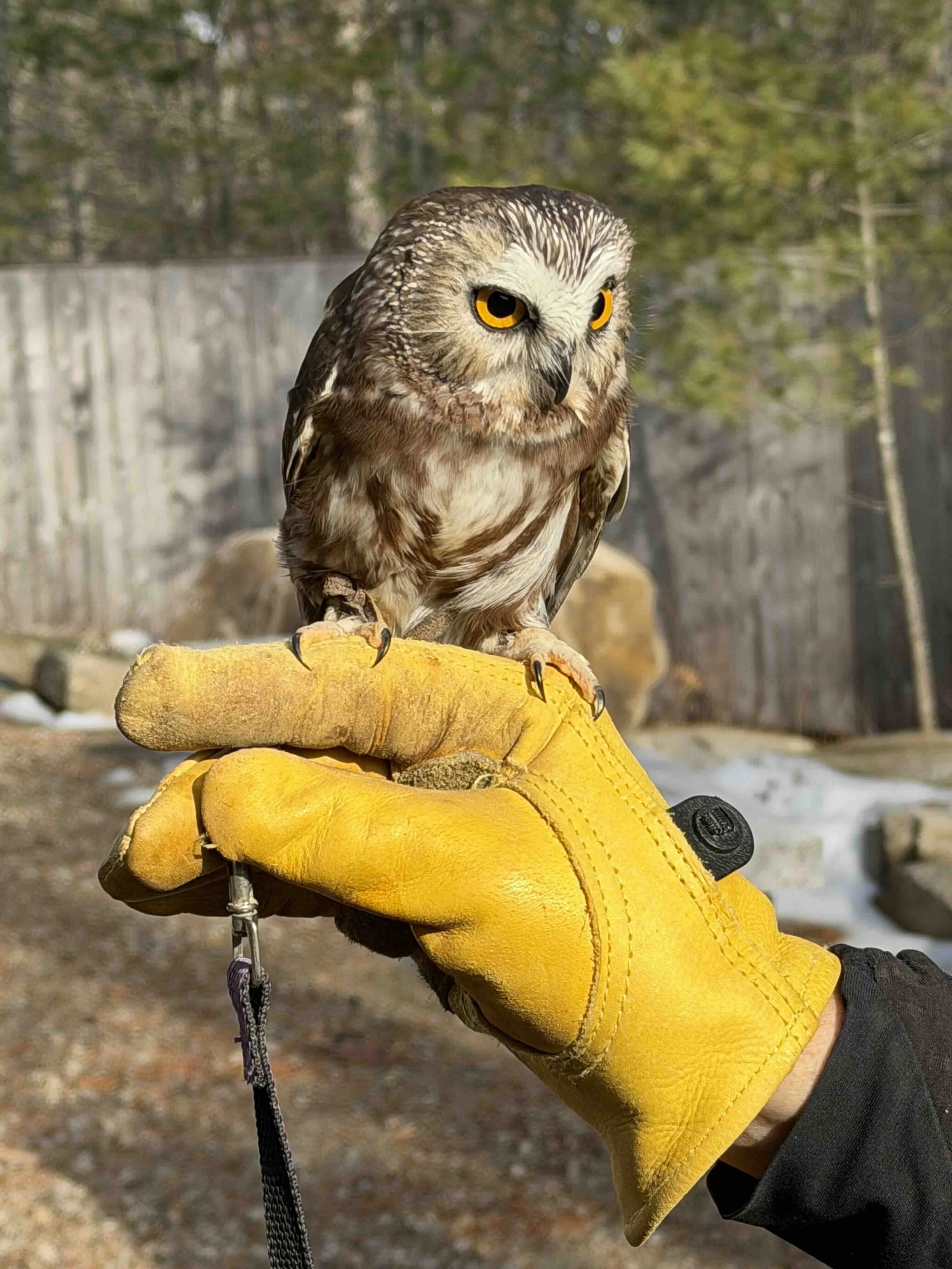
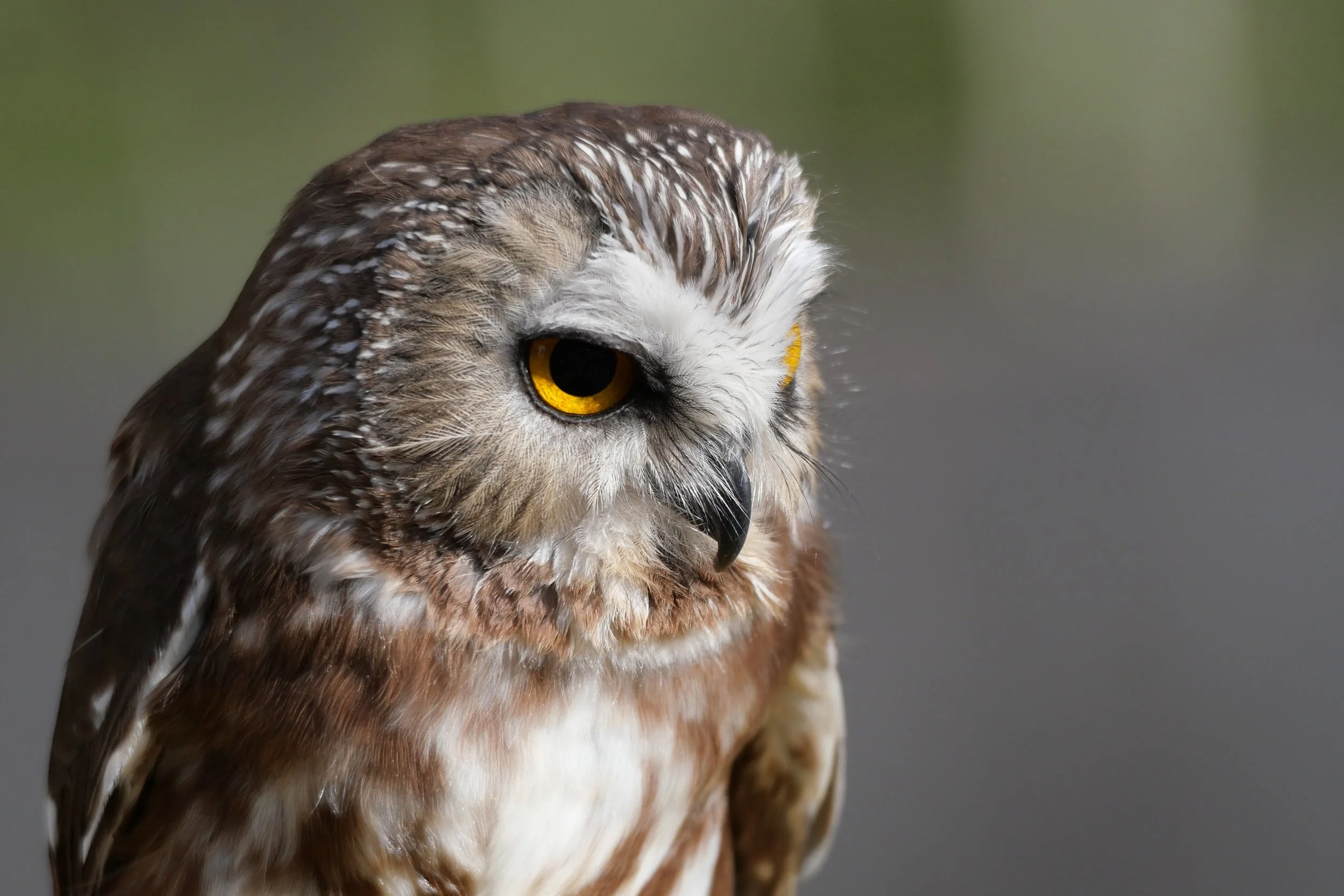
After a wonderful time on the trails, we returned to the Center for Wildlife to meet their animal ambassadors. It is always special to see the creatures that call the Center home, but hearing their individual stories through Dan’s firsthand knowledge allowed us to experience them in an entirely new way. We were especially fortunate to meet Nyx, a gorgeous female northern saw-whet owl who is unable to fly. She lives with her companion owl, Ollie, who is still adjusting to being around people. Nyx is a stunning example of her species—a minuscule, secretive owl that lives life as both predator and prey. We were completely in awe of her and deeply grateful for the opportunity to be in her presence.
Of course, we kept an eBird checklist for the outing. We heard a wild barred owl, along with white-breasted and red-breasted nuthatches. While tracking, we also heard chickadee alarm calls and watched a small sharp-shinned hawk careen through the forest.
https://ebird.org/checklist/S293539891
It was a fun, memorable day, and we can’t thank Dan enough for all he does for both humans and animals. Please keep an eye out for our February trip announcement—and until then, happy birding!